
INTRODUCTION:
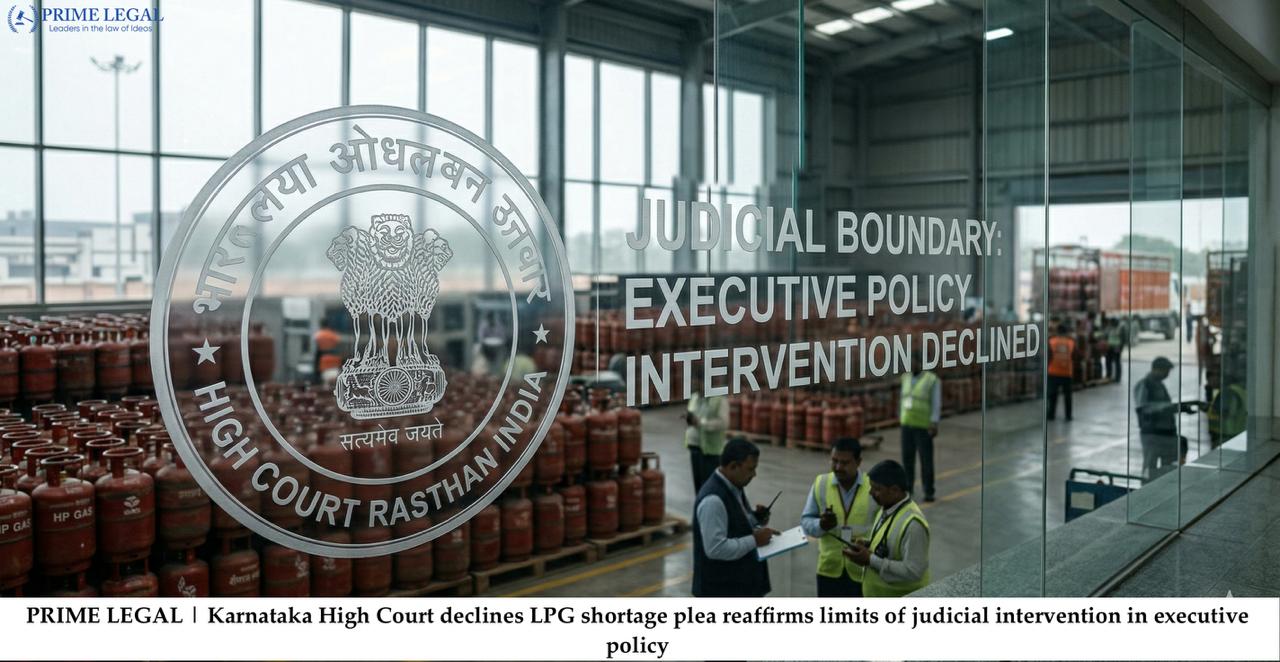
In the recent decision given by the Karnataka High Court it declined the plea seeking the judicial intervention in the LPG supply shortages, that’s been going on in the country, which is affecting hotels and restaurants to an extent. The location and distribution of LPG are matters of the executive policy and generally not fit for the judicial direction, specially amid a global energy and geopolitical crisis surrounding the country.
On 22 to 23 March 2026, the Karnataka High Court it refused to grant relief to hoteliers and the restaurateurs, which are facing a huge backlog due to the shortage. The bench in this decision? Held that rationing and prioritization of LPG falls within the domain of the Executive, and courts should not lightly substitute judicial wisdom for administrative or policy meeting choices and it should be left in the hands of executives to decide the matters relating to it.
BACKGROUND:
This case arose in a form of repetition in front of a quote under Article 226 of the Constitution. By the Bangalore Hotel Association and some of its members establishments, they argued for regarding the disruption in the commercial LPG availability across the state which has affected the conditions of the commercial industries in the country by not being able to reclaim the shortage demands of the LPG. The petitioners in this case contended that the shortage was affecting the hospitality sector at large, including restaurants, hotels and dhabas, and is also threatening the livelihood of flags of workers due to the prioritization of the LPG distribution in the country where the domestic sector is being given the priority. The commercial sector is being left out of the priority, and no such measures were being made for the welfare of the persons engaged in the commercial sector especially the food industry. No LPG gas is getting circulated in the commercial sector due to its acute shortage which has become a very serious issue.
An order is being issued by the Karnataka government on 9th March 2026 regarding the Natural Gas (Supply) Order 2026, which imposed strict limits on the Commercial LPG cylinders circulation. The order, it repeatedly capped the total daily supply of Commercial LPG cylinders in the state and about 7000 with only 1000 cylinders earn marked for hotels, restaurants and dhabas which is extremely low circulation for the entire food industry. The figure is being described by the petitioners as grossly inadequate and hence a relief was being requested from the High Court.
This plea was also framed against the backdrop of a global LPG supply crunch that’s there in the country, which is being reportedly linked to the geopolitical tensions involving the US Iran and Israel, as well as broader disruptions in the Persian Gulf Energy Corridor, which control the major supply portion of oil and gas. The petitioners hereby argue that Karnataka’s allocation policy was arbitrary and discriminatory and that neighbouring states such as Tamil Nadu, Kerala, were managing supplies more effectively, giving the priority to the commercial sector as well along with the supplies in the domestic sectors. The petitioners hereby, argues about the discrimination which is there in the state regarding the distribution and the prioritization of the LPG cylinders in the state of Karnataka compared to other state policies in managing the same crisis effectively.
KEY POINTS:
- First, in this case, the court says that although Article 226 gives the High Court strong powers, these powers are not unlimited, and the goals cannot step into areas that require technical knowledge and policy decisions like LPG distribution in the state or the country. The issues which require technical expertise in its resolution should be handled or dealt accordingly to prevent any sort of mishap or ruckus.
- The Court here highlighted the principle of separation of powers, which means that the judiciary, executive and legislators, all have their own roles. The LPG allocation is clearly a government policy matter, so the court should not intervene or interfere unless there is a clear violation of law or fundamental rights. It is stated by the court that matters relating to the executive should be solved by them and the court should not intervene in their matters unless there is a violation.
- It is also recognized. LPG shortage is not just a local issue; it is linked with the global problems which is playing a significant role in its disruption, which includes the international conflicts and the supply chain disruptions. These are the complex issues that Quote is not equipped to manage efficiently.
- Hereby the court did not accept the argument made by the petitioners comparing the Karnataka state policies with the other states, it is said that the LPG allocation depends on the national level decision and cannot be judged simply by comparing the states altogether. It requires a upper hand in solving these matters as this does not only include the country but the whole international mess which is currently going on globally.
- Justice Sachin Shankar Maghadum, he clearly stated that court should not interfere in such matters specially during a war like situations where the government is already trying its best to manage the limited sources that’s there in the country. The allocations and prioritization of the commodities is being made by keeping in mind the limited availability of the resources in such conditions.
RECENT DEVELOPMENTS:
After hearing the case, the Karnataka High Court closed the petition without giving any directions to the government as it is being stated by the court that they should not interfere in the matters considering high technicalities. This means the court did not order any changes in LPG supply or distribution of the LPG cylinders in the state. But the government assured the court that it is taking steps to manage the situation and to ensure a fair distribution of LPG gas cylinders. The court accepted this and said it trusts the government’s efforts in ensuring the fair distribution of the limited sources available in the country at the current moment.
The hotels and restaurants were advised to approach the government directly and try to resolve the issue through discussions at administrative channels instead of going to the court, which currently cannot give any judgment regarding this condition including global crises.
CONCLUSION:
This judgment clearly shows that the courts should prefer to stay away from policy matters, especially during crisis, like a global energy shortage. The Court made it very clear in this judgment that while it can protect the legal rights, it cannot take over the role of the government in managing the resources like LPG.
This means that instead of relying on the courts, they need to work with the government and should come up with a better usage of the commodities which are scarce. It should negotiate policies and final practical solutions with the government itself without involving the court in this process.
“PRIME LEGAL is a National Award-winning law firm with over two decades of experience across diverse legal sectors. We are dedicated to setting the standard for legal excellence in civil, criminal, and family law.”
WRITTEN BY: MEENAKSHI DANGI.

