
INTRODUCTION:
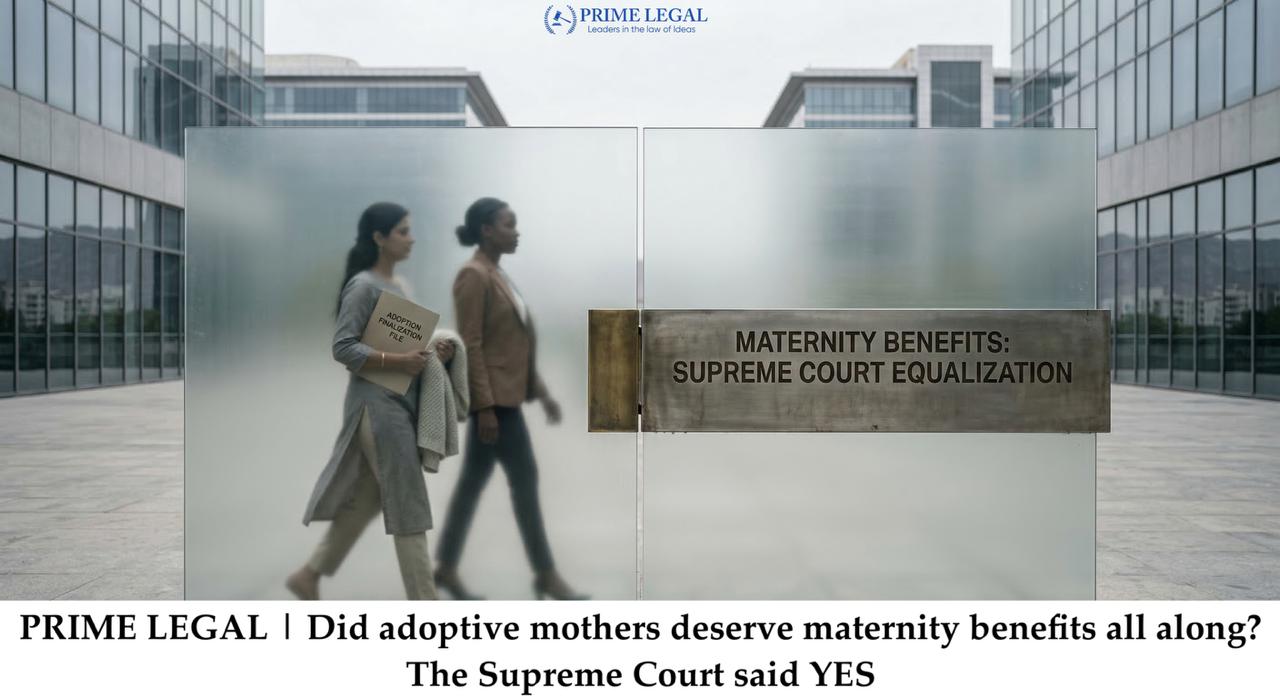
The Supreme Court of India in the recent landmark judgment dated 17th March 2026 In the case of Humsanandini Nanduri v. Union officials India, Brought a huge change in the society and explained how maternity benefits are understood in India. This case, talks about the maternity leaves that a woman gets to take care of the baby, but the real clash comes when an adoptive mother asks for maternity leave to take care of the baby. The Court held in this case that adoptive mothers are equally entitled to maternity leave as a biological mother and it struck down the earlier restrictions that limited such benefits only when the adopted child was below the three months of age. For an adoptive mother to get maternity leave, the child should be below the age of 3 months of age which turns out to be difficult because of the long process and duration involved in adopting the child in the country. This decision holds significance in the society because it recognizes that motherhood is not limited to biological processes, but it includes emotional, social and caregiving responsibilities and by removing all these inequalities and impurities from the societies, the court aims to ensure equality, dignity and proper childcare in adoptive families as well.
BACKGROUND:
The issue arose under the Maternity Benefit Act 1961, which originally focuses only on biological mothers. This created a sort of distinction among the biological mothers and the adoptive mothers. Although later amendments extended benefits to adoptive mothers as well, they imposed a condition that the child must be less than 3 months old to qualify for 12 weeks of leave under the Maternity Benefit Act. This created a clash. Because most children adopted in India are older than three months due to the lengthy legal and administrative procedures to adopt the child in the country. And as a result many adoptive mothers were denied maternity leave based on this factor that the child is older than three months of age and hence no maternity leaves are provided to the mother.
The petitioner in this case, she adopted a one-year-old child but was refused the maternity leave, leading her to challenge this provision as it was stated that the child is not below the three- month age criteria. She argued in the court that such a restriction violated fundamental rights under Articles 14, 15 and 21 of the Constitution, as it unfairly discriminated biological mothers and adoptive mothers without any reasonable basis, and draws out a line in the basic enjoyment of the fundamental rights given to the people.
KEY POINTS:
- The Supreme Court carefully examined the purpose of maternity leave and found that the age restriction on adopted children had no logical connection to that purpose. The three-month gap lacks a rational nexus with maternity leave as objectives, such as- physical recovery, emotional bonding and infant help and if not provided leads to the violation of article 14 of the Constitution. The maternity leave criteria are considered crucial for the personal bonding of mother and the children and the care that a child needs in those initial months which can only be fulfilled by the mother.
- The judgment strongly focused on child welfare, stating that adopted children, especially those coming from institutional care, requires time, stability and emotional bonding. If the maternity leave is denied to adoptive mothers, this would negatively impact the child’s psychological and emotional development overall.
- The court also acknowledged that due to procedural delays and legal formalities, most children in India are adopted after they are older than three months of age. And hence it creates difficulty in adopting a child who is below three year age criteria to be eligible for the maternity leave. The court considered the maternity leave benefits to be provided to all the mothers as it will be helpful in the overall growth of the child.
- The court recognized that denying such benefits could force women to choose between career and family. That would thereby affect gender equality in the employment sector. It emphasized that such discrimination based on the method of motherhood is unconstitutional and undermines dignity and equality.
- The Court here directed that its ruling should be implemented without any delays by all the employers, ensuring that adoptive mothers can immediately avail maternity leave, irrespective of the child’s age, without waiting for the legislative amendments to proceed.
RECENT DEVEOPENTS:
In the final ruling of this case, the Supreme Court of India went down the restrictive provision and declared that adoptive mothers are entitled to 12 weeks of maternity leave irrespective of the child’s age. The judgment was delivered by a bench of Justice J.B Pardewala and R. Mahadevan who directed that this benefit must be implemented without any delays and all the mothers can avail the maternity leave without waiting for the legislative amendments. To balance our gender inequalities, the court looks forward to provide paternity leave to have shared parenting responsibilities in the growth of the child. The court in the recent judgment aims at abolishing the taboo that’s there in the country and to provide equal benefits to everyone with no discrimination.
CONCLUSION:
In conclusion, this judgment marks an important development in the Indian Constitution and social welfare law, which aims at removing the discriminatory age restriction to be eligible for the maternity needs in the country. The Court has ensured that adoptive mothers receive equal recognition and support as biological mothers. This decision not only uplifts the societal measures and the taboos but also work towards equal opportunities and curbing down the unnecessary restrictions without logical reasoning. Overall, the ruling reinforces the idea that motherhood is defined by care and responsibility rather than biology, thereby promoting a more humane and equitable legal system.
“PRIME LEGAL is a National Award-winning law firm with over two decades of experience across diverse legal sectors. We are dedicated to setting the standard for legal excellence in civil, criminal, and family law.”
WRITTEN BY: MEENAKSHI DANGI.

