
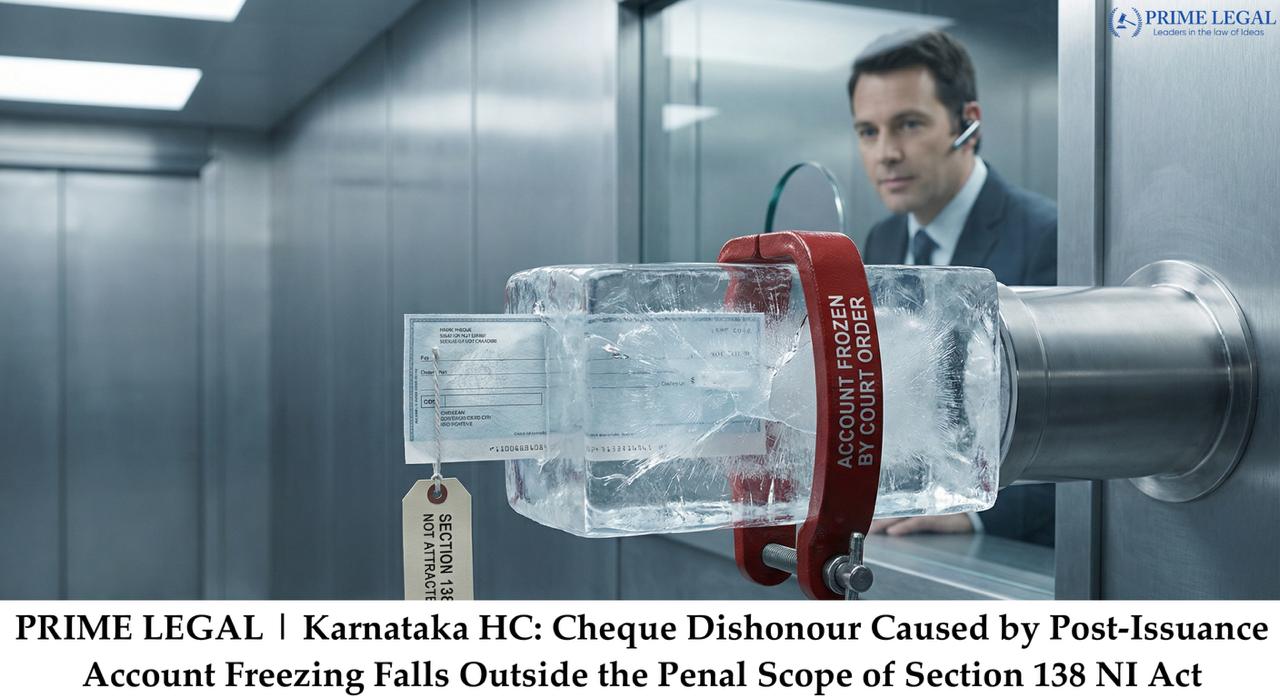
CASE NAME: M/s ND Developers Private Ltd. & Ors. v. Ritesh Raushan
CASE NO.: Criminal Petition No. 11207 of 2025
COURT: Competition Commission of India
DATE: 04-03-2026
QUORUM: Justice M. Nagaprasanna
FACTS:
In this case, the petitioners are accused one to six and the respondent is the complainant. The 1st petitioner is a private limited company incorporated under the provisions of the Companies App 1956. The complainant, Mr Ritesh Raushan, he along with his wife, purchased a flat in a project called ND Passion Elite developed by M/s ND developers PVT Ltd. In the purchasing of the flat, the company offered a no pre-EMI scheme under which the builder was responsible for paying the interest on the home loan until the possession of the flat was handed over. It was stated that the buyer does not have to pay any money till the possession of the flat is being transferred to him. But later the builder failed to hand over the possession on time, which forced the complainant to pay around Rs. 41,75,634 himself. The inability of the builder to transfer the possession on time has cost the complainant. Further, to compensate for this amount, the builder has issued a check of Rs. 41 lakhs in favour of the complainant on 9th March 2024.
Meanwhile, a criminal case had already been registered against the company for the offense of cheating and criminal breach of trust, which led to the freezing of the account of the builder. The issuance of the notice to the bank was initiated by the police to freeze the companies bank account which happened on 24 May 2024. The criminal cases were filed against the company in Crime No. 92 of 2022 and crime No. 116 of 2023.
The complainant in this case, presented the check for encashment on 5 June 2026, but the bank returned it unpaid, with the remark ‘account blocked.’ Due to the failure of the check, the complainant filed a legal notice on the accused on 4th July 2024 demanding the payment. Regarding the account freeze, the company or the builder, they had no knowledge which they told as a reply to the legal notice on 15 July 2024. The builder came to know about the account freeze on 26th July 2024 when the bank communicated the order to them.
Further, the complainant filed a private complaint on 17th August 2024 against the builder under the provisions of the BNSS for the offense under section 138 of the Negotiable Instrument Act. Later the magistrate issued summons on 10th January 2025 challenging these proceedings. The accused, thereby, filed a criminal petition before the High Court in the year 2025 seeking quashing of the case.
ISSUES:
- Whether proceedings could be initiated against the petitioners on dishonour of check when the reason for dishonour is the account being debit frozen.
LEGAL PROVISIONS:
- Section 138 of the NI Act- Deals with the check dishonour due to insufficient funds.
- Section 528 of BNSS- The High Court inherited bars to pass orders securing justice, including quashing FIR/ proceedings if no offense was disclosed.
- Section 118 of NI Act – presumes every negotiable instrument was made for consideration and accepted by the drawer.
ARGUMENTS:
APPELLANT:
The counsel for the petitioners is Smt. Sumathi Pauline, the accused company is the appellant in this case, and the company and its directors argued that the check, dated 9th March 2024, was not dishonoured because of lack of funds, but because of their account being frozen by the police on 24 May 2024, regarding the investigation of other criminal cases filed against them. The accused hereby, defend themselves by saying that they weren’t aware of the frozen account. There was no issue regarding the funds in the account, but the bank was being freeze without their knowledge and that’s why the check bounced. They also stated that they had no control over their bank activities whatsoever and they were unaware of the debit freeze until 26th July 2024, which is why their reply to the legal notice dated 15th July 2024 did not mention the freezing of the account.
The accused further clarifies that the check was not issued as a form of debt, rather it was regarding the completion of the project under their company. Meanwhile, they have already compensated for the delay in the allotment of the possession of the 2 flats to the complainant, which he has already entered into a settlement by executing a settlement deed before the RERA on 24-6-2022. They have already provided the settlement benefits earlier. And based on these grounds, they argued that the offense under Section 138 of NI Act is not maintainable and the criminal proceedings should be quashed.
RESPONDENT:
The counsel of the respondent is Sri. Chinmay J. The complainant further argues in this case that the check issued for Rs. 41 lakhs had been issued to discharge a legally enforceable liability arising from the builder’s failure to fulfil the contractual obligation under the No pre-EMI scheme which was being established by the builder only. It was stated by the complainant that the builder had breached the agreement and had even sold the flat to 3rd parties. Therefore, the check issued on 9th March 2024 represented the valid debt against him. He further stated that dishonour of the check on 5 June 2024 activates the applicability of section 138 of NI Act against the builder.
The complainant further relied on the statutory presumptions under Sections 118 and 139 of the NI Act, which presumes that a check is issued for a legally enforceable liability and the reason behind the dishonour of the check should not absolve the accused from the liability.
ANALYSIS:
The High Court after carefully examined all the facts of the case, sequence of events and the relevant legal provisions under it. The court noted that the check was issued on 9th March 2024, the bank account was frozen on 24 May 2024, and the check was presented for payment on 5 June 2024. This event or series of event clearly shows that the check had been issued earlier, and the account was frozen before the check was presented for the encashment. Which states that the builder has already given the check to the complainant for the encashment without having any problem regarding the funds in the bank. The court further explains that for an offense under section 138 of the NI Act to be made out, the dishonour must occur due to the insufficiency of funds or failure to maintain the account properly and not based on the exception like freezing of bank account by the police. It was being analysed by the court regarding the blockage of the account, that it was beyond the control of the accused as he could not deposit money, withdraw funds or operate the account in any manner. Therefore, the court held that the accused did not have any control over the account at the time when the check was presented. The court also mentioned the date 26 July 2024, on which the accused got to know regarding the freezing of the account, further supporting the argument that the dishonour of the check was not due to their fault or intention nor due to the lack of funds in the account.
The court later referred to various decisions of the other high courts which had held that dishonour of a check due to the account blocked or account frozen by the statutory authorities does not fall within the scope of section 138 in the NI Act because the essential requirements of the dishonour due to insufficient fund is absent.
JUDGMENT:
After analysing all the facts and the law, the High Court of Karnataka concluded that the essential ingredients required to establish an offense under section 138 of the Negotiable Instruments Act were not satisfied in this present case. Since the check was dishonored because the bank account had been frozen by the police and not because of insufficient funds, the criminal proceedings could not take place and therefore on 4 March 2026, the High Court allowed the criminal petition and quashed the entire proceedings pending in CC. No. 1446 of 2025 before the Additional Chiefs Judicial Magistrate of Bangalore and hence the present case stays quashed in the eyes of law.
CONCLUSION:
This case establishes a very important principle in the eyes of law that not every dishonour of a check is a violation of Section 138 of Negotiable Instruments Act. The dishonour must occur due to the insufficient funds or failure of the drawer to maintain the account and in the present case, the check issued was dishonored because the bank account had been frozen by the police, which was beyond the control of the accused, which marks as an exception under section 138 of the Negotiable Instruments Act and was not considered a violation of this, and accordingly, the proceedings were quashed as no right was being violated under section 138 of the Negotiable Instruments Act.
“PRIME LEGAL is a National Award-winning law firm with over two decades of experience across diverse legal sectors. We are dedicated to setting the standard for legal excellence in civil, criminal, and family law and NI Act matters.”
WRITTEN BY: MEENAKSHI DANGI
Read the judegment copy here

