INTRODUCTION
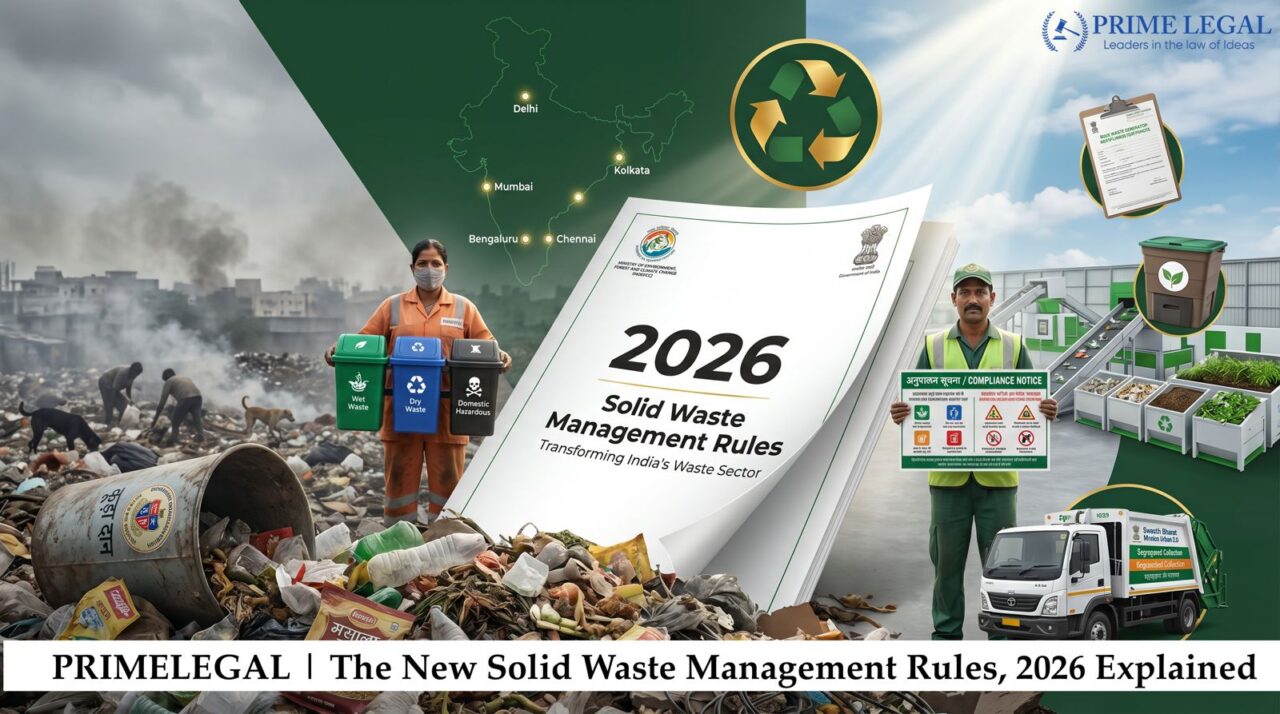
India has taken a decisive step in reforming its approach to its increasing waste management challenges. The Ministry of Environment, Forest and Climate Change (MoEFCC) has established Solid Waste Management (SWM) Rules 2026 which became effective on 1st April, 2026 to replace the previous regulations from 2016. The rules which were created under the Environment Protection Act of 1986 establish a fundamental change from India’s previous waste management method which focused on collection and disposal to a system that recognizes waste as a valuable resource operating under a circular economy framework. The new regulations have set an ambitious yet straightforward target which aims to achieve complete waste elimination from landfills.
BACKGROUND
The Solid Waste Management Rules of 2016 have failed to improve waste management conditions in India which have existed for almost ten years. The Central Pollution Control Board (CPCB) 2023–24 data shows that India produces more than 620 lakh tonnes of solid waste every year which amounts to about 1.85 lakh tonnes of waste every day. The system processes only 1.14 lakh tonnes of waste each day while the rest of the waste material goes to unregulated landfills and dumping sites. The 2016 Rules introduced progressive regulations to solve waste management issues but their implementation failed because of weak enforcement and lack of monitoring and large waste generators who did not comply with the rules. Now urban areas suffer from hazardous environmental conditions because legacy landfills spread across the city for years have contaminated both soil and groundwater resources. The 2026 Rules have introduced new requirements which include digital tracking systems and financial penalties for organizations that fail to meet their compliance obligations.
KEY POINTS
- Four-Way Waste Segregation Made Mandatory
The 2026 Rules introduce their first major alteration through the establishment of mandatory four-stream waste segregation which replaces the previous wet-dry waste segregation system. The new waste segregation system requires waste to be sorted into three categories which include Wet Waste that consists of food and organic materials for composting and bio-methanation and Dry Waste that contains plastics and paper and metal and glass which will be sent to Material Recovery Facilities and Sanitary Waste which contains diapers and napkins and sanitary products that need special disposal methods and Special Care Waste which includes domestic hazardous materials such as medicines and paint cans and bulbs. Urban local bodies need to distribute three different coloured bins which include green and blue and red to public areas and restroom facilities.
- Extended Responsibility for Bulk Waste Generators
The rules bring bulk waste generators under an enhanced accountability framework similar to the Extended Producer Responsibility EPR system which manufacturers must follow. The definition of bulk generator applies to any entity that produces 100 kilograms of waste or more every day and uses 40000 liters of water or more each day or occupies a space of 20000 square meters or more. The requirement applies to housing societies and malls and hotels and universities and government offices. The organizations must complete their registration process through the centralised portal and they must separate their waste at the source and they must handle their organic waste through on-site composting and other approved methods and they must submit their annual returns by 30 June, each year. The violation of these requirements will result in environmental compensation penalties.
- Digital Monitoring Through a Centralised Portal
The 2026 Rules establish an online tracking system which monitors waste operations from its creation until it reaches its final dumping site to solve the persistent data collection issues and insufficient monitoring systems which affected the 2016 framework. All bulk generators together with urban and rural local bodies and waste transporters and waste processors and waste pickers and railways and airports and Special Economic Zones (SEZs) must register on this platform. The digital system establishes a framework which enables organizations to demonstrate their responsibility while decreasing the number of incidents which involve fraudulent reporting and unrecorded waste disposal activities.
- Restricting Landfills and Promoting Energy Recovery
The new rules allow landfills to operate only as a final option which receives disposal of waste materials that cannot be recycled or reused or processed for energy production. All urban local bodies must map existing legacy landfills by 31st October, 2026, and prepare time-bound remediation plans using bioremediation and biomining techniques. The waste which has a calorific value of 1,500 kcal/kg or higher must be redirected to energy recovery through Refuse-Derived Fuel (RDF) systems which require cement plants to increase their RDF usage from 6% to 15% over a six-year period.
CONCLUSION
The Solid Waste Management Rules, 2026 establish a comprehensive legal framework which enables India to implement its waste management system through operational methods. The rules establish sustainable circular waste systems through four-way waste separation procedures and expanded waste generator responsibilities and digital waste tracking systems and their landfill elimination plan. Their success hinges on local authorities implementing the rules and municipal by-laws receiving approval by March, 2027 and all major waste producers following the regulations throughout Indian cities and towns.
“PRIME LEGAL is a National Award-winning law firm with over two decades of experience across diverse legal sectors. We are dedicated to setting the standard for legal excellence in civil, criminal, and family law.”
WRITTEN BY: PRANAVI KOLLU

