
Abstract
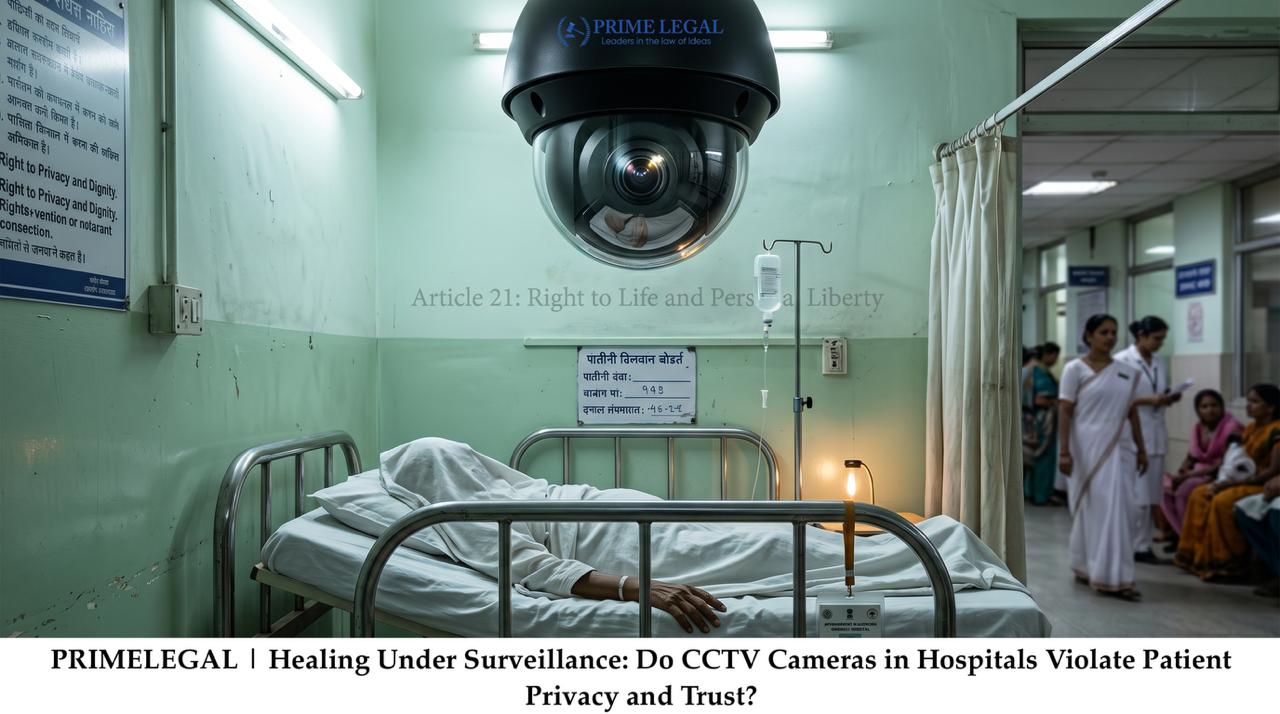
Hospitals exist as healing spaces which treat all three dimensions of human health needed for physical restoration and emotional recovery and psychological treatment. The increasing implementation of CCTV surveillance systems in medical facilities creates significant threats to patient privacy rights and their ability to maintain personal dignity and confidence in medical treatment. The installation of surveillance devices in important hospital areas brings better security and responsibility monitoring but it endangers the fundamental rights which hospitals exist to safeguard. This article analyzes the conflict between hospital security needs and patient privacy rights through security expert recommendations and an important Supreme Court observation from India.
Keywords: CCTV in hospitals, patient privacy, HIPAA, healthcare surveillance, Supreme Court India, workplace violence, medical ethics, protected health information
Introduction
Hospitals have established CCTV cameras as permanent security equipment which they install throughout their buildings in waiting areas and hospital corridors and especially their medical treatment zones. The motivation is understandable because hospitals need to protect themselves from increasing incidents of workplace violence and theft and patient elopement. The solution creates a serious ethical dilemma because it asks whether healing spaces can function as areas that maintain continuous surveillance. The Supreme Court of India established this conflict in October 2021. A bench of Justices D.Y. Chandrachud and B.V. Nagarathna dismissed a petition demanding CCTV cameras across all hospital wards nationwide. The court stated that “Hospitals are not police stations.” The court system should handle privacy matters. The court stated that “surgery is not permitted when a woman is undergoing treatment or any other patient needs to be treated.” The ruling was brief but its message was clear: patient dignity is not negotiable and blanket surveillance is not a substitute for thoughtful policy.
Why Hospitals Want Cameras in the First Place
The first step to understanding the ongoing debate requires us to recognize the actual dangers which hospitals need to protect against. The world contains healthcare facilities which rank among its most hazardous work environments. Emergency rooms and psychiatric wards experience the highest rates of assault and abusive behavior and verbal threats against doctors and nurses. Pharmacies report incidents of missing drugs. Medical equipment experiences theft incidents. Certain patients with specific medical conditions can leave their treatment without any prior notice because they are at risk of endangering themselves. Hospitals use security cameras to solve various operational challenges they encounter throughout their facilities. The system enables security personnel to observe developing situations while they track individual movements for investigation purposes and establish the times when people entered medication rooms and they use the system to create event narratives which are needed for court cases and insurance claims. Cameras operate in parking lots and ambulance bays to safeguard staff members who leave and return to work during nighttime hours. The surveillance system which operates near newborn nurseries protects against abduction attempts which occur only on rare occasions. These issues represent serious matters. Healthcare facilities experience substantial financial losses because workplace violence leads to staff absences and requires expensive trauma treatment and results in increased legal costs. The process of drug diversion creates drug addiction problems. The correct use of cameras results in both cost savings and life protection.
The Privacy Problem: Where Cameras Must Not Go
Hospitals present challenges because they lack standardized layout patterns. People who enter a hospital lobby experience privacy standards that match those found in shopping malls. The two medical spaces of a patient room and an operating theatre share essential characteristics that make them distinct from one another. Patients who occupy these spaces represent the most defenseless members of society because they remain undressed while doctors perform medical procedures and nurses provide care to them. The recording of their video footage without their consent violates their rights because it can be used to identify them and their medical condition and treatment history. Healthcare security experts reach a shared conclusion because they consider patient room monitoring and examination room security and treatment area cameras to be unsuitable for use in healthcare settings. The dangers of the situation exceed acceptable limits while the reasons to proceed with the plan lack sufficient weight. The implementation of surgical cameras together with psychiatric evaluation cameras and sensitive examination cameras creates “protected health information” (PHI), which consists of personal data that leads to discrimination and stigma and humiliation if it gets exposed. Hospitals must secure this data because it represents confidential information which they must protect from becoming public through their security operations. The two most private spaces in any building are patient rooms and bathrooms which include changing rooms and staff break rooms. There is virtually no legitimate justification for cameras in these spaces, regardless of the security concern. The design of behavioral health units needs to account for the fact that patients already experience feelings of being watched and judged and unsafe. A psychiatric ward camera system functions as a threat to the therapeutic space which patients need for their recovery process.
The US Law | The HIPAA Question: Are “HIPAA-Compliant Cameras” Real?
The Health Insurance Portability and Accountability Act, 1996 (HIPAA) establishes regulations for safeguarding patient data which hospitals in the United States must follow. The security industry holds a mistaken belief that specific cameras provide “HIPAA compliance” as an automatic feature. This statement is incorrect. The system requires access controls because only designated personnel are authorized to view recorded content. The system uses encryption to protect footage from unauthorized interception. The system produces audit logs which create records about who accessed which content at specific times. The system requires clear retention policies which state that footage disposal needs documented evidence and permanent storage should not occur. India does not enforce HIPAA regulations yet its patient rights frameworks and digital data protection laws increasingly reflect these requirements. The Supreme Court’s 2021 observation established that the state must conduct surveillance with specific regulations because it must consider both footage handling procedures and their effect on individuals.
The Trust Dimension: What Patients Feel
The assessment process needs to consider both legal and technical aspects and the more challenging aspect of building trust which holds equal value. Patients who believe they are under observation will not share full details with their physicians. Patients will postpone their medical treatment for private health issues. Patients experience emotional distress when they cannot establish needed human bonds. The therapeutic relationship between patient and provider depends on an atmosphere of safety, confidentiality, and dignity. The unobservable surveillance system which patients cannot comprehend or reject creates a hostile environment that breaches their privacy rights. The issue represents a major problem. Trust deficits among patients lead to decreased participation in healthcare systems, which results in poorer health outcomes and creates permanent damage to the organization’s image. The hospital has not resolved its safety issue through camera installation because its system for protecting patients from violence has created more problems that require urgent solution. Staff trust matters too. Healthcare workers who experience continuous surveillance report both increased stress levels and decreased satisfaction with their work. The installation of cameras in staff break rooms and locker areas and rest spaces creates an environment that shows staff members they are not trusted. Proper surveillance policies should protect workers from harm instead of creating a situation where workers feel like they are being watched as criminals.
Conclusion
The Supreme Court of India issued a warning against using continuous hospital surveillance. Healthcare facilities need cameras for legitimate purposes but their function needs to be defined through legal and ethical boundaries. The question is not whether to use cameras — it is where, how, and under what rules. Hospitals that achieve this objective will create safer environments for employees while maintaining legal privacy standards and earning patient trust during their most sensitive times. Organizations that implement cameras without established operational procedures transform their facilities into environments that create anxiety for people who need medical care.
“PRIME LEGAL is a National Award-winning law firm with over two decades of experience across diverse legal sectors. We are dedicated to setting the standard for legal excellence in civil, criminal, and family law.”
WRITTEN BY: PRANAVI KOLLU

