
INTRODUCTION
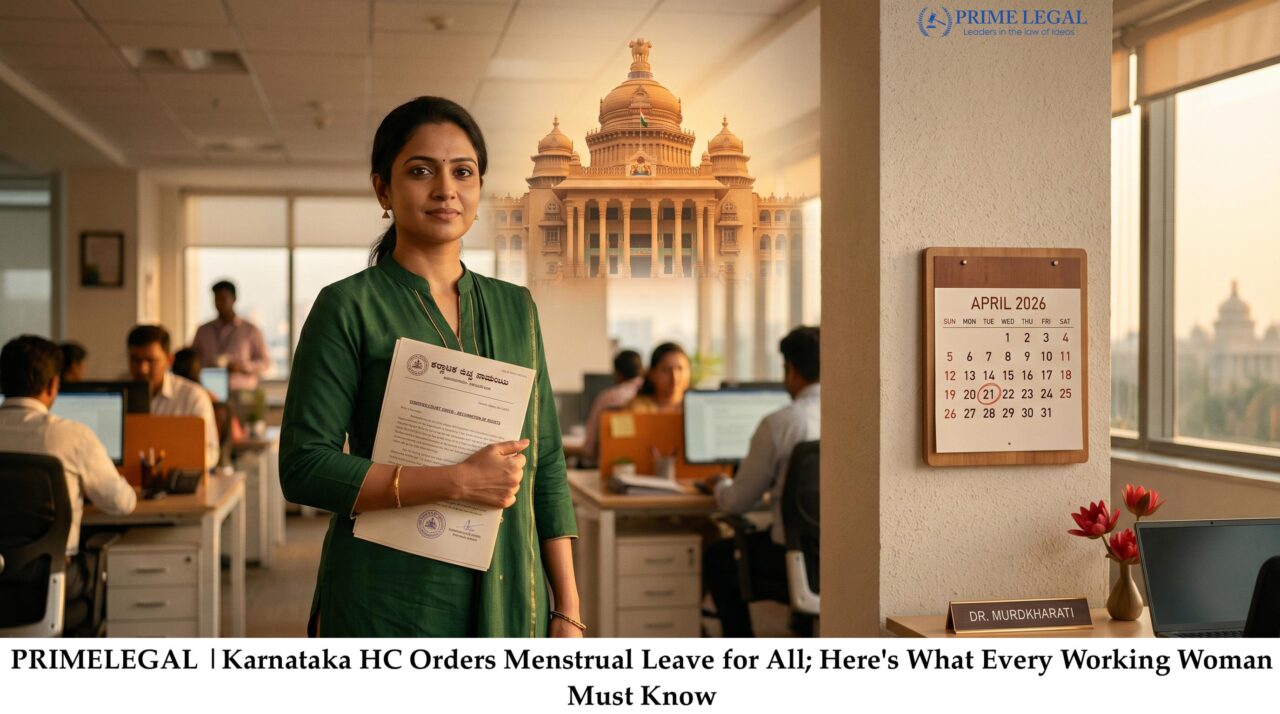
The ruling establishes a critical judicial milestone which acknowledges women’s biological needs at work while providing all women workers in India including those in unorganised work environments with comprehensive legal protections. A hotel worker from Belagavi district initiated the case which Justice M Naga prasanna heard at the Dharwad bench after she was denied her entitled menstrual leave thus demonstrating the difference between actual policy execution and what exists in official documents.
BACKGROUND
The Karnataka Government issued a Menstrual Leave Policy notification on 20th November, 2025 which required registered establishments to provide women employees aged 18 to 52 years with one day of paid leave per month during their menstrual cycle. This policy applied to women working across sectors covered under major labour laws including the Factories Act 1948 the Karnataka Shops and Commercial Establishments Act 1961 and the Plantation Labour Act 1951. The State introduced the Karnataka Menstrual Leave and Hygiene Bill 2025 to establish permanent legal recognition for this policy but the bill has not yet become law. The Bill faced several obstacles before its passage because the associations of employees challenged the workers who lacked knowledge regarding their entitlement. The High Court’s involvement became essential under these conditions.
KEYPOINTS
- Court’s Directive
The Karnataka High Court issued a required order to the State Government which mandated implementation of the existing Menstrual Leave policy through its established guidelines. The Court required the State to implement the Milena Leave policy until the Karnataka Menstrual Leave and Hygiene Bill 2025 becomes law through the creation of necessary guidelines and circulars and administrative instructions. The Court established that all sectors must execute their operations according to standardized procedures which should be maintained throughout all activities.
- The Petitioner’s Case
The petition was filed by Chandravva Hanumant Gokavi, a 41-year-old woman employed at a hotel in Mudalgi, Gokak taluk, Belagavi district. She filed a petition at the Dharwad bench of the Karnataka High Court to obtain a court order which would require the government to implement the menstrual leave policy for workers in the unorganised sector. She specifically complained that she had not been granted menstrual leave as per the policy, and further highlighted that the policy was not widely known to employees in several areas. She required all companies that hire female workers to develop complete understanding programs about this policy for their staff members.
- The Court’s Observations on Equality
Justice M. Nagaprasanna made a constitutionally significant observation regarding Article 14 of the Indian Constitution, which guarantees equality before the law. The Court established that legal systems treat men and women as equal but biological differences between the sexes create distinct identities. The recognition of these biological differences especially regarding health and dignity and bodily autonomy rights does not breach the equality protection principle.
In fact, the Court held that recognising such differences gives substantive meaning to the right to equality, rather than undermining it. This reasoning is important as it defends the policy against charges of gender-based discrimination in favour of women.
- Focus on the Unorganised Sector
The Court specifically established that the Menstrual Leave benefits should be provided to unorganised sector employees who include daily wage workers. The November 2025 notification was primarily aimed at the organised sector covered under specific labour laws. The Court established that unorganised sector workers need more supportive systems which the State must develop through complete educational programs that will teach both organised and unorganised sectors about the policy and its advantages.
- Pending Legal Challenges
The High Court’s directive establishes a strong case for menstrual leave but employer organizations still maintain their legal objections against the policy. The Bangalore Hotels’ Association, the Karnataka Employers’ Association, the Bangalore Employers’ Association, and 15 female working professionals have filed petitions to challenge the November 2025 Menstrual Leave policy notification in front of another judge at the principal bench of the Court in Bengaluru.
CONCLUSION
The Karnataka High Court has mandated employers to enforce the Menstrual Leave policy which establishes a new standard that protects women’s workplace dignity together with their health rights in all professional fields. The case of Chandravva Hanumant Gokavi, a hotel worker from Belagavi who was simply denied her rightful leave, reflects the ground reality faced by thousands of women particularly in the unorganised sector who remain unaware of or unable to claim their legal rights. The Court’s constitutional reasoning which shows that biological differences create essential equality between men and women demonstrates that menstrual leave needs to be recognized as an essential need rather than a special benefit. The State must now execute its ethical and legal obligations through the Karnataka Menstrual Leave and Hygiene Bill 2025 which requires implementation of this progressive policy throughout Karnataka to benefit all working women in the State while establishing a strong national precedent.
“PRIME LEGAL is a National Award-winning law firm with over two decades of experience across diverse legal sectors. We are dedicated to setting the standard for legal excellence in civil, criminal, and family law.”
WRITTEN BY: PRANAVI KOLLU

