
INTRODUCTION
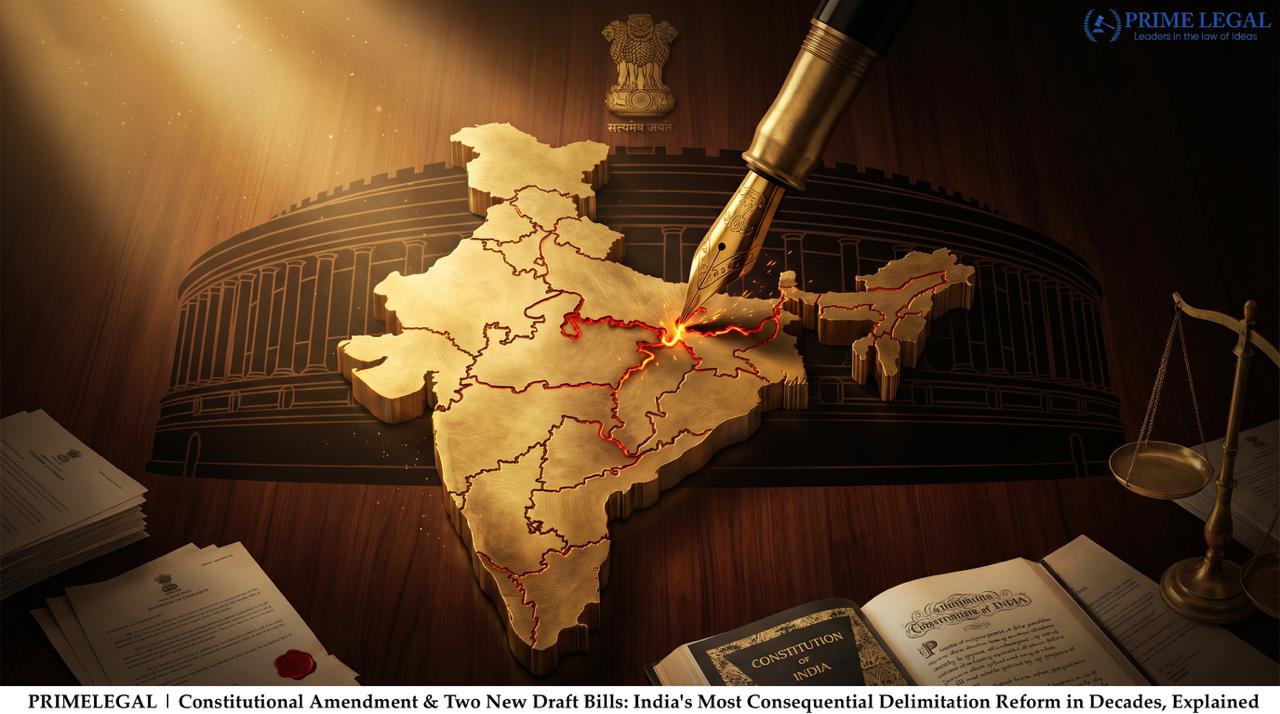
Yesterday the Parliament witnessed the introduction of three new Bills which are positioned as a means to reform the electoral and constitutional landscape that has sparked an intense row of debates nationwide. The Constitution (One Hundred and Thirty-First Amendment) Bill, 2026, the Delimitation Bill, 2026 and the Union Territories Laws (Amendment) Bill, 2026 collectively aim to restructure parliamentary representation by implementing women’s reservation and redrawing constituency boundaries. Though it might sound a democratic move these Bills have sparked debate because of concerns over federal balance and constitutional principles.
BACKGROUND
Delimitation is a constitutionally mandated process of redrawing electoral constituencies under Articles 82 and 170 of the Indian Constitution. This process is done to ensure that there are adequate representations from every state based on their population.
However, post the 42nd Amendment and the subsequent amendments this process was frozen as it penalised the great efforts of states which had managed to successfully control its population. With the freeze coming to an end post 2026 the Union government is not wasting more time to initiate delimitation procedures using the updated 2011 census data and expand the Lok Sabha size.
KEY POINTS
- The Hundred and Thirty First (131st) Constitutional Amendment Bill, 2026 proposes to reserve 33% of seats for women candidates in Lok Sabha and State Assembly elections, from 2029 general elections onwards.
- The Delimitation Bill, 2026 proposes to redraw the constituencies across the country based on the population according to the latest census data which will increase the total number of Lok Sabha Seats.
- The Bill also seeks to expand the Lok Sabha seats without altering the proportional state’s share.
- The Union Territories Laws (Amendment) Bill, 2026 is also drafted in such a way that it compliments the other two Bills by aligning the UT representations with new delimitation structure.
RECENT DEVELOPMENTS
The Bills have been severely criticised by political parties and experts alike as it will disproportionately benefit certain regions more than the other and the federal balance of power will be tilted.
The delimitation will disadvantage southern states more profoundly as they have managed to successfully curb their population growth, thus raising concerns of inequitable representation.
The proponents also argue that delimitation is a necessary step towards strengthening representative democracy.
CONCLUSION
The three Bills are the biggest electoral reforms that will be implemented in the country if passed by both the houses of the Parliament and receives the Presidential assent. Though they aim at modernising the representations and increase gender equality in the political realm of the country they surely do open a Pandora’s box of concerns and questions which the Union government has not been able to deliver a satisfactory answer. India’s federal structure, regional equity and political balance now all hang in a thread which could be tipped to any side depending on the success of the implementation of these Bills.
“PRIME LEGAL is a National Award-winning law firm with over two decades of experience across diverse legal sectors. We are dedicated to setting the standard for legal excellence in civil, criminal, and family law.”
WRITTEN BY: AARSHITHA UNNIKRISHNAN

