
INTRODUCTION
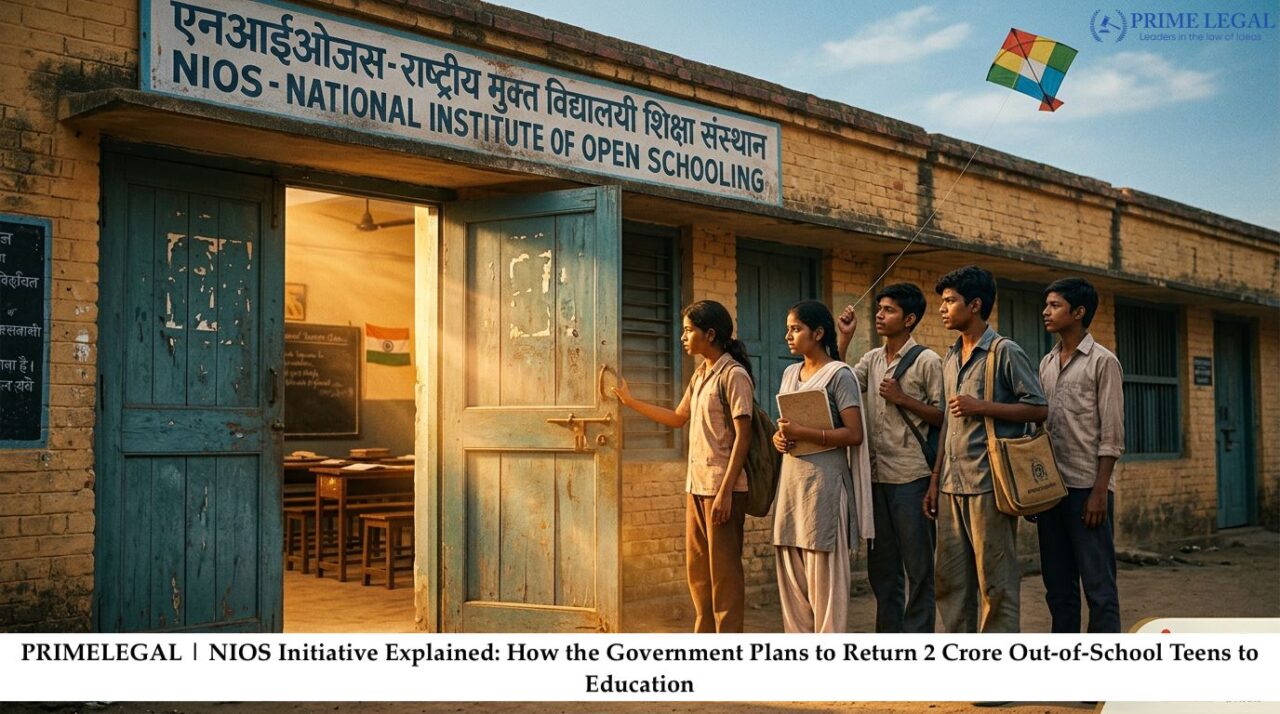
In a project that seeks to respond to the number of students who stop attending school in India, the Union Government and the National Institute of Open Schooling (NIOS) collaborate to enrol 2 crore adolescents. This effort targets children who are 14 – 18 years old and who stopped their studies because they lack money, move to different locations, have duties at home, live far from schools or experienced changes after the pandemic.
As part of the National Education Policy (NEP) 2020, the government intends to provide education to everyone plus decrease the number of students who leave school before 2030. To reach this goal, the government uses models from NIOS that allow for flexibility and open learning rather than requiring students to return to standard school buildings.
BACKGROUND
By looking at data from the Periodic Labour Force Survey (PLFS), officials note that high numbers of students leave school during the secondary and higher secondary stages, especially if they belong to groups with little money. It is estimated that 2 crore people between 14 and 18 years of age are not in the formal education system.
For the purpose of solving this problem, the Ministry of Education talked with NIOS but also state authorities to create a plan so that those students can enroll again – but NIOS is different from standard schools because it offers ways to learn that are adaptable – those methods let students study from a distance and take examinations at their own pace.
This model may help students who are unable to return to regular classrooms because of socio-economic constraints, work obligations, or other barriers.
KEY POINTS
- The government plans to identify and reintegrate nearly 2 crore out-of-school adolescents through NIOS and state open-schooling systems.
- Pilot programmes are expected to begin across several states, including Karnataka, Bihar, Maharashtra, Uttar Pradesh, Gujarat, Madhya Pradesh, Odisha, Chhattisgarh, and Delhi.
- Students will be offered flexible learning systems, including online education, self-learning modules, and support through NIOS study centres.
- Vocational and skill-development programmes will be integrated with academic education to improve employability and encourage continued participation.
- Authorities are expected to conduct district-level surveys and mapping exercises to identify children who have dropped out of school.
- The programme will especially focus on vulnerable groups such as girls, migrant children, and students from economically weaker backgrounds.
RECENT DEVELOPMENTS
In recent reports, writers describe how the Ministry of Education organizes a strategy to implement the program in stages with NIOS and state governments. There are discussions about how officials can use app-based monitoring systems and local facilitators so that they can track how students participate plus ensure that students do not stop their education again.
As education experts evaluate the plan, they state that flexible learning models are necessary because many adolescents cannot finish their education in school buildings. For many people the inclusion of vocational education is useful because it helps with academic needs and financial needs at the same time.
But there are concerns about how the government will carry out the plan. By analysing the situation, experts show that limited internet access, a lack of knowledge about open schooling and negative social opinions about non-traditional education might limit the results of the program. It is important that the government keeps students involved for a long time but also keeps the level of education high.
CONCLUSION
To explain the NIOS initiative, it is a large attempt by the government to help out-of-school adolescents return to formal education. By using flexible learning systems with vocational training and specific outreach programs, the initiative works so that financial or social difficulties do not prevent young people from having educational opportunities.
Its long-term success will depend on effective implementation, coordination between states and educational bodies, and sustained support for vulnerable students. If executed successfully, the programme could significantly reduce dropout rates and help millions of adolescents rebuild both their educational and professional futures.
“PRIME LEGAL is a National Award-winning law firm with over two decades of experience across diverse legal sectors. We are dedicated to setting the standard for legal excellence in civil, criminal, and family law.”
WRITTEN BY: SAMANA

