
INTRODUCTION
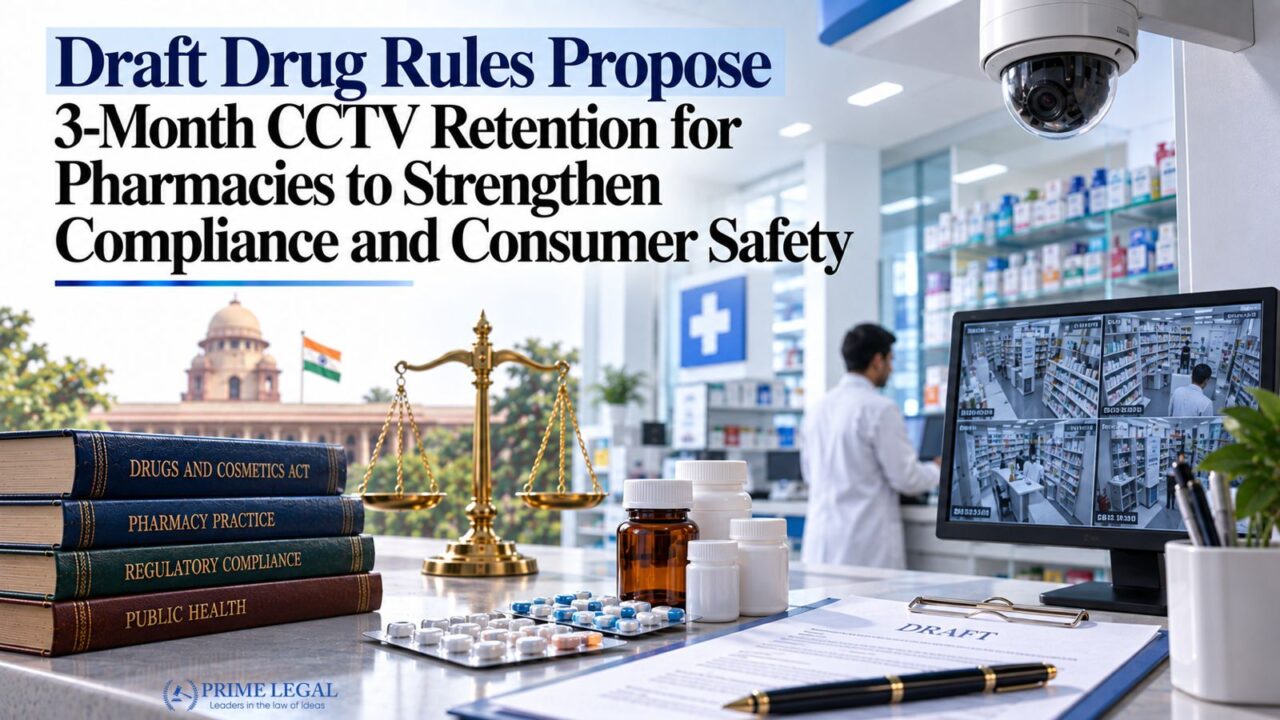
The Union Health Ministry has proposed a major strengthening of the supervision of pharmacies through a draft amendment to the Drugs Rules, 1945. The proposal, notified vide G.S.R. 791(E) dated 8 September 2026, would add a new sub-rule 2A to Rule 65, which provides for CCTV surveillance of sale of prescription drugs and storing the video for a minimum period of three months. This is a positive step, moving away from a paper audit to camera-enabled accountability at India’s retail medical stores, and will introduce new implementation challenges of cost, data privacy, and enforcement capacity across a diverse pharmacy environment.
BACKGROUND
In India, retail pharmacies are regulated by a multi-tiered regulatory structure with Schedule H, H1, and X drugs subject to rigorous prescriptive and record-keeping requirements. Schedule H lists hundreds of prescription-only drugs with red-bordered warnings about them and pharmacists have to keep notes of patients and prescribers on registers which are kept for years, and Schedule X applies to narcotics and psychotropic medicines for which the rules are even tougher. Within this structure, compliance at the retail level is uneven, leading to the over-the-counter availability of medicines that are intended for closer control. It is not entirely a newly discussed initiative as the Drugs Consultative Committee discussed it earlier in 2026 after the National Commission for Protection of Child Rights recommended a joint action plan on mobile-based tracking and camera surveillance at medical shops. The current draft extends those discussions and makes camera surveillance a statutory compliance requirement instead of a recommended best practice.
KEY POINTS
- The draft proposes to insert sub-rule (2A) to Rule 65 of the Drugs Rules, 1945, which requires that the prescription drugs sale at any licensed premises should be monitored through CCTV.
- Recorded footage must be preserved for a minimum of three months from the date of recording.
- The requirement will not apply to wholesale drug dealers, targeting only retail medical stores.
- The ministry states the amendment addresses unauthorized access to and sale of Schedule H, H1, and X drugs.
- The rule’s language is broader than the schedules named, referring to any drug sold on a registered practitioner’s prescription, leaving final scope open to the notified version.
- The proposal is based on consultation with the Drugs Technical Advisory Board as per Sections 12(1) and 33(1) of the Drugs and Cosmetics Act, 1940.
- It is designed to provide a credible chain of sales data and complement existing prescription protection measures in the supply chain.
- Regulators plan auditing transactions through stored video during compliance checks.
RECENT DEVELOPMENTS
The draft notification followed deliberations by the Drugs Consultative Committee and subsequent consideration by the Drugs Technical Advisory Board, which recommended its approval before the ministry issued the formal draft. Under standard rulemaking procedure, the draft rules will be considered for finalisation on or after thirty days from the date the Gazette copies are made publicly available, allowing stakeholders and the public to submit objections and suggestions. The ministry has publicly framed the move as one aimed at stopping unauthorised sale of prescription medicines and making pharmacies more accountable. Separately, some states have already begun enforcing shorter camera-retention norms; Chandigarh authorities, for instance, have directed chemist shops to maintain at least thirty days of CCTV backup as a deterrent against illegal drug sales, indicating that the central proposal aligns with, and would substantially extend, existing local enforcement trends.
CONCLUSION
If finalised, the three-month CCTV retention mandate would mark one of the most concrete accountability measures yet imposed on India’s retail pharmaceutical trade, directly targeting counterfeit sales, drug diversion, and unauthorised dispensing of habit-forming medicines. Yet its success will depend on how regulators balance surveillance benefits against the compliance burden on small and rural chemists, alongside unresolved questions of data storage, access control, and patient privacy. The thirty-day comment window now offers pharmacy associations and civil society a critical opportunity to shape the rule’s final contours before it acquires the force of law.
“PRIME LEGAL is a National Award-winning law firm with over two decades of experience across diverse legal sectors. We are dedicated to setting the standard for legal excellence in civil, criminal, and family law.”
WRITTEN BY: HARSHMEET KAUR SUDAN

