
INTRODUCTION
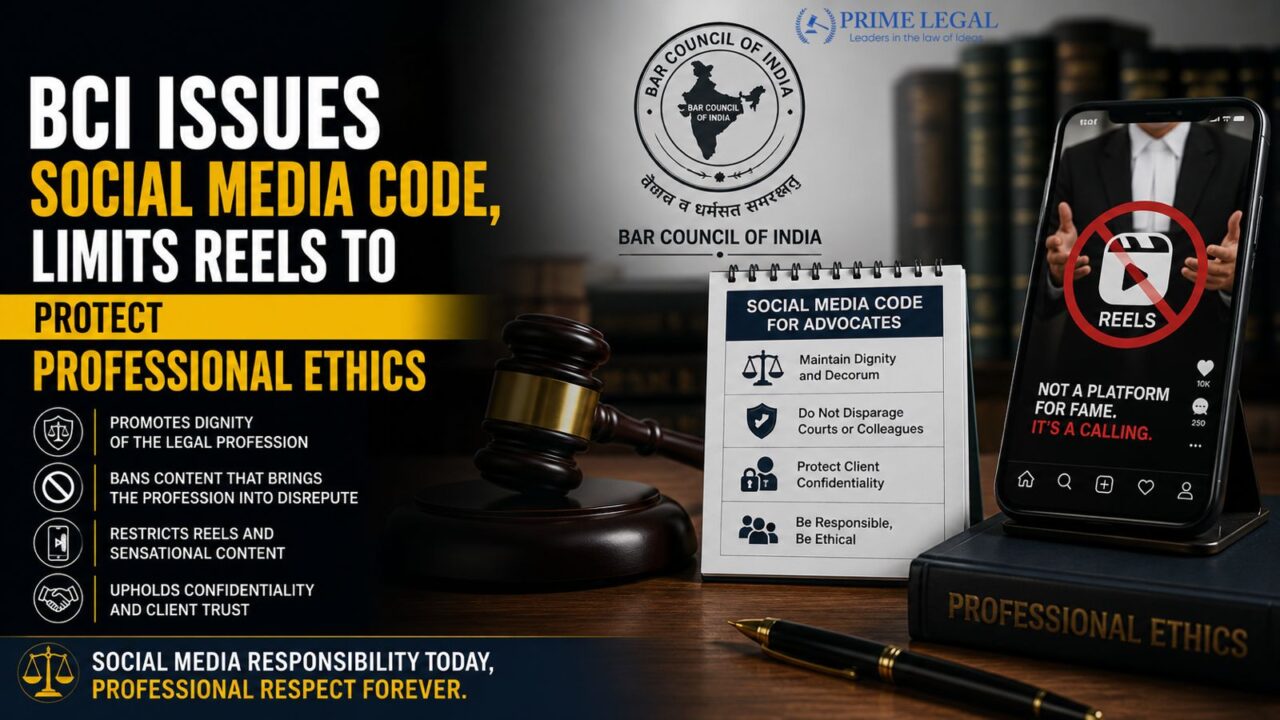
On 17th July, 2026, the Bar Council of India released a detailed guideline on social media and digital conduct of advocates, law students and legal interns. The new directives are designed to maintain the dignity of the courts, guarantee professional confidentiality and to prevent digital platforms from commercializing and sensationalising the legal profession. The BCI even specifically targeted the popular trends of social media used by law students, banning the release and sharing of such “day in a chamber,” “lawyer life,” and “law intern” reels.
BACKGROUND
The regulatory circular came about as result of the BCI’s noticing a disturbing, growing pattern of sensationalising professional legal space, judicial processes and internships for digital popularity. The BCI commented that advocates were increasingly using social media to provide inaccurate legal advice, post promotional materials, and share confidential chamber work, even by law students.
The BCI had welcomed the move to avoid making reels around the court premises, which the Kerala High Court Advocates Association had earlier warned lawyers against. Further, the Supreme Court had not long ago had reservations about monetized legal content, influencer collaboration and self-promotion via digital platforms by advocates in the case of Anil Pandey v. Bar Council of India (W.P. (C) No. 817 of 2026).
KEY POINTS
- It has been strictly forbidden by the BCI to record, photograph or publish content of any court proceedings, virtual hearing, client conferences or chamber discussions by law students and interns.
- All popular social media formats, including “Day in Court,” “Internship Reveal,” “Courtroom Drama” and “Lawyer Life” are totally prohibited, the BCI says, claiming that they “dehumanize judicial work and make law school into entertainment.
- Advocates’ access to court premises, corridors or chambers will not be denied where they are making promotional content, reels or videos in a manner that is not in keeping with good professional practice and dignity.
- It is not permissible to wear bands, gowns or legal robes in public, for branding, or for social media use.
- During their law school admission and prior to beginning an internship, law students are now required to sign a standalone sworn undertaking that they will abide by the rules on digital ethics.
- The use, creation or dissemination of AI-generated content that would impersonate judges, advocates, or court proceedings is strictly prohibited.
- Educational and legal awareness material will be allowed if it is accurate, non-promotional, non-sensational and does not guarantee legal results.
- Internships may be cancelled and reporting to Bar Councils or Colleges may be reported, as can be professional disciplinary proceedings if violations occur.
ANALYSIS
The BCI’s ethical code in digital form is a major development in evolving ethical rules and practices from the analogy world into the digital. The Council acknowledges that these principles of legal ethics – including client confidentiality and the demeanour of the courtroom – should be laid down at the beginning of legal education, and, by rendering law students and interns subject to these rules, the Council does so.
The explicit prohibitions on “internship reveals” and “lawyer life” reels add more clarity to the difference between learning and gaining social media points, which ensures that people aren’t heading to legal chambers for the sole purpose of gaining social media points. Moreover, the use of stand-alone compliance affidavits is a measure that guarantees digital ethics are not a matter of formality but a duty. The rules are strong on banning sensationalism and self-promotion, but sensibly make an exception for legal education in a responsible manner so that the public can be educated about the law with accuracy.
CONCLUSION
The Bar Council of India has reiterated that the legal profession is bound by the ethics of dignity, restraint and confidentiality and these are well entrenched in the digital world. The BCI’s goal is to safeguard the dignity of the judicial process by limiting commercial use of court reels, commercial promotion and trivialisation of internships. They’re preventive and educative measures that will make future members of the Bar more mindful of their professional practices, research, and humility as opposed to social media dramatization.
“PRIME LEGAL is a National Award-winning law firm with over two decades of experience across diverse legal sectors. We are dedicated to setting the standard for legal excellence in civil, criminal, and family law.”
WRITTEN BY: SHEEN.

