
CASE NAME: Shri Amar Gupta v. M/s Shakti Developers & Anr.
CASE NUMBER: RERA/ASSAM/COM/2025/40
COURT: Real Estate Regulatory Authority, Assam
DATE: 21 August, 2026
QUORUM: Mr. P.K. Borthakur, Chairperson, RERA, Assam
FACTS
Amar Gupta owns a commercial unit about 3,757 sq. ft. on the first floor of “Shakti Square” bought from the developer, Shakti Developers, back in 2017 for Rs. 50 lakh. He’s rented it out to SBI, which has run a branch out of the space since 2021.
His complaint, though, isn’t really with the bank or the sale. It’s with the building’s own Housing Society, made up of the other unit-holders. He says the Society blocked lift access for his tenant’s customers, cut the water connection, and hit him with maintenance and security charges running as high as Rs. 11,500 a month nearly six times what everyone else on the floor pays. Some of this, he says, traces back to an earlier Gauhati High Court order on unpaid rent and restoration of amenities, which left him depositing Rs. 66,000 “under protest” just to get things moving again. He took the matter to RERA under Section 31, asking for the amenities to be restored, the charges justified or refunded, and some transparency on whether construction on the 5th floor and elsewhere was even legal.
ISSUES
- Can a housing society actually be dragged into a Section 31 complaint, given who the Act says a complaint can be filed against?
- Does the Act’s Explanation which brings an “association of allottees” into the definition of “person” cut both ways, letting such an association also be sued, or does it only help such a group file a complaint?
- Setting the Society issue aside, had the developer actually finished what the law requires of it specifically, getting hold of the occupancy certificate?
LEGAL PROVISIONS
Section 31, Section 11(4)(b), Section 11(4)(f), and Section 17 of the Real Estate (Regulation and Development) Act, 2016 Section 2(zk), Section 2(d), and Section 2(zm) of the Act (definitions of promoter, allottee, and real estate agent)
ARGUMENTS
COMPLAINANT: Counsel argued the Society’s conduct cutting off water, blocking the lift, and charging wildly more than other owners was exactly the kind of violation RERA exists to fix. He also pushed the point that a developer doesn’t just walk away from its obligations the day it hands over the keys.
RESPONDENT NO. 1 (SHAKTI DEVELOPERS): The developer’s position was fairly blunt; this fight belongs to the complainant and the Society, not them. Possession of every unit had already changed hands, and day-to-day management of the building was now the Society’s job, not theirs.
RESPONDENT NO. 2 (THE SOCIETY): Appearing through its President, the Society defended the charges as appropriate for a commercial unit and said the access restrictions were about security, given a bank was operating inside what was otherwise a residential building.
ANALYSIS
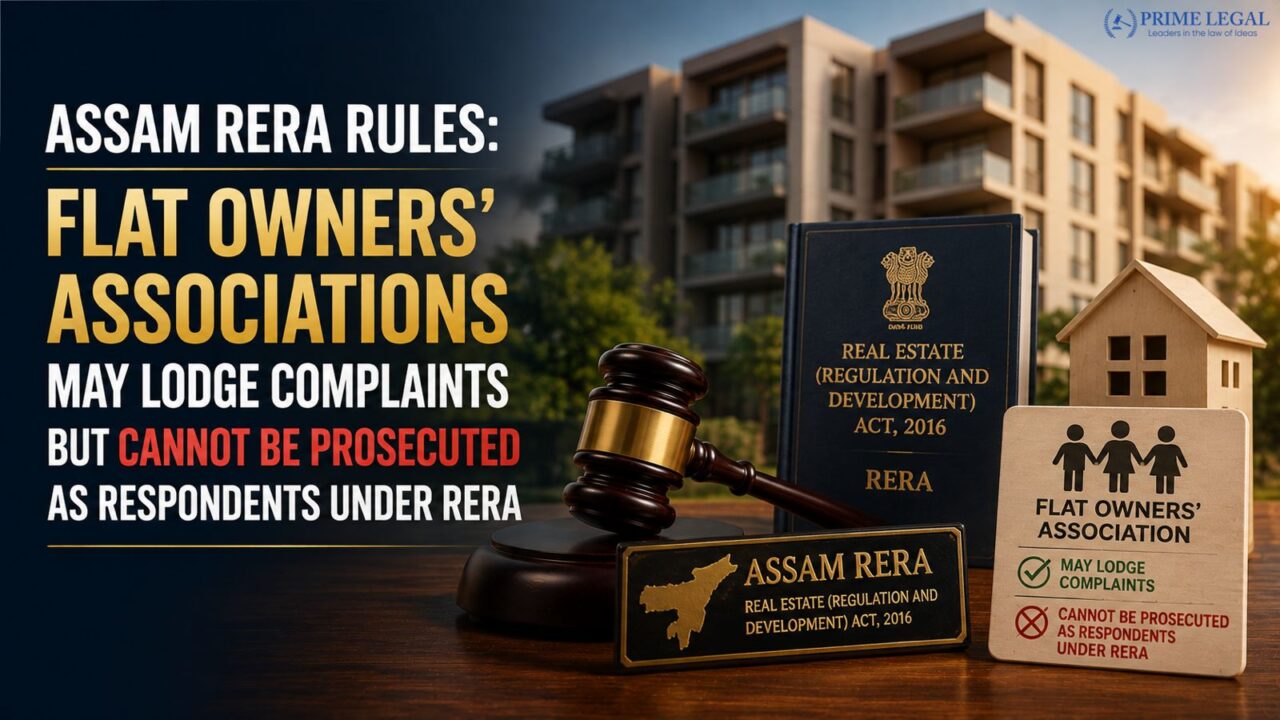
The Authority went straight to the wording of Section 31 a complaint can only be filed against a promoter, an allottee, or a real estate agent. Nothing more. Yes, the Act’s Explanation does mention an “association of allottees,” but only in the context of who can bring a complaint, not who can be made to answer one. The Authority read that as a deliberate choice if Parliament had wanted a society to be answerable too, it would have said so, the same way it said so for the complainant’s side. So everything Gupta raised against the Society, the lift, the water, the lopsided charges was, in the Authority’s view, really an internal management dispute. That’s the kind of thing that belongs before a civil court, the society registrar, or a consumer forum not RERA.
The developer’s position held up better, but only partly. The Authority accepted that possession and maintenance genuinely sat with the Society now, and there wasn’t anything on record to suggest Shakti Developers still had a hand in running the place. But one loose end never got tied up: back in August 2025, Gupta’s counsel had flagged that the project’s occupancy certificate simply hadn’t been obtained or shared. The developer never pushed back on that. Not once not in its written statement, not during mediation, not after. And that mattered, because getting the occupancy certificate and handing it over isn’t the kind of duty that quietly transfers to a society once possession is given. It stays with the promoter, full stop. Unlike the maintenance squabbles, this was a clear, live violation of the Act and one the Authority had every jurisdiction to act on.
JUDGMENT
The complaint against the Housing Society was thrown out for want of jurisdiction RERA simply isn’t the right forum for it. The complaint against the developer was largely disposed of too, except for one thing: Shakti Developers was ordered to get the occupancy certificate and hand over an authenticated copy to the Authority, to Gupta, and to the Society within 90 days. If it doesn’t, Gupta can come back for further directions. He also remains free to chase the Society through whatever forum actually has the power to deal with it. No costs awarded either way.
CONCLUSION
The order draws a fairly sharp line: RERA is there to police what promoters, allottees, and agents owe each other under the Act, not to settle the everyday friction of running a housing society, however unfair that friction might feel to the person on the receiving end. At the same time, it’s a pointed reminder that some obligations like actually producing an occupancy certificate don’t expire just because a developer has moved on and handed the building over.
“PRIME LEGAL is a National Award-winning law firm with over two decades of experience across diverse legal sectors. We are dedicated to setting the standard for legal excellence in civil, criminal, and family law.”
WRITTEN BY: MAHFUZA FATHIMA
Read the Judgement copy below:
Shri Amar Gupta v Ms Shakti Developers & Anr_260901_203735

