
ABSTRACT
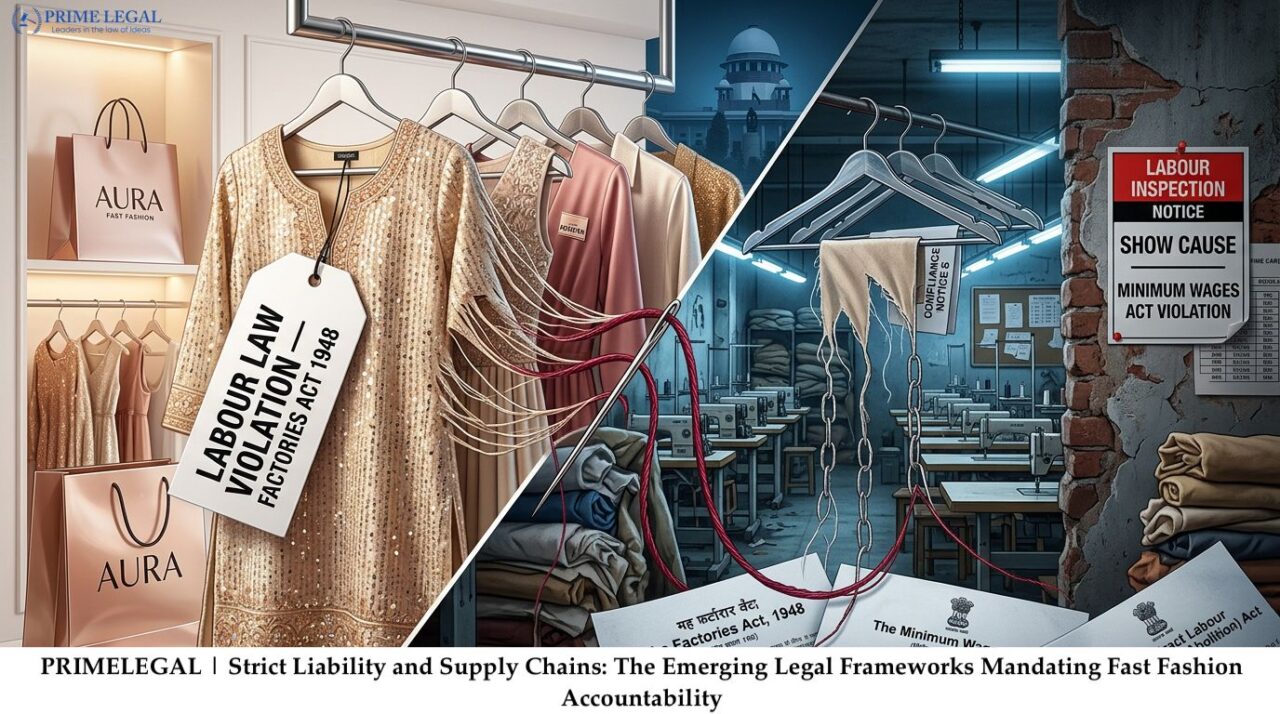
In the global economy, the fast fashion industry produces clothing using inexpensive labour, manufacturing in different countries and changing styles frequently. It is common for large fashion companies to earn high amounts of money with this system, but the people who make the clothes work in buildings that are not safe, receive pay that is lower than the value of their work and have few laws that keep them safe. Due to the way global supply chains are organized, companies receive financial gains from the work. And those companies are not held responsible for the ways that suppliers or subcontractors break rules regarding workers – this article is an analysis of why current laws are not sufficient to manage supply chains or to make corporations take responsibility for their actions. By looking at examples from the world and from India, this text shows that current laws are not effective. To protect workers is difficult because the systems of production are divided into many small parts.
KEYWORDS: Fast Fashion, Labour Law, Corporate Accountability, Garment Workers, Supply Chains.
INTRODUCTION
Fast fashion refers to the rapid and inexpensive production of clothing designed to imitate current trends. Brands such as Zara, H&M and SHEIN rely heavily on global supply chains that outsource manufacturing to developing countries where labour costs remain comparatively low.
This model has significantly increased the speed and profitability of the fashion industry. However, it has also intensified labour exploitation. Garment workers often face long working hours, unsafe workplaces, poor wages and weak bargaining power. Since multinational corporations rarely directly own manufacturing factories, they frequently avoid direct legal liability for labour violations occurring within their supply chains.
GLOBAL LABOUR VIOLATIONS IN FAST FASHION
One of the most significant examples of labour exploitation in the garment industry was the Rana Plaza Collapse. In April 2013, the eight-storey Rana Plaza building in Bangladesh collapsed, killing more than 1,100 workers and injuring thousands. Factories operating inside the building manufactured clothing for international brands including Primark and Benetton Group. Investigations later revealed that workers had been ordered to continue working despite visible structural cracks in the building.
The disaster exposed major weaknesses in international labour regulation. Although local factory owners faced criminal proceedings, multinational corporations largely avoided direct legal liability because production had been outsourced through multiple contractual arrangements.
Another major controversy involved Boohoo Group in 2020. Investigations into factories in Leicester, United Kingdom alleged that workers supplying Boohoo were paid below minimum wage and forced to work in unsafe conditions during the COVID-19 pandemic. The controversy highlighted how fast fashion corporations economically benefit from exploitative labour systems while maintaining legal distance from supplier factories.
These examples demonstrate how global supply chains often separate economic control from legal responsibility.
THE INDIAN POSITION
India remains one of the world’s largest garment manufacturing centres, employing millions of workers within textile and apparel industries. However, labour exploitation continues to persist, particularly among women and migrant workers employed through informal arrangements.
One major example is the “Sumangali Scheme” reported within textile mills in Tamil Nadu. Under this system, young women from economically vulnerable backgrounds were recruited into spinning mills through long-term contracts promising lump-sum payments at the end of employment. Human rights organisations criticised the system for exploitative conditions, restrictions on movement and practices resembling bonded labour.
Another important incident emerged in Bengaluru in 2020, when thousands of garment workers protested after confusion surrounding wages and provident fund deductions created fears of salary reductions. Several factories linked to export-oriented garment production witnessed unrest and violence. The incident highlighted the economic vulnerability of garment workers and the weak enforcement of labour protections within outsourced manufacturing systems.
Although Indian labour legislation such as the Factories Act and the Minimum Wages Act formally provide protections relating to workplace safety and wages, enforcement remains inconsistent due to informal employment structures and fragmented supply chains.
CORPORATE ACCOUNTABILITY AND THE LIMITS OF LABOUR LAW
The primary weakness of labour law in fast fashion lies in outsourcing itself. Multinational corporations exercise significant economic control over pricing, deadlines and production targets while legally distancing themselves from factory operations. Traditional labour law frameworks were designed around direct employer-employee relationships and struggle to regulate transnational supply chains involving multiple contractors and subcontractors.
As a result, workers often cannot hold global fashion brands directly liable for labour violations occurring within supplier factories. Ethical sourcing policies and corporate social responsibility commitments frequently remain voluntary and weakly enforceable.
In response, several jurisdictions are now considering mandatory human rights due diligence laws requiring corporations to monitor labour conditions throughout their supply chains. Such measures attempt to impose enforceable corporate responsibility beyond formal ownership structures.
CONCLUSION
The fast fashion industry reveals the widening gap between global commerce and labour protection. While multinational corporations profit from highly flexible international supply chains, workers continue to face exploitation, unsafe conditions and weak legal remedies. Examples from Bangladesh, the United Kingdom and India demonstrate that existing labour laws remain inadequate in addressing modern production systems.
As fast fashion continues to expand globally, labour law must evolve beyond traditional employer-employee frameworks and impose stronger accountability upon multinational corporations benefiting from outsourced labour. Without effective regulation, the economic success of fast fashion will continue to depend upon vulnerable and invisible workers.
“PRIME LEGAL is a National Award-winning law firm with over two decades of experience across diverse legal sectors. We are dedicated to setting the standard for legal excellence in civil, criminal, and family law.”
WRITTEN BY: SAMANA.

