
INTRODUCTION
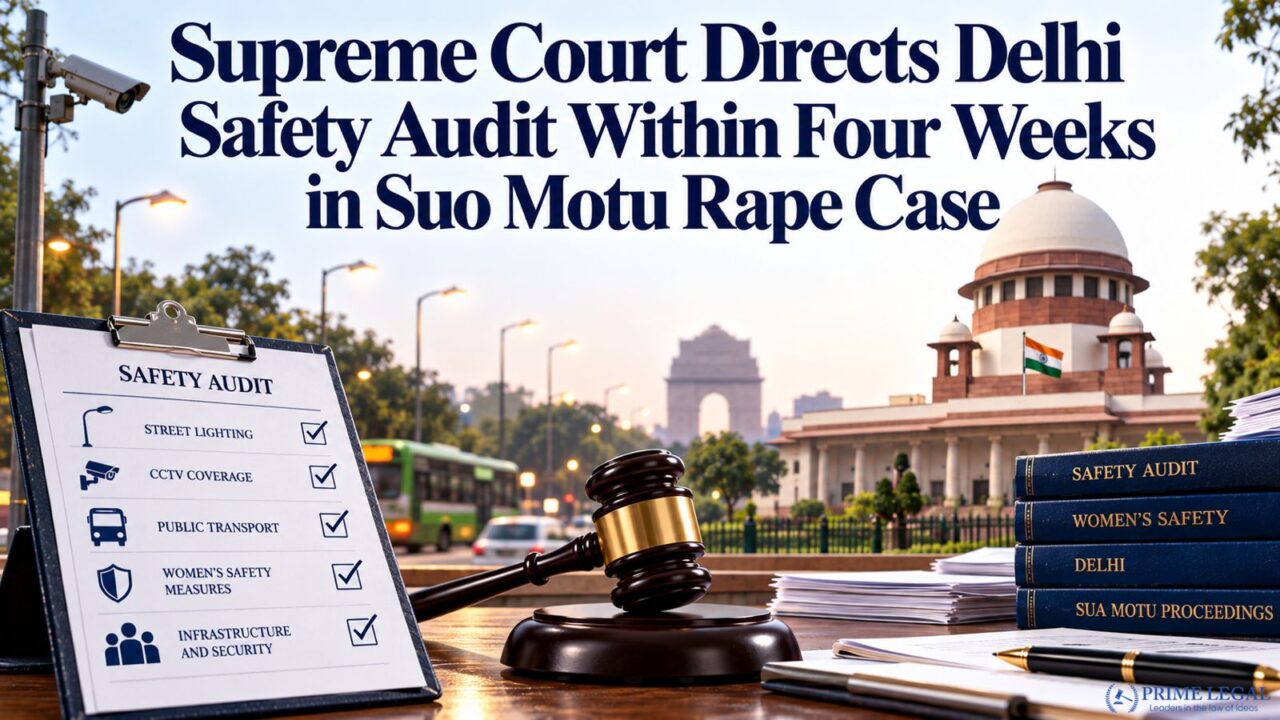
The Supreme Court has suo motu noticed the spate of reports regarding rape and sexual assault cases occurring in Delhi-NCR and has passed directions for the improvement in the security of women and children in public spaces by the Delhi Police and municipal corporations. The Bench comprised Justice J.B. Pardiwala and Justice K. Vinod Chandran and stressed the fact that public places cannot become high-risk areas because of inadequate lighting, surveillance or police patrolling.
BACKGROUND
These proceedings were initiated due to complaints of various grave sexual offences committed against women such as the alleged gang rape of a young girl at Aastha Kunj Park, alleged gang rape followed by murder of a teenaged girl in Swaroop Nagar and the alleged sexual assault of a minor within a running sleeper coach from Greater Noida to Delhi. According to the Supreme Court, these events have brought into question the efficiency of the law enforcement and safety measures in place. It was made clear by the Court that the suo motu proceedings are not about establishing the guilt of accused individuals but about wider institutional and administrative failures.
KEY POINTS
- Safety Audit: Survey of vulnerable areas and making district wise vulnerability maps has been ordered by the Delhi Police for parks, isolated spots, transportation points, market places and areas near education institutes.
- Lighting, CCTV and Patrolling: There has been a directive for carrying out audits for lighting and CCTV facilities along with patrolling in vulnerable spots.
- Current safety measures: In seeking information from the Government, the Court wanted specific information on how the various safety measures like the National Database on Sexual Offenders, Investigation Tracking System for Sexual Offences, Mission Shakti, Emergency Response Support System 112, Women Helpline 181, Safe City Project, Women Help Desks and One Stop Centres function.
- Trials and accountability: The Court noted that just being worried was not enough and asked for specific information on the functioning of the various safety measures. The Court also asked for information regarding Fast Track Special Courts and that trials be expedited.
RECENT DEVELOPMENTS
The Court has ordered the respective authorities to conduct the preliminary safety audits and submit the report within four weeks. In addition to that, the Court has also appointed Senior Advocate Liz Mathew as amicus curiae. The next hearing will take place on 5 October 2026. The Court also advised the press about responsible journalism and ensuring the confidentiality of the victims in accordance with Section 72 of Bharatiya Nyaya Sanhita, 2023 and Section 23 of the POCSO Act.
CONCLUSION
The role played by the Supreme Court stresses the importance of prevention, as well as accountability and implementation of current safety systems. This process aims at finding out whether the systems put in place to safeguard women and children are working or whether the concerned government agencies are making any efforts towards preventing sexual offences in public places.
“PRIME LEGAL is a National Award-winning law firm with over two decades of experience across diverse legal sectors. We are dedicated to setting the standard for legal excellence in civil, criminal, and family law.”
WRITTEN BY: KHWAISH SACHDEVA

