
CASE NAME: Himanshu Chordia v. State of Rajasthan & Anr.
CASE NUMBER: Criminal Appeal No(s). ___ of 2026 (Arising out of SLP (Crl.) No(s). 3171 of 2025)
COURT: Supreme Court of India, Criminal Appellate Jurisdiction
DATE: 31 July, 2026
QUORUM: Hon’ble Mr. Justice Sanjay Karol and Hon’ble Mr. Justice Vipul M. Pancholi
FACTS
The appellant, Himanshu Chordia, married Respondent No. 2, Arushi Jain. Following marital discord, Respondent No. 2 left the matrimonial home with their child and filed an application for maintenance under Section 125 CrPC along with an application for interim maintenance. The appellant filed an application under Section 125(4) CrPC contending that Respondent No. 2 was guilty of adultery and hence not entitled to any maintenance, as per the photographs and videos that purportedly proved her affair with another individual. He further moved for production of the financial and personal details of the respondent woman under Section 91 of CrPC. Both the petitions of the Appellant were rejected by the Trial Court because the evidence and the case of adultery could only be established at the time of the final decision on the matter. The Court also granted interim maintenance to Respondent No. 2 and the minor of Rs. 25,000 each. The Rajasthan High Court also rejected the appeal of the Appellant against these two orders of the trial court because the question of adultery was disputed. The appellant then approached the Supreme Court.
ISSUES
- Whether an allegation of adultery raised under Section 125(4) CrPC must be adjudicated as a distinct, earlier stage of the proceedings, or whether it can be deferred entirely to final adjudication of the maintenance application.
- Whether interim maintenance must continue to be paid while a Section 125(4) application remains pending.
LEGAL PROVISIONS
- Section 125 CrPC, the second proviso to sub-section (1) referring to interim maintenance, sub-section (4) referring to bar on maintenance where the wife lives in adultery, unjustifiably refuses to live with the husband, or the parties live separately by mutual consent, and sub-section (5) referring to cancellation of an existing order on proof of such grounds.
- Section 91 CrPC.
- Section 65(B), Indian Evidence Act, 1872 (admissibility of electronic records)
- Case Laws: Rajnesh v. Neha, (2021) 2 SCC 324;
Dwarika Prasad Satpathy v. Bidyut Prava Dixit, (1999) 7 SCC 675;
Mohd. Abdul Samad v. State of Telangana, (2025) 2 SCC 49;
Vanamala v. H.M. Ranganatha Bhatta, (1995) 5 SCC 299;
Navinchandra N. Majithia v. State of Meghalaya, (2000) 8 SCC 323;
R.M. Malkani v. State of Maharashtra, (1973) 1 SCC 471;
Arjun Panditrao Khotkar v. Kailash Kushanrao Gorantyal, (2020) 7 SCC 1
ARGUMENTS
APPELLANT:
The appellant argued that his allegation of adultery under Section 125(4) CrPC had to be decided as a preliminary issue before any interim maintenance could be granted or continued, relying on a substantial body of photographic and video evidence said to establish Respondent No. 2’s extramarital relationship. He argued that not only the Trial Court but also the High Court was wrong in not deciding this matter at the threshold and letting interim maintenance continue until the petition was finally decided.
RESPONDENT:
The position upheld by the courts below was that the adultery allegation raised a disputed question of fact that could only be resolved after evidence was led and tested at the final hearing of the Section 125 application, and that interim maintenance could not be withheld merely because such an allegation had been raised.
ANALYSIS
The Court traced the beneficent and civil character of Section 125 CrPC proceedings, and the 2001 amendment introducing interim maintenance specifically to prevent delay in relief to a dependent spouse. It held that a Section 125(4) application constitutes a distinct second stage of the proceedings separate from both the grant of interim maintenance and the final adjudication under Section 125(1), and that treating it as decidable only at final hearing would render the sub-section otiose. The Court laid down that interim maintenance must continue to operate through this second stage, and can only be halted if the evidence filed with the Section 125(4) application establishes the disqualifying ground (adultery, unjustified refusal to cohabit, or mutual separation) ex facie or by admission; where the ground requires fuller proof, interim maintenance continues until that application is finally decided. It was on this basis that the rejection by the Trial Court of the appellant’s application under Section 125(4) was declared erroneous and the case was remanded to decide on that application.
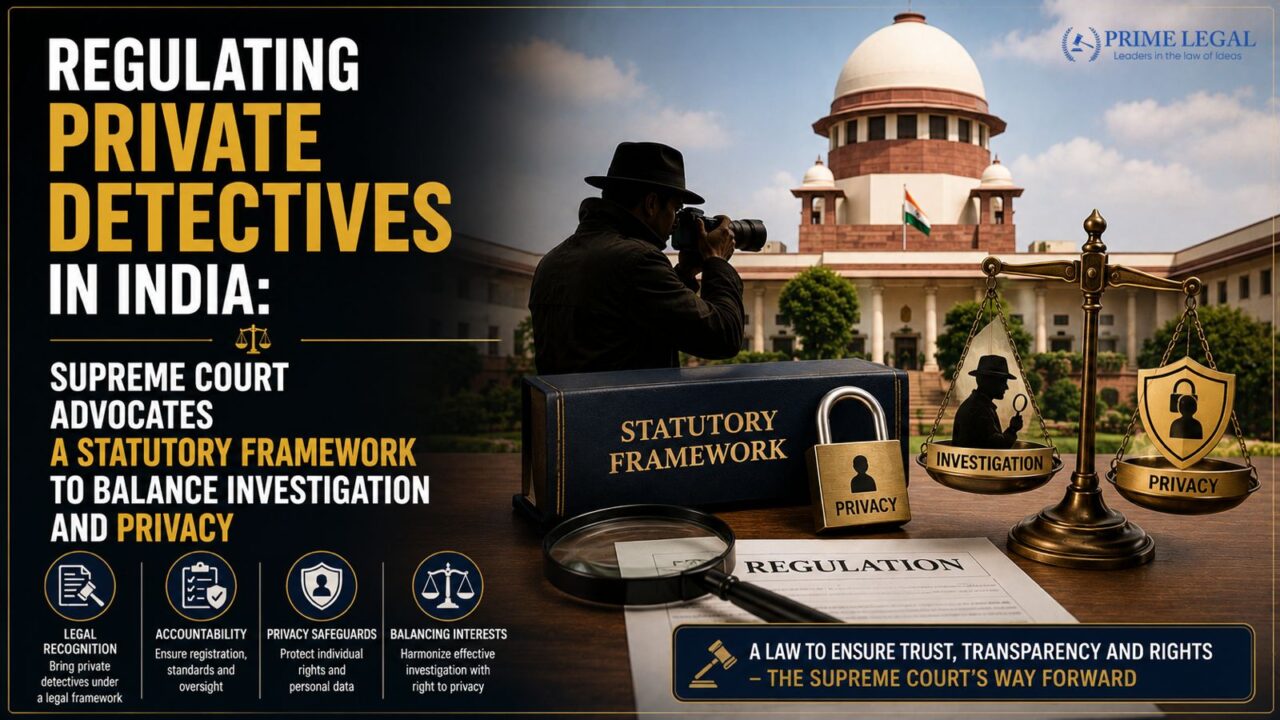
The Court pointed out some issues relating to the legality of private agency evidence collection, custodianship and chain of verification particularly Section 65B of the Evidence Act, privacy invasion of the persons being observed, and liability under laws like Section 354C IPC (Voyeurism). Mentioning the Private Detective Agencies (Regulation) Bill, 2007 (lapsed), and some regulatory frameworks in other countries.
JUDGMENT
The Supreme Court allowed the appeal and set aside the Rajasthan High Court’s order. The matter was remanded to the Trial Court with a direction to decide the appellant’s application under Section 125(4) CrPC on its merits, in light of the two-stage framework laid down by the Court.
CONCLUSION
The Court held that a Section 125(4) CrPC application raising adultery, unjustified refusal to cohabit, or mutual separation must be decided as its own distinct stage of the maintenance proceedings and cannot be deferred wholesale to final adjudication; interim maintenance continues to run until that application is decided, and is arrested only where the disqualifying ground is established on the face of the evidence or is admitted.
“PRIME LEGAL is a National Award-winning law firm with over two decades of experience across diverse legal sectors. We are dedicated to setting the standard for legal excellence in civil, criminal, and family law.”
WRITTEN BY: DRISHTITA BANIK
Read the Judgement copy below:

