
INTRODUCTION
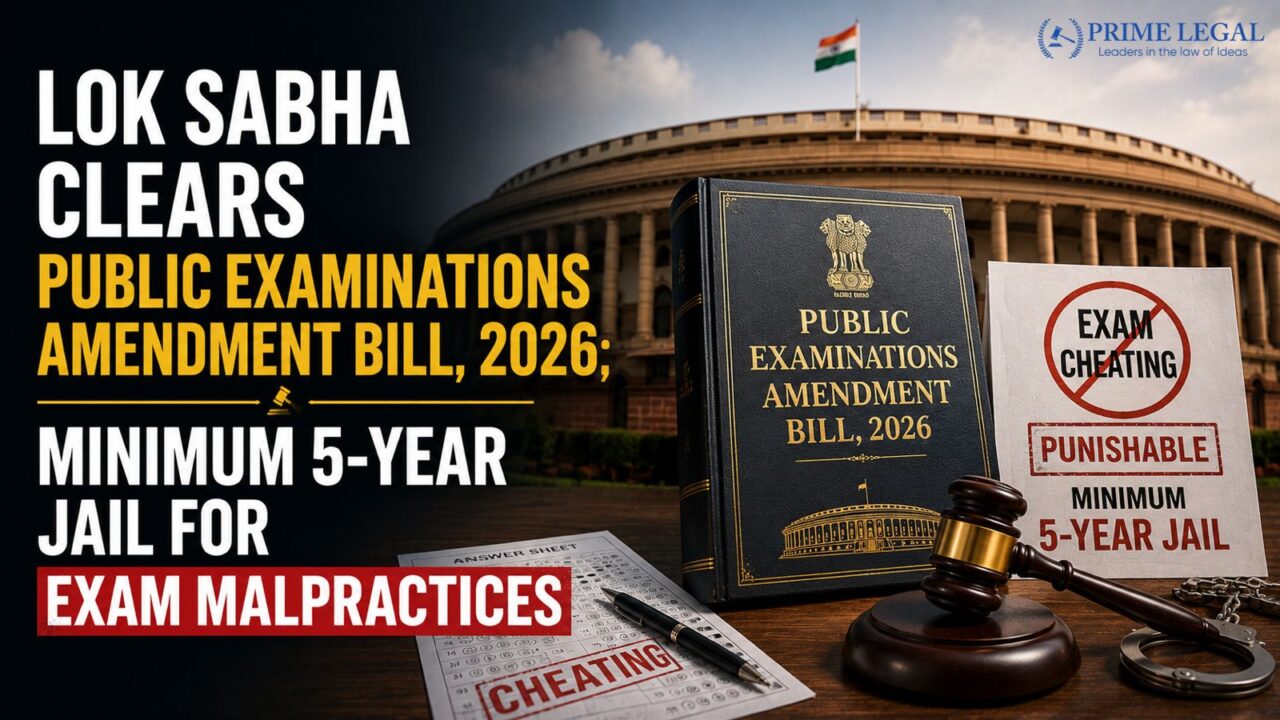
Recently, the Lok Sabha passed the Public Examinations (Prevention of Unfair Means) Amendment Bill, 2026, which is a major step towards enhancing the legal measures to prevent examination papers being leaked and cheated in examinations. The Bill, passed by voice vote on Wednesday, makes amendments to the Public Examinations (Prevention of Unfair Means) Act, 2024. The amendments are far more stringent in imposing punishment, create prompt court procedures and require a time-limit for investigations, which will discourage any organized cheating in public examinations in India and bring back the credibility of the examinations.
BACKGROUND
The Amendment Bill is the response to the nationwide controversies and protests over frequent instances of examination paper leaks, particularly the recent NEET-UG controversy. The initial Act of 2024 was intended to prevent unfair practices in public examinations taken by central examining bodies and recent events showed that this was not really being effective as a deterrent. Union Minister for Education Dharmendra Pradhan had resigned on 25th July because of the outrageous conduct regarding the compromised examinations. In this context, the Union Government had introduced this Bill to strengthen the integrity and transparency of the examination system and safeguard the interest of millions of students and job aspirants.
KEY POINTS
- The minimum and maximum sentences imposed on those who use unfair means are raised to 5 and 10 years respectively. The amount of fine is also increased from ₹10 lakh to ₹50 lakh.
- In case of organised crime for examination related crimes (syndicates), the minimum sentence is increased from 5 years to 7 years in prison and the minimum punishment is increased from ₹1 crore to ₹10 crore.
- The maximum fine for malpractice service providers or private agencies has been doubled from ₹1 crore to ₹5 crore and their debarment period from 4 years to 8 years.
- Complicit directors or senior management of service providers can be sent to minimum five years imprisonment along with upto ₹5 crore fine.
- The Bill stipulates time-bound proceedings – investigations must be completed within two months and trials must be completed within three months of the chargesheet being filed.
- State Governments and U. Ts had to make Sessions Courts as Special Fast Track courts for day-to-day trials of these offences.
- A special fast-track court appeals will be heard by a division bench of the high court and appeals filed against the orders of this court should be disposed of within three months.
- The Central Government can establish a Special Task Force to investigate offences under the Act.
ANALYSIS
The 2026 Amendment Bill is a formidable piece of legislation in response to the systemic issues highlighted by the recent high-profile leaks of examination papers. The Gambia government has made a huge boost in the financial penalties and the minimum prison term, with the intention of building a strong deterrent for individual malpractices and organized cheating gangs. It is key to note that the law not only addresses the victims of the leaks, but also the facilitators, with harsh penalties faced by service providers and those in charge of their management. The imposition of deadlines on investigations and the setting up of Special Fast Track Courts solve the problems of delays in the criminal justice system and thus help in speedy implementation of increased penalties for the offenders. This holistic approach is a commitment to the meritocratic values of recruitment and educational assessment systems of India.
CONCLUSION
With the Lok Sabha passing the Public Examinations (Prevention of Unfair Means) Amendment Bill, 2026, the examination system in India is taking a significant leap towards becoming more robust and secure against exam fraud. The law will introduce such harsh penalties, increase fines and implement judicial procedures specifically designed to break the so-called ‘cheating networks’ and punish service providers. The Bill, which is now before the Rajya Sabha, is likely to bring about a much tougher legal regime to ensure that competitive and recruitment examinations conducted by the government are fair, transparent and credible in order to restore public confidence in the integrity of the system.
“PRIME LEGAL is a National Award-winning law firm with over two decades of experience across diverse legal sectors. We are dedicated to setting the standard for legal excellence in civil, criminal, and family law.”
WRITTEN BY: SHEEN

