
Case Name: XYZ v. State of Karnataka & Another
Case Number: Criminal Petition No. 4532 of 2024
Court: High Court of Karnataka at Bengaluru
Date of Judgment: 4 November 2026
Quorum: Single Judge: Hon’ble Mr. Justice M. Nagaprasanna
Facts of the case:
Raja Hussain, the Petitioner, got married to the Second Respondent, Thabasum, on 13.1.2022, through an arranged marriage by the mutual consent of a friend of the Petitioner. They started their married life together with the family of the Petitioner; however, the relation soured, resulting in disputes. The Respondent, Thabasum filed her complaint at the Udupi Women Police Station on 9.7.2022 stating that the petitioner has committed the offences of cruelty, voluntary causing hurt, intentionally insulting and committing the offence of criminal intimidation. Crime No.57 of 2022 was registered on 9.7.2022 under Sections 498A, 323, 504 & 506 read with Section 34 IPC. Based on the police investigation, the charge sheet was filed only against Raja Hussain while the other family members were not included. The matter is numbered as C.C. No.2125 of 2023 and is pending before the II Additional Senior Civil Judge & Additional Chief Judicial Magistrate, Udupi. Also, separate proceedings were initiated by Thabasum under Section 12 of the Protection of Women from Domestic Violence Act, 2005. She was granted maintenance of ₹ 6,000 per month.
Legal Issues:
- Whether the criminal trial of the petitioner had brought out all the elements of the offences mentioned in Section 498A, 323, 504 and 506 of the IPC.
- Whether, in the light of the facts and circumstances of the case, the criminal trial was not an abuse of the criminal process by the accused in the matter.
Legal Provisions:
- Section 498A, Indian Penal Code, 1860 – Husband or relative of husband subjecting a woman to cruelty.
- Section 323, Indian Penal Code, 1860 – Punishment for voluntarily causing hurt.
- Insult with intent to provoke breach of peace, Section 504 of Indian Penal Code, 1860.
- Section 506, Indian Penal Code, 1860 – Punishment for criminal intimidation.
- Section 34, Indian Penal Code, 1860 – Acts done by several persons in furtherance of common intention.
- Section 482, Code of Criminal Procedure, 1973 – Inherent powers of the High Court to prevent abuse of the process of law and secure the ends of justice.
- Section 12 of the Protection of Women from Domestic Violence Act, 2005 – Application to Magistrate for relief under the Act.
Arguments:
Petitioner:
The petitioner, Raja Hussain, contended that the criminal case against him is unsustainable, as the complaint and the charge-sheet did not contain the necessary ingredients of the offenses charged. His counsel said that the complainant has a prior record of multiple matrimonial ties, disputes, criminal complaints and settlements. Based on documents and an affidavit, he claimed that she has been continuously making disputes after marriage, filing criminal cases and settling them for monetary gain. In his view, the present case is one such effort of misusing the criminal process for the purpose of extracting money from him. He argued that there were no allegations at all that he had committed acts of subjecting the complainant to cruelty, causing hurt, insulting and threatening her. Prosecution of the case without fulfilling the requirements of the law would amount to abuse of the criminal process.
Respondent:
The respondent, Thabasum, opposed the petition and prayed for continuance of the criminal proceedings. Counsel of the respondent challenged the documents relied upon by the petitioner to prove her matrimonial history, arguing that the marriage certificates filed by the petitioner to prove that she was married successively were false and some photographs were morphed. The counsel admitted that the complainant had some previous marriages but argued that each successive marriage was entered into only after termination of the previous marriage through divorce, talaq or khula. Hence, there was no overlapping of marriages. It was further argued that past history of the respondent cannot be a ground to dismiss the current complaint. She argued that enough material was available to prove that the petitioner was guilty of cruelty regarding dowry demand. On this ground, the respondent argued that the charge sheet made out a case for trial based on evidence adduced at the time of trial and prayed for rejection of the petition.
Analysis:
The Karnataka High Court considered the complaint, charge sheet and materials to ascertain whether the ingredients of the offences alleged are made out. Matrimonial discord, per se, does not constitute criminal cruelty as contemplated under Section 498A of the Indian Penal Code. The allegations have to be such that the conduct shown is wilful and likely to lead the woman to commit suicide or result in grievous hurt or harassment with the intent to force an unlawful demand for any property. There is no material showing voluntary causing hurt under Section 323 of the Indian Penal Code, intentional insult under Section 504 of the Indian Penal Code and criminal intimidation under Section 506 of the Indian Penal Code. It has been laid down that filing of a charge sheet will not make up for the absence of facts showing commission of an offence. Considering the precedents of the Supreme Court like Dara Lakshmi Narayana, it has been reiterated that the proceedings can be quashed when the allegations are without disclosing any offence or mala fide intention.
Conclusion:
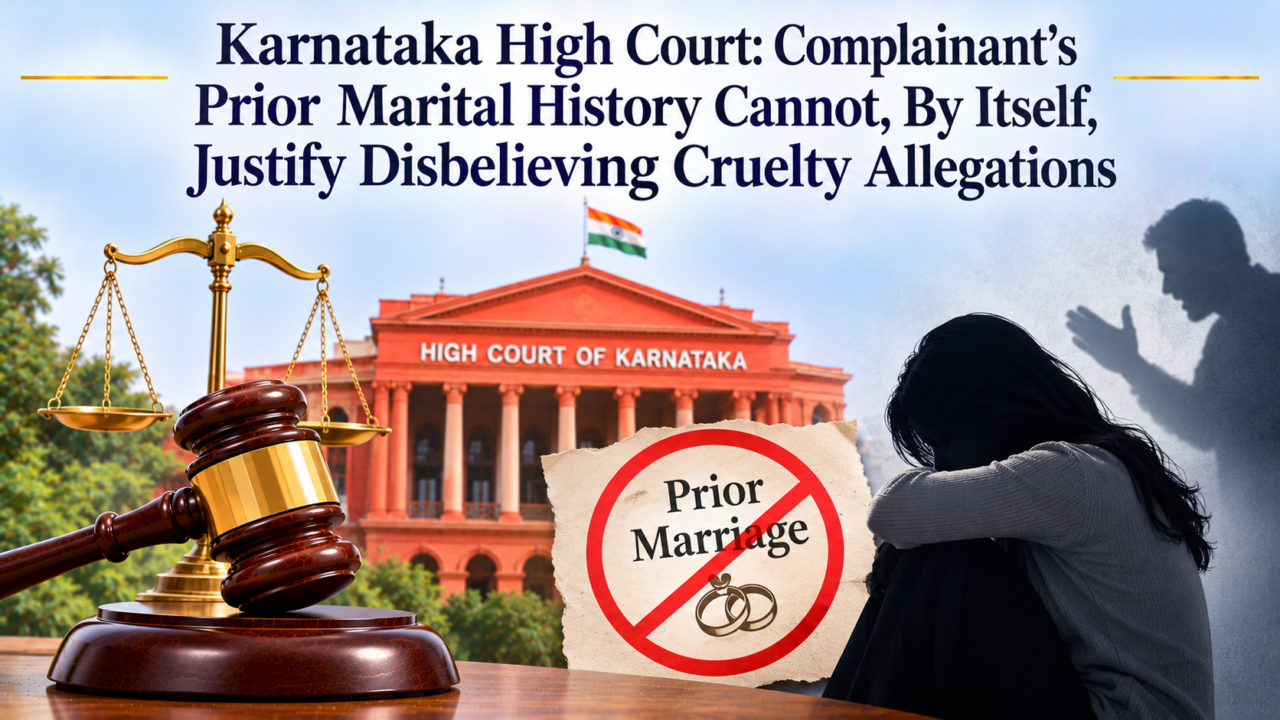
In the matter of Raja Hussain vs State of Karnataka & Ors, the Karnataka High Court took cognizance of the criminal petition filed by the accused and quashed the proceedings in C.C. No. 2125 of 2023 in relation to Crime No. 57 of 2022 pending before the II Additional Senior Civil Judge and Additional Chief Judicial Magistrate, Udupi. It was held that the allegations do not contain the essential elements of offences under Sections 498A, 323, 504 and 506 IPC. To continue with the proceedings in the absence of the above would be an abuse of the process of law and a miscarriage of justice. While making it clear that previous marriages of a woman or any dispute in the past between the parties will not in itself be enough to declare a complaint to be a false one, each case must be looked into independently on the basis of the allegations made and the supporting material. In the present case, the complaint and the charge sheet contained only general allegations without the necessary factual base for the offence as per the penal provisions.
“PRIME LEGAL is a National Award-winning law firm with over two decades of experience across diverse legal sectors. We are dedicated to setting the standard for legal excellence in civil, criminal, and family law.”
WRITTEN BY: Krittika Sengupta
Find the attached Judgement copy here: XYZ v. State of Karnataka & Another

