
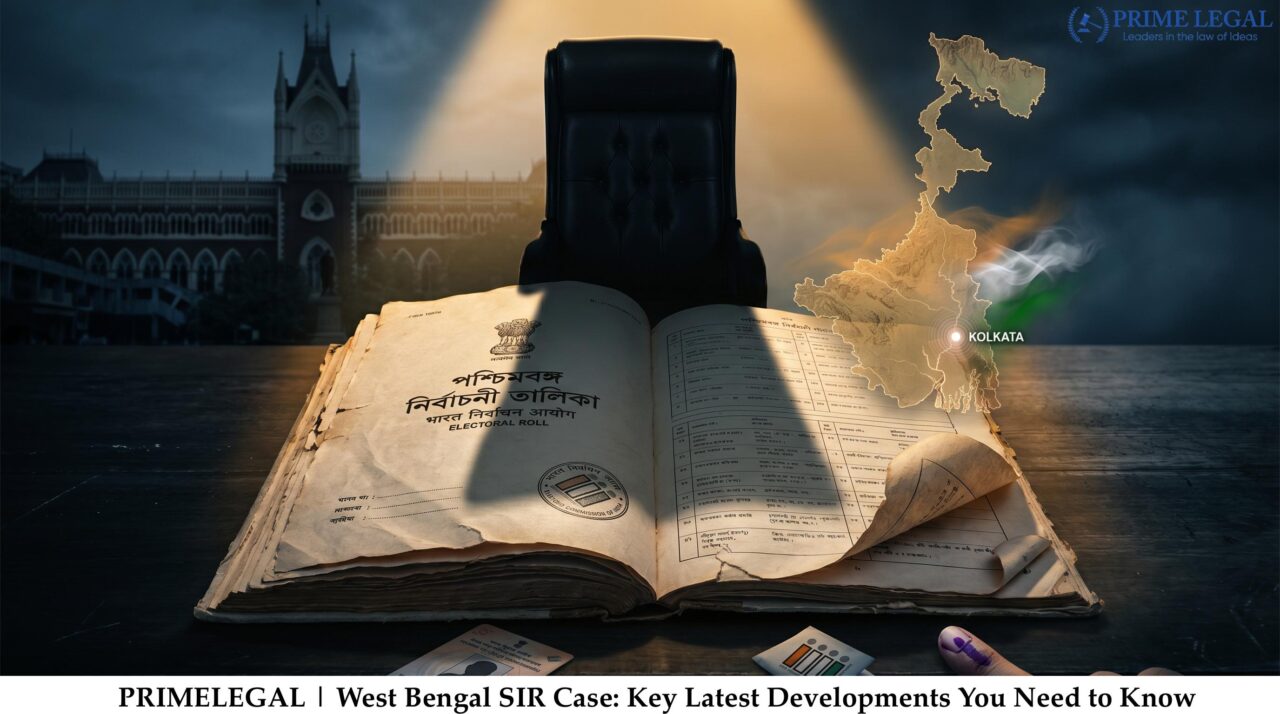
INTRODUCTION
Ahead of the 2026 Assembly elections the Special Intensive Revision (SIR) of the electoral rolls in West Bengal is one of the most important legal and constitutionally significant controversies. Currently under the consideration of the hon’ble Supreme Court of India, the matter raises concerns on electoral integrity, scope of judicial intervention in electoral processes and voter disenfranchisement. Defending it as a necessary clean up of voter rolls by the Election Commission of India (ECI), critics argue that it risks massive exclusion of genuine voters from the rolls.
BACKGROUND
The SIR is a large-scale exercise undertaken by the ECI to verify and update the electoral rolls for removing names of the voters who are deceased, ineligible or duplicates. West Bengal just witnessed an extensive revision of the rolls in recent history sparking a political conflict between the State government and the Election Commission, and allegations of targeted disenfranchisement by the government.
The issue soon escalated to constitutional dispute by challenging the ECI’s actions by way of a writ to the Supreme Court under Article 32 of the Constitution on the event of deletion of millions of names from the electoral rolls.
KEY POINTS
- More than thirty lakh people have filed appeals challenging exclusion from the voters list indicating the scale of protests against the ECI actions.
- The Supreme Court has refused to grant interim voting rights to the voters whose names have been removed from the voters list and whose appeals are pending before the tribunals.
- The Court directed the aggrieved parties to approach the appropriate tribunals seeking remedies and emphasised the importance of robust appellate mechanism.
- The Appellate tribunals have been directed to consider fresh evidence, ensuring procedural fairness in adjudicating the matter.
- The Election Commission has freezed the electoral rolls limiting the scope of inclusion unless further directed by the Court.
RECENT DEVELOPMENT
A supplementary voters list was published post the Supreme Court allowing the voters whose names were restored by the tribunals allowing them to participate in the upcoming elections.
Many individuals including public figures have lost their voting rights following the revision of the SIR highlighting the concerns of wrongful exclusion.
Even though judicial intervention has helped restore the names of some voters, confusion persists on tribunal procedures leaving many voters uncertain as to how to reclaim their voting rights, due to lack of communication and administrative clarity.
CONCLUSION
The West Bengal SIR case represents an intersection of electoral administration and constitutional rights which is complex in nature. The scale of exclusions and functional ambiguities raise serious concerns about disenfranchisement and due process while ensuring accurate voter rolls.
While the Court’s approach reflects a need to balance electoral integrity with rights under Article 326 of the Constitution, there is an urgent need to bring in transparent procedures, effective grievance redressal mechanisms and safeguards against such errors in future for ensuring a democratic election.
“PRIME LEGAL is a National Award-winning law firm with over two decades of experience across diverse legal sectors. We are dedicated to setting the standard for legal excellence in civil, criminal, and family law.”
WRITTEN BY: AARSHITHA UNNIKRISHNAN

