
INTRODUCTION
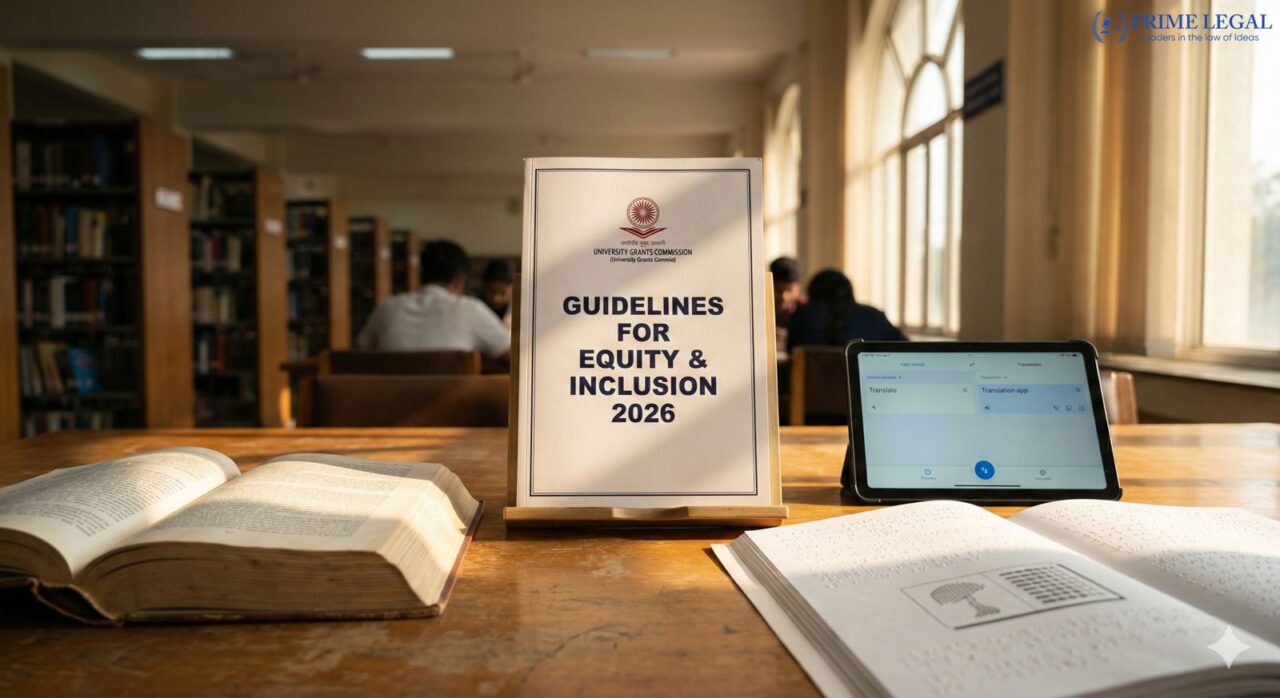
The UGC Equity Guidelines provide a detailed explanation of their framework which aims to combat caste-based discrimination in Indian higher education institutions through its transformative framework. The University Grants Commission (UGC) notified the Promotion of Equity in Higher Education Institutions Regulations, 2026, on January 13, 2026, establishing comprehensive mechanisms to eliminate discrimination and ensure equal opportunity across all higher educational institutions (HEIs) nationwide. The new regulations establish binding equity requirements which replace the existing advisory framework from 2012 with enforceable equity mandates. The new regulations establish institutional structures which include mandatory Equal Opportunity Centers (EOCs) and Equity Committees and Equity Squads and 24×7 Equity Helplines to fulfill the Supreme Court’s early 2025 directive for “very strong and robust mechanisms” to address discrimination. The regulations explicitly extend protection to Scheduled Castes, Scheduled Tribes, and Other Backward Classes (OBCs), addressing a critical gap in the 2012 rules that had excluded OBCs. Legal scholars and civil rights advocates have characterized this regulatory evolution as historic institutional accountability mechanism addressing persistent discrimination through legal duty rather than voluntary ethical principles.
BACKGROUND
The existing systems which regulate educational equity in India need fundamental changes because higher educational institutions show documented evidence that students face caste-based discrimination despite existing legal protections. The deaths of Rohith Vemula (2015) and Dr. Payal Tadvi (2019) which became landmark cases, proved to institutions that advisory mechanisms do not provide adequate protection for their operations. The 2012 UGC regulations, focused primarily on single Anti-Discrimination Officers and loosely defined Equal Opportunity Cells failed to build an effective accountability system which would have stopped harassment and prevented systemic exclusion from happening. The Supreme Court ordered complete system changes in 2025 after institutional responses to increasing complaint numbers and existing response system deficiencies became evident. The UGC conducted nationwide stakeholder consultations which included input from students, faculty members, civil society organizations, and people from affected communities. The 2026 Regulations replace the entire 2012 framework by establishing mandatory governance systems which include OBCs as constitutional protections that were not previously part of equity policies.
KEY POINTS
- Every higher education institution is obligated to create an equal opportunity center to work together with equity committees, squads and ambassadors for running functional 24-hour helplines. Equity committees must include mandatory representation from members of SC, ST, OBC, women and persons with disabilities to ensure inclusive making structures to maintain campus diversity.
- The regulations aim to define and protect discrimination against SCs, STs and OBCs by providing constitutionally grounded protections, which extent beyond the framework of 2012 which focuses narrowly on the situation. These regulations aim to rectify the historical neglect regarding inclusion of backward classes within higher education policies.
- The Equity Squads use mobile surveillance systems to patrol the entire campus because they need to check all protected areas which will stop any discriminatory activities while their fast response systems. Equity Ambassadors serve as nodal officers embedded within departments, hostels, and facilities, creating distributed accountability networks.
- The Head of Institution is obligated with the duty to ensure compliance and is personally held responsible for implementation of the directives in an effective manner. There must be an annual equity compliance reports to be submitted to UGC by the Heads to establish direct administrative accountability.
- The protections under these regulations’ extent to all the categories within higher education institutions such as student students, faculty, non-teaching staff, managing committee members and explicitly to all persons including male, female, or other genders, recognizing gender minority protections.
- The UGC establishes a national monitoring committee which includes statutory body members and civil society representatives to assess implementation progress while investigating discrimination incidents and proposing ways to stop future occurrences.
RECENT DEVELOPMENTS
The regulations have created extensive debates among stakeholders since their announcement. Supreme Court petitioners assert that the regulations lead to discrimination against “general classes” because the representation requirements create reverse discrimination. The regulations face opposition from critics who believe the regulations fail to define penalties for false complaints while they suspect potential abuse of the process. The framework has received broad approval from civil rights organizations and student advocates because it provides essential institutional protection against documented discrimination patterns. Student associations describe the regulations as a historic accountability system which enables institutions to implement their constitutional equality obligations. The implementation schedule requires institutions to create EOCs Committees and helplines that must be operational by specific dates throughout 2026.
CONCLUSION
The UGC Equity Guidelines 2026 establish a new standard for Indian higher education governance through their requirement that institutions must work to eliminate all forms of discrimination which now constitutes a legal obligation. The regulations create an accountability system through their requirement of multiple centers and squads and committees and helplines which will handle discrimination cases that were not properly managed through previous advisory systems. The OBC inclusion corrects constitutional neglect towards such groups while expanded stakeholder protections recognize intersectional vulnerability dimensions. Institutional head accountability establishes personal responsibility for compliance, which establishes a new way of institutional leadership to handle equity matters. The regulatory framework creates an institutional requirement which mandates that all students and faculty and staff must have access to discrimination-free campuses where they receive equal treatment with dignity.
“PRIME LEGAL is a National Award-winning law firm with over two decades of experience across diverse legal sectors. We are dedicated to setting the standard for legal excellence in civil, criminal, and family law.”
WRITTEN BY: KRISHNA KOUSHIK

