
ABSTRACT
The article examines the growing legal recognition of product shape and trade dress as protectable trademarks in India, which came to light through judicial pronouncements and the recent case of Ferrero Spa v. Abhimanyu Prakash. It explains the concept of shape marks, differentiates proprietary designs from generic containers and outlines enforcement tools and analyses policy rationales of preventing consumer deception, curbing counterfeit supply chain, preserving goodwill and protecting public health. It highlights that robust enforcement of shape and trade dress right are essential to safeguard the brand value of a company and the welfare of the consumers, signalling towards a growing Indian IP jurisprudence.
KEYWORDS: Shape Trademark, Trade Dress, Passing off, Deceptive Similarity, Counterfeiting and Enforcement, Intellectual Property Remedies
INTRODUCTION
In the era of retail stores and online marketplaces, a brand’s visual identity extends beyond its name and logo and gives rise to non-traditional trademarks. These are the shapes of goods or packaging which are crucial indicators of source and are called shape marks or trade dress. The Trade Marks Act, 1999, explicitly includes three-dimensional forms in its definition of a trademark. As consumers frequently rely on and identify products based on the shape or the look of a package, India’s booming consumer market, which has varied and distinctive packaging and containers have considerable brand goodwill, making them prime targets for knock-offs.
Indian Courts have been attentive and careful of this trend. Recently, the Delhi High Court in Ferrero Spa & Ors v. Abhimanyu Prakash & Ors. [2025 SCC OnLine Del 8956], enjoined manufacturers of look-alike jars for Nutella, and found the Firozabad-produced jars to be deceptively similar to Ferrero’s registered Nutella shape mark. On an earlier occasion, the Supreme Court had allowed passing off suits based on a product’s shape to proceed. These judicial precedents signal a judicial willingness to protect appearance as a key element of brand identity.
SHAPE MARKS AND TRADE DRESS PROTECTION
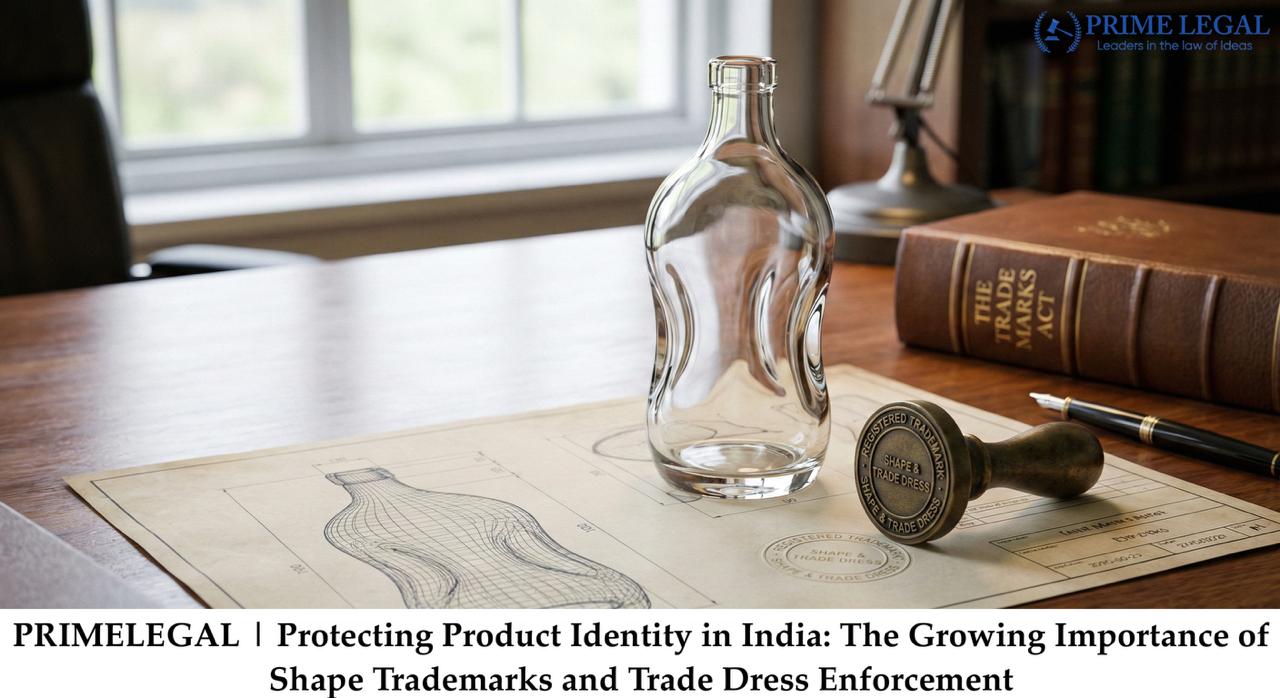
A shape trademark is a three-dimensional form of the product or its container which serves as an identifier. Trade dress has a broader ambit and covers a product’s overall appearance or packaging, including colour schemes, graphics or even store layouts, which allows one to distinguish between brands. Under the Indian legislation, a mark can include the shape of goods or their packaging, which expressly lists bottles, cartons, caps, etc. For a shape or packaging to be protectable, it must be distinctive and capable of creating a source association in the minds of consumers. Generic jars or bottles may not qualify, but a unique contour can qualify, such as that in Coca-Cola bottles or that of Toblerone’s triangular chocolate bar. This is very similar to classic passing off. If the overall look of a good gives the impression of deceptive or near similarities, it is likely to cause confusion. Indian courts have treated trade dress as the soul for identification of goods for a long time. For instance, in Cadbury India Ltd. v. Neeraj Food Products [2007 SCC OnLine Del 841], the Delhi High Court enjoined the use of candy packaging, the James Bond wrapper, found deceptively similar to Cadbury’s well-known packaging.
If a person adopts a look-alike shape or get up which misleads the consumer about the source of the product, then it can be both trademark infringement and passing off. Even if only the container, not the product, is being sold, the court recognises that this can facilitate counterfeiting. In the Ferrero’s case, the defendants were held to have actual and constructive knowledge that their empty jars infringed Nutella’s jar shape. Proprietary shapes and dress are thus protectable as long as they signify origin, and this similarity is likely to deceive customers.
THE NECESSITY OF PROTECTION
The need for such protection is crucial, specifically for the Indian markets, as shoppers often rely on familiar shapes and packaging cues. Without protection, identical containers allow cheap imitations to pass themselves off as genuine. Trade dress causes confusion in the minds of unwary customers if the first impressions of the look resemble those of a branded good. In the case regarding Britannia Little Hearts, the manufacturer argued that identical heart-shaped biscuits and packaging on Amazon listings were likely to cause consumer confusion and dilute its long-established goodwill. Copying shapes can enable a massive downstream trade in knock-offs. Generic references, such as Nutella jars on buyer-to-buyer platforms, often allow the sales of such counterfeiters. Without curbs, such infringers help organised networks to flourish and allow fake goods to make as much as 35% of sales in India’s high-risk markets.
Brands invest heavily in distinctive packaging and design. Unauthorised look-alikes misuse those investments and erode the original good’s exclusivity. For goods with tight margins, even small losses to fake products can be significant. Continuing to use a unique shape is part of a brand’s identity. Attackers exploit that built-up reputation and wilfully infringe with full knowledge of rights. Further, such fake consumable goods packed in copied containers can cause serious risks. Counterfeit goods like food, medicine or chemicals often use illicit packaging to evade detection. Substandard products not only damage the trust of the brand but can also cause serious safety risks to consumers. In sectors such as steel and lubricants, fake products have led to infrastructure failures and accidents.
PRACTICAL ENFORCEMENT MEASURES
To overcome these issues, brand users have undertaken multiple measures to enforce shape and trade dress rights. Companies vigilantly scan online marketplaces and local markets for suspicious products or off-spec packaging. They can issue warnings or take actions against look-alikes. Legal notice may be sent to such sellers and manufacturers, demanding a cease of production and distribution. The owners may also file suit, plead violation of a registered shape mark and seek relief. Upon investigations, the infringing goods are formally seized and impounded by the appointed commissioners. The courts may award a permanent injunction, damages or an account of profits. Innovative solutions may also be used to neutralise seized packaging, by either filling containers with the original products or by donating them in CSR programs.
CONSEQUENCES OF NON-ENFORCEMENT
If such trademarks and trade dress are left unprotected, the market suffers badly, as weak enforcement will lead to similar fake products to flood the markets invisibly and dilute the original brand’s distinctiveness. This will lead to the consumers finding it harder to tell genuine products from fake ones, leading to the downfall of the original brand’s reputation, which can destroy years of faith that the brand built. These similar-looking fake products have a great possibility of endangering lives, as dangerous and substandard ingredients frequently appear in fake food, drugs or cosmetics. Non-enforcement encourages grey and black markets, weakening formal distribution channels and tax revenues. When empty containers and cartons can be bought cheaply, an elaborate informal network arises wherein local repackers, street vendors and online sellers escape regulation. A failure to regulate such component-level infringement ultimately signals the failure of India’s Intellectual Property (IP) regime.
CONCLUSION
Thus, to conclude, the recent Ferrero Spa v. Abhimanyu Prakash case, along with other rulings show India’s courts’ evolving and robust approach to trade dress. Shape trademarks are no longer peripheral rights but are the core assets that deserve protection. Manufacturers can no longer escape liability by knowingly making infringing products that violate trademark rights. Furthermore, the judiciary is taking a strict stance by reinstating passing off actions for product shape, awarding compensation of hefty amounts or forfeiting stocks. This emphasises that reliance and aggressive enforcement are the key for businesses and for the courts and regulators, the packaging and product design have equal weightage to logos and words. When courts grant injunctions and destructive remedies for trade dress infringement, they uphold the rights of every brand to induce consumers to give them the preference which their merit deserves. Thus, an IP regime that recognises container shape and overall presentation are protectable not only to secure commercial value for innovators but also safeguards consumers from deceptive practices.
“PRIME LEGAL is a National Award-winning law firm with over two decades of experience across diverse legal sectors. We are dedicated to setting the standard for legal excellence in civil, criminal, and family law.”
WRITTEN BY: STUTI ANVI

