
ABSTRACT
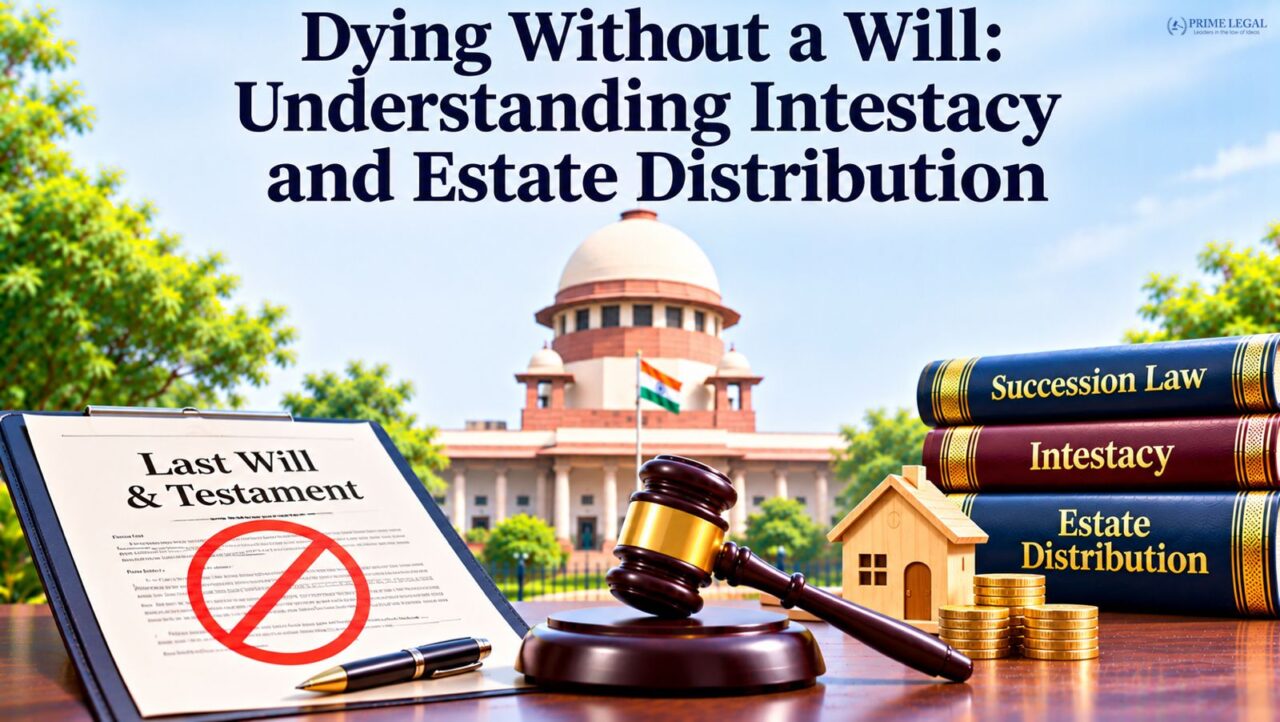
Dying without a will is dying intestate. When you do not have a will, state law-if not your wishes-makes many of the decisions about who inherits your property, who will be responsible for administering your estate, and in some situations who will care for your minor children.
Wills are for the rich. Think again. No matter how much you have to your name, if you own a home, have a business, digital finances or are responsible for family members, estate planning is important. It will provide direction to those left behind in the stressful days following your death.
INTESTACY EXPLAINED
When a person dies without a will, a probate court will follow their state’s intestacy laws to transfer all assets that do not pass automatically to someone else, such as by a designation or a joint ownership or a trust. The court will also appoint an administrator to collect assets, pay debts and taxes, and distribute the remaining assets.
Intestacy does not mean the government ends up holding your property. The legal default is to give it to close family members (spouse, children, parents, siblings, etc.) in a predetermined order according to state law.
WHO INHERITS?
SITUATION TYPICAL DEFAULT OUTCOME
Married, no children The entire estate (or the majority of it) can go to the spouse.
Married with children The spouse and children frequently inherit the estate.
Single parent with children usually take shares equally. Single, no kids Usually inherited, if deceased, siblings and grandchildren can get it. The estate will go to the state.
The issue is that the intestacy is a formula, not your relationships. Your friends, fiancée, cats, stepchildren, and charities may get nothing unless they are your heirs at law, or the asset passes on the beneficiary designation or trust.
WHAT A WILL CANNOT CONTROL
A will isn’t everything. Life insurance policies, retirement accounts, payable-on-death bank accounts, property jointly owned with someone else, and property in a funded trust may pass outside the will.
Which is why designating a beneficiary count. An ex-spouse listed on an outdated policy could still take money from you if something happens. Annual (or even biannual) updates to beneficiary designations are just as important as updating your will.
THE REAL-WORLD IMPACT
Losing half the estate due to dying intestate can slow matters down and be costly. An estate can take months or years to probate and some family members may have to wait a long time to access the money they will need to pay funeral expenses, bills and support the family. Court and lawyer fees can further diminish any funds to the heirs.
Without written directions, loved ones may fight over who gets the house, who takes care of the estate and who looks after your minor children. A will enables you to designate an executor and specify a guardian for your minor children, increasing the likelihood that a judge won’t have to do it.
CRYPTOCURRENCY AND DIGITAL ASSETS
Crypto is considered property, but it offers a specific challenge: Heirs will own the currency but will be unable to access it. If you use a self-custody wallet, recovering crypto that doesn’t have its own private key or recovery phrase can be very complicated.
It might name someone to inherit your crypto, but it shouldn’t name passwords, private keys, or seed phrases as a will may be made public by a probate. Keep an encrypted record of your wallets and exchanges, save the recovery information, and designate someone to act on your behalf for your digital assets.
Digital assets encompass emails, social media accounts, online stores, and cloud services. RUFADAA is the Revised Uniform Fiduciary Access to Digital Assets Act, which exist in various forms in nearly all US states, and gives a legal pathway for executors to access digital accounts.
Social media sites might offer features such as Facebook’s legacy contact, Instagram memorialization, or Google’s Inactive Account Manager that let you choose who can access your account, send certain data to a specified person, or request that your account be deleted.
PRESERVE YOUR WISHES
- Leave the details in your legal will, including beneficiaries name, executor, and guardian of minor children (if applicable).
- Invest in tax-advantaged savings accounts and review and revise ownership beneficiary designations on insurance, retirement and other financial accounts.
- Create an inventory of all online accounts, cryptocurrencies, digital wallets and assets.
- Utilize your platform’s tools for legacy or disabled accounts.
- Select an executor or trust provider who can handle the digital assets.
- Keep your crypto recovery details in a safe place, but different from your will.
THE BOTTOM LINE
When you don’t have a will, the law speaks for you. Your property could pass to unintended heirs, your partner may be shut out, and your family will spend untold hours sorting out your financial and digital worlds. There’s nothing morbid about a will; it’s about safeguarding your loved ones and your life.
“PRIME LEGAL is a National Award-winning law firm with over two decades of experience across diverse legal sectors. We are dedicated to setting the standard for legal excellence in civil, criminal, and family law.”
WRITTEN BY- AASTHA KEDIA

