
INTRODUCTION
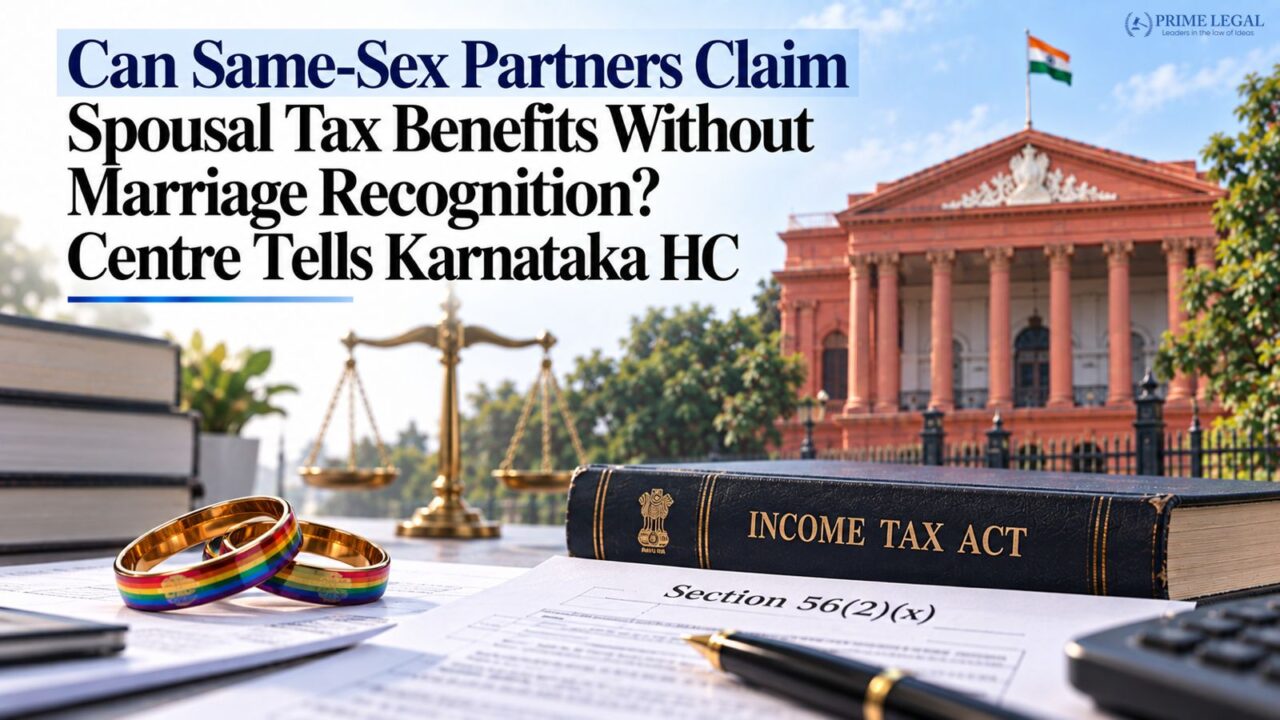
This petition has been filed in the Karnataka High Court relating to the applicability of the Income Tax Exemption available to “spouse” in the Income Tax Act, 1961 to the same-sex partners. It may be noted that the petitioners have challenged the denial of benefit of the exemption in respect of the gift from a “relative”. The Union of India has denied the plea on the ground that treating same-sex partners as “spouse” amounts to recognising the marriage of such persons.
BACKGROUND
This case involves Anurag Kalia & Anr. vs. Union of India & Anr., WP No. 28761/2025. The case involves a 22-carat gold bracelet that is said to be a family heirloom and is claimed to have been gifted by one partner to the other as a token of celebration of their anniversary. It has been argued that the gift would have been tax-exempt if they were a married heterosexual couple. The petitioners have questioned the constitutional validity of the term “spouse” in relation to the Fifth Proviso to Section 56(2)(x) of the Income Tax Act, 1961, inasmuch as it does not extend the privilege to same-sex partners. The petitioners are seeking a ruling that the privilege is extended to people in a steady same-sex union, even though their union is not legally recognized as marriage. As an alternative, they seek the definition of “spouse” which would cover same-sex couples like heterosexual couples who are assumed to be married.
KEY POINTS
- Tax Exemption in the Case of Gifts: Section 56(2)(x) of the Income Tax Act relates to taxation of specified money or property received without any consideration. Fifth Proviso gives the exemption for specified receipts, which include certain gifts received from “relatives”.
- Meaning of Relative: Section 2(41) of the Income Tax Act explains “relative” as well as mentions the husband or wife of an individual among others. The government contended that the expression “spouse” in Section 56 should be considered in the light of this statutory framework.
- Claim made by petitioners: The petitioners have sought the extension of the tax exemption to their same-sex partner in a stable relationship. As an alternative, they have sought the interpretation of “spouse” to include their same-sex partner under the relevant circumstances.
- Objection by Centre: The Union Government contended that interpreting the expression “spouse” in a manner that would include same-sex partners would amount to recognition of a same-sex matrimonial relationship, which in its view cannot be done by way of interpretation of the Income Tax Act.
RECENT DEVELOPMENTS
The Central Government on 19 September 2026 rejected the petition filed before the Karnataka High Court where Solicitor General Tushar Mehta submitted that the use of the term “spouse” in Section 56(2)(x) of the Income Tax Act should be interpreted in light of the definition under Section 2(41) where it means either a husband or wife. The Centre, relying on the case of Supriyo v. Union of India, contended that the extension of tax exemption to same-sex partners will mean recognition of a same-sex marriage relationship, something which the Supreme Court had left to the legislature to do. It further said that the classification is made on the basis of marital status, not sexual orientation, and the interpretation of the term “spouse” may also lead to wider implications in other statutes concerning succession, adoption and maintenance. The Karnataka High Court has posted the matter for further arguments on 9 October 2026.
CONCLUSION
The Karnataka High Court case pertains to the possibility of extending the benefit of tax exemption provided to a “spouse” under the Income Tax Act to same-sex couples who do not have a legally recognized relationship status of a marriage. It is pertinent to mention that this issue relates to the interpretation of Section 56(2)(x) along with Section 2(41) of the Income Tax Act, 1961, and the constitutional challenge by the petitioners based on Article 14. It is further argued by the Centre that any extension in the term “spouse” would amount to legal recognition of same-sex marital relationship. However, the petitioners claim equal availability of the particular tax benefit without the need for legal recognition of their relationship status of marriage. The news reports of 19 September 2026 concerns arguments made during the proceedings; it does not report a final judgment deciding the petition.
“PRIME LEGAL is a National Award-winning law firm with over two decades of experience across diverse legal sectors. We are dedicated to setting the standard for legal excellence in civil, criminal, and family law.”
WRITTEN BY: KHWAISH SACHDEVA

