
ABSTRACT:
The Transgender Persons (Protection of Rights) Amendment Bill 2026 talks about a great critical point in the country and the constitutional journey of India, which recognizes the gender equality and the individual autonomy as a balancing pillar of the country. The Constitution of India recognizes the gender identity and the rights related to it such as article 14, 15, 19, 21 which all talks about the gender identity as a fundamental right which are protected under the Constitution. This shift raises serious constitutional concerns regarding dignity, privacy, equality and freedom of expression. Bill’s provisions appeared to dilute the progressive spirit of earlier jurisprudence and risk reintroducing gatekeeping mechanisms that the judiciary had explicitly rejected before. This analysis critically examines the constitutional tensions, legislative developments, judicial precedents, stakeholder response and socio legal consequences arising from the amendment. Which ultimately argues that the law may face significant judicial scrutiny and require urgent reform to align with constitutional morality in the country.
KEYWORDS:
NALSA, transgender, welfare, amendment bill, LGBTQ, etc.
INTRODUCTION:
The rights in India have evolved through centuries. It now recognizes transgender rights in the country, which has played a dynamic interplay between judicial activism and legislative response. The decision of the Supreme Court in the National Legal Service Authority v. Union of India marked transformative movement by affirming that gender identity is integral to personal autonomy and dignity and therefore the Transgender Persons Amendment Bill, 2026 signals a potential regression by reintroducing institutional control over identity recognition and emphasizing and accepting the changing need of the society. It is moreover a proposed speculative framework rather than an existing law.
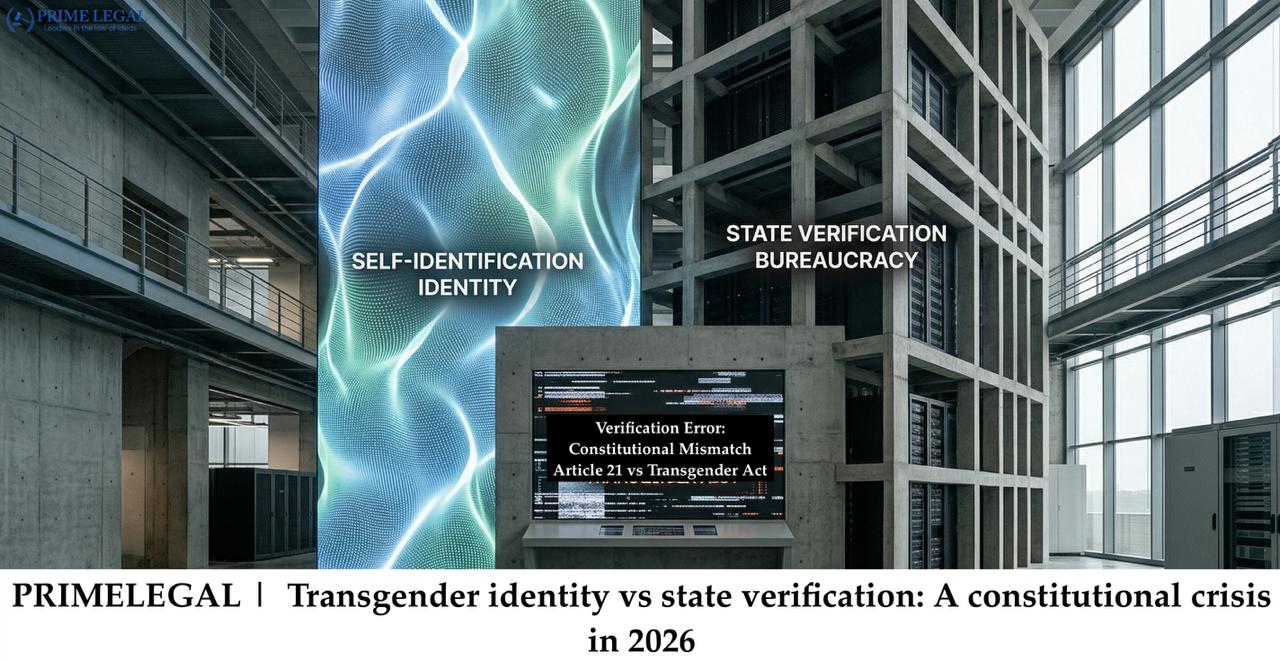
This development creates a great step towards accepting the societal changes. But it also creates a constitutional crisis whether the state can impose verification mechanisms on an individual’s self-identified gender without violating fundamental rights. This issue lies at the intersection of autonomy versus the state paternalism, and dignity versus bureaucratic regulation, which creates confusion and a question mark in accepting the needs of the society without harming the rights and the sentiments of the people of society.
LGBTQ+ RIGHTS WITHIN THE CONSTITUTIONAL FRAMEWORK OF INDIA:
The discussion revolving around the transgender identity, it must be situated within the broader framework of LGBTQ+ rights, that talks about the enhanced and expanded version for the various changes that are there in society considering the individual identity of a person. It includes lesbian, gay, bisexual, transgender, queer and other gender diverse identities present in the society or the country. In India, the constitutional journey of LGBTQ+ rights have transformed to a great extent. Cases like Navtej Singh Johar v. Union of India– where the SC has decriminalised consensual same sex relations and affirmed that the sexual orientation should be protected under the protection. Transgender is the extended part that is included in the spectrum of LGBTQ+ making the scope much wider and accepting the development and growth of the country.
FOUNDATION OF SELF- IDENTIFICATION:
The Supreme Court in the judgment of National Legal Services Authority v. the Union of India, (2014), it was being held that, the identification of the gender identity is a self- determination factor rather than the medical certification. Countries like Argentina allow the individuals to change the identity of the gender of an individual based on the simple declaration or self- interpretation rather than complicated medical or bureaucratic approval for it to be accepted.
- It also talked about the Article 21 of the Constitution which talks about the Right to live with dignity that also includes the concept of gender expression as a part of it.
- To protect the discrimination based on gender, articles like 14 and 15 talks about how no one should be discriminated against, which also extends to gender equality in the society or the country.
- Article 19(1)(a) also protects them by stating the freedom an individual has in express himself which also includes the free expression of the gender of the person.
Hereby, the court emphasized the concept of the psychological identity by rejecting the biological determination of the gender which directs the state to provide the reservations and the welfare measures without any intrusive verification.
LEGISLATIVE FRAMEWORK: 2019 ACT v. 2026 AMENDMENT:
The 2019 Act based on the Transgender Persons (Protection of Rights), which was based on the Partial Compliance with NALSA, it eventually recognized the rights of the transgender persons, which allowed the self- declaration of the identity with the procedural limitations being involved. It also aims at prohibiting the practice of any sort of discrimination based on the identification of the gender.
But based on its weak enforcement, it was criticized for the hurdles that were approaching with the acceptance of the whole different section of people, and it also clashed with the fundamental rights of the society.
Meanwhile, the 2026 Amendment Bill brought certain crucial changes as a form of alteration to make the bill effective and stronger in neutralising the gender identification in the society. This involved the exclusion of the restrictive definition which included the limits regarding the identity of the transgender that is they were categorized in the traditional socio-cultural groups which were called as hijras in the society or the persons who had congenital biological variations. This definition excluded many individuals, especially the urban and the non- urban traditional transgender persons from the definition.
The Medical Verification Mechanism was introduced which contradicted the concept of self- identification of the gender recognized in NALSA and included the application to the district magistrate and later, referral to the Medical Board and a certification which is based on the verification.
THE CONSTITUTIONAL CONFLICT ANALYSIS:
- Violation of Article 21 which talks about the right to life with dignity and privacy of an individual in the constitution of India. It is being violated by the process of Medical Verification which invades the bodily autonomy of an individual and forces an individual to undergo scrutiny of the identity, which is inconsistent with the judgment of a very crucial landmark case K.S. Puttaswamy v. Union of India which talks about the protection of the personal identity choices from any sort of state interference.
- Violation of Article 14 of the Constitution which talks about the right to equality that is being violated based on the unequal treatment given to these persons by the society no matter how strong the provisions formed. Here, the transgender, they face additional burdens in society as their way of survival.
- Article 15 talks about the non- discrimination factor, by restricting the identity categories in society, the law indirectly discriminates based on the gender identity, that falls within the ambit of sex discrimination as being interpreted in NALSA.
- It also talks about the violation of Article 19(1)(a) which is an essential feature for freedom of speech and expression, the state verification hereby, limits the expression of the gender identity of an individual freely, as the gender identity is considered a form of expression.
SUGGESTED REFORMS:
It is being suggested to restore the self- identification feature without any intervention of the Medical Board. This would create a sense of privacy and would protect the personal rights of the transgender people in the society.
If the definition of the transgender identity is broadened in society, it would widen the scope of the term and would expand the means of acceptance in the country.
To include the community participations in the policymaking system. It would enlarge the participation board criteria and would include the people from all the communities that would help in better policymaking and better results.
Making regulatory schemes for the transgender community rather than the regulatory measures or controls that would restrict the scope of the community rather than enlarging it.
CONCLUSION:
The Transgender Persons Amendment Bill, 2026, it represents the significant constitutional dilemma in the country. It prioritizes verification over self- identification. That disrupts the transformative vision of the society and limits the growth, and it also undermines the transformative vision laid down in NALSA as well. This bill violates dignity, equality, and privacy by risking the hard- won rights by subjecting the identity to bureaucratic approval.
If not corrected through proper judicial intervention or any sort of legislative reform, the law will not withstand constitutional scrutiny. The rights of the transgenders hereby, depends on reaffirming that the principle that identity is not granted by the State- it is inherent to the individual to choose.
“PRIME LEGAL is a National Award-winning law firm with over two decades of experience across diverse legal sectors. We are dedicated to setting the standard for legal excellence in civil, criminal, and family law.”
WRITTEN BY: MEENAKSHI DANGI.

