
Introduction
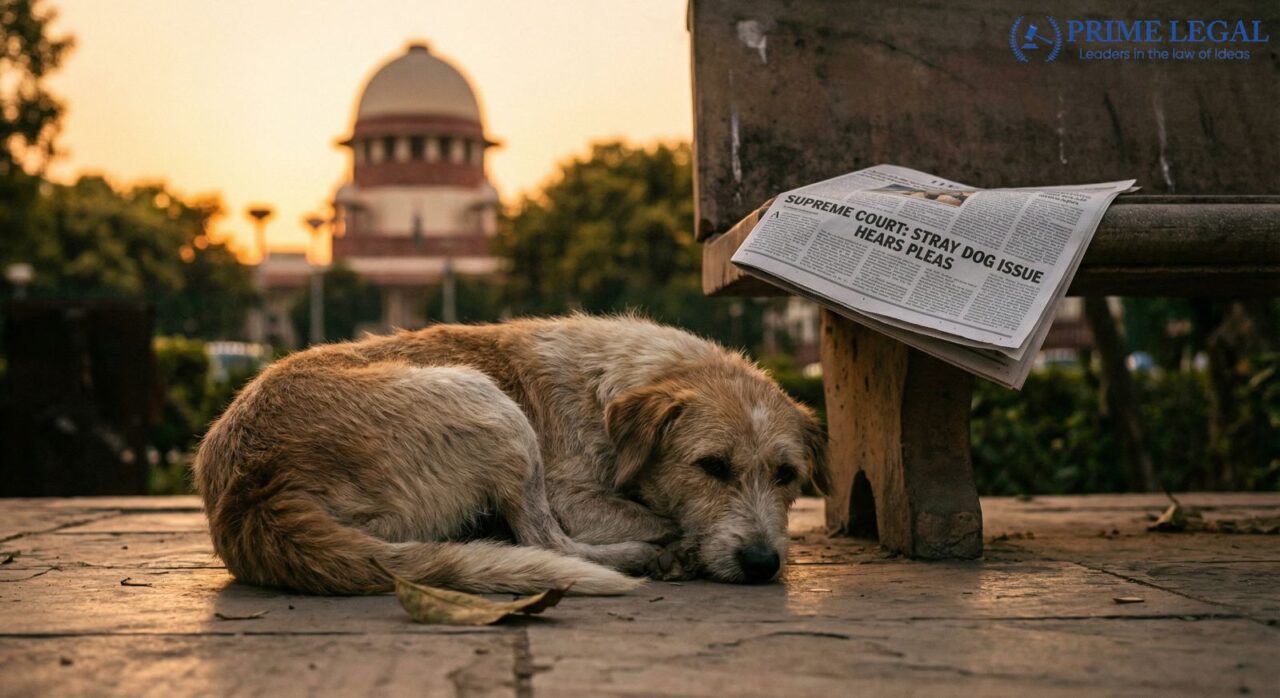
The stray dog’s case in the supreme court of India deals with the challenge of managing stray dog populations in public spaces while balancing human safety with animal welfare. The case arose from increasing incidents of dog attacks, injuries, and fatalities particularly in areas like school, hospital, bus stops, and railway stations. Petitioners from victims & and citizens sought strict action against aggressive strays, whereas animal welfare groups emphasized humane treatment under the animal birth control rules. The supreme court has been tasked with formulating a framework that ensures public safety without compromising ethical and legal obligation toward animals.
Background
The case emerged due to rising concern over stray dog related incidents and the failure of local authorities to implement effective management measures. The Animal Birth Control (DOGS) Rules, 2001 and subsequent amendments, outline humane methods such as catch vaccinate-sterilize-release (CVSR) to control stray populations. Despite these rules, incidents continued, highlighted gaps in enforcement and the urgent need for judicial intervention. In august 2025 the Supreme court passed an order that vaccinated dogs be sent back to their original place unless they were too aggressive or rabid and this could maintain a balance between conflict of interest.
Key Notes
The supreme court has emphasized the unpredictability of animal behavior noting that one cannot simply read a dog’s mood. It also highlighted that ethical consideration must extend to all animals asking rhetorically whether chickens or goats should be treated differently. Public safety remains a core concern with the court reprimanding states for negligence and directing preventive measures including fencing, sheltering and vaccination drives.
States like Punjab and Gujarat were specifically directed to secure vulnerable areas such as schools, hospitals and court premises. Humane strategies like the CVSR model have been endorsed ensuring sterilized and vaccinated dogs can be safely managed while reducing aggressive incidents. The case also underscores the role of judicial oversight in public policy when human rights intersect with animal welfare highlighting gaps in state-level compliance and accountability.
The court continues to balance these competing claims ensuring that human life and freedom of movement are protected while preventing cruelty to animals. It has set a precedent for scientifically informed and ethical and urban stray dog management emphasizing both preventive action and long-term sustainability. The hearings also reflect the broader societal debate about coexistence with stray animals in densely populated areas emphasizing ethical legal, and policy considerations.
Conclusion
The stray dog case is a landmark in Indian jurisprudence exemplifying the delicate balance between public safety and animal welfare. By promoting humane methods like CVSR enforcing state accountability and emphasizing judicial oversight the Supreme court is shaping a sustainable framework for managing stray dogs. The resolution of this case will have a lasting impact on urban animal management policies, public safety measures and ethical approaches to animal welfare across India.
“PRIME LEGAL is a full-service law firm that has won a National Award and has more than 20 years of experience in an array of sectors and practice areas. Prime legal falls into the category of best law firm, best lawyer, best family lawyer, best divorce lawyer, best divorce law firm, best criminal lawyer, best criminal law firm, best consumer lawyer, best civil lawyer.”
WRITTEN BY: NISHTHA JAIN

