
INTRODUCTION
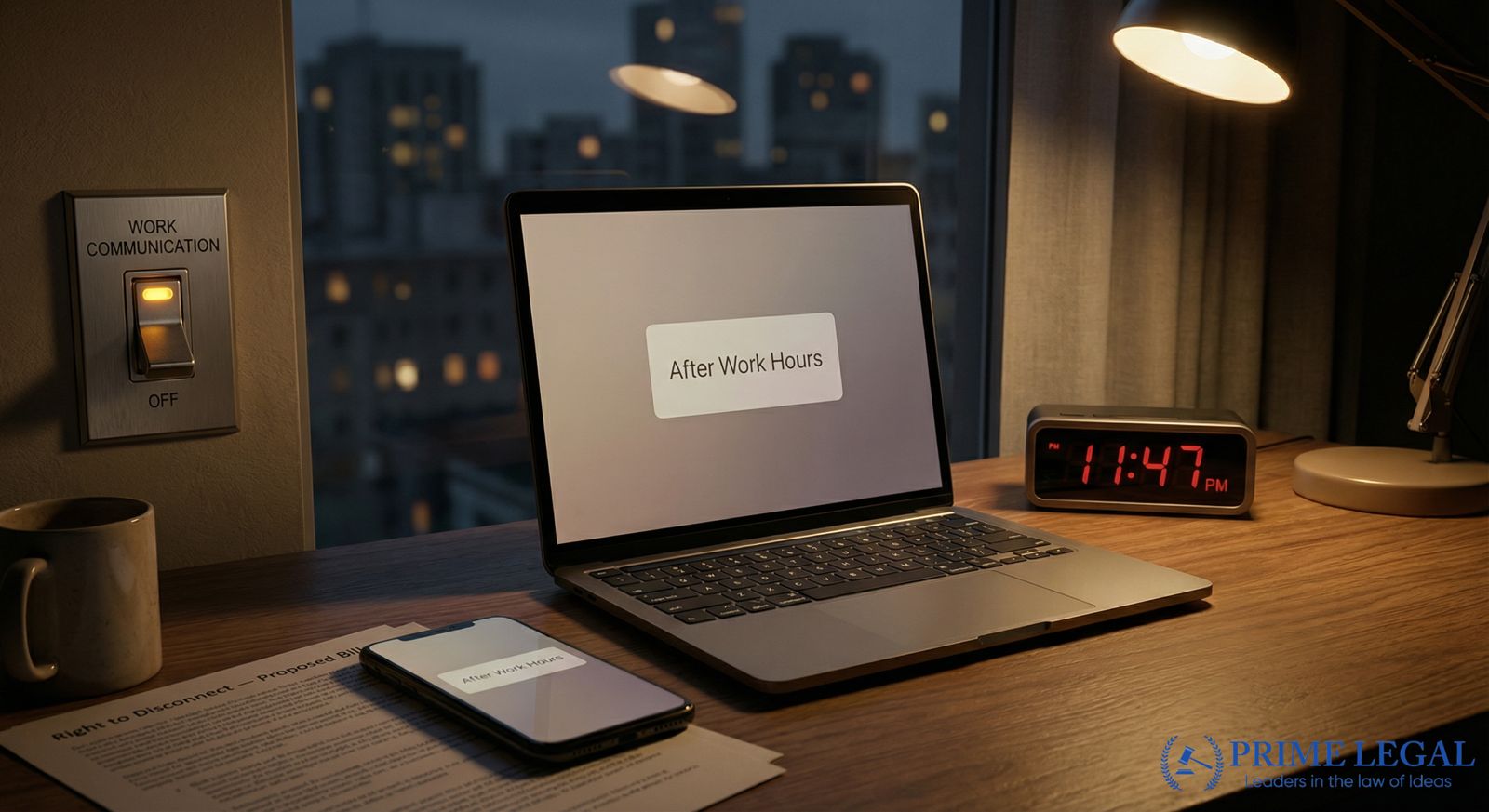
The Right to Disconnect Bill has been introduced as a private member’s bill, a form of legislation which is rarely enacted. It arises within the framework of the country’s recent consolidation of labour laws into four codes, which govern working hours, overtime, and employer authority. This Bill marks a significant turning point in the evolution of Indian labour law. In today’s digital age, where work duties routinely extend far beyond the confines of physical workplaces, the legislature must carefully reassess how labour laws address the challenges of constant connectivity. However, this reassessment takes place within a regulatory framework that continues to depend primarily on time-based mechanisms.
BACKGROUND
India’s labour landscape has changed dramatically with the growth of digital platforms. These innovations have clearly increased productivity, but they have also created a widespread culture of being available around the clock. Employees regularly face pressure to reply to emails, messages, and calls long after their normal shift ends, leaving it difficult for them to leave work even during holidays or off seasons. Recent studies show that, more than half of Indian workers put in over 49 hours a week, which is way beyond global averages and almost 78% battle with burnout symptoms. These factors have called for preventive measures to tackle digital overwork.
KEY POINTS
- Companies would need to create policies limiting after-hours contact, train managers and staff, and report violations to a new welfare body, forcing HR to update rules on when communication can be done and how to settle disputes.
- Workers gain a legal right to switch off outside work hours, helping cut down stress, burnout, and health issues while improving work-life balance and job satisfaction over time.
- Companies like startups, IT firms, and consultancies with flexible or global operations might face some real challenges, so there is a need for systems such as shift rotations, async messaging, or automated tools to keep everything above board legally.
- The bill gives workers a strong legal right to switch off. It tackles burnout symptoms, and echoes laws in France and Italy, and pushes companies toward fairer practices.
RECENT DEVELOPMENTS
The bill takes a big step to protect workers by clearly separating work from personal time, but real-life issues like emergencies or teams across time zones could cause problems, which calls for careful planning, clear rules, and some flexibility to balance worker rights with practical business needs.
CONCLUSION
The Right to Disconnect Bill, 2025, highlights the need to set strict boundaries between work and personal life in our digital world.Though it’s a private member’s bill with slim chances of becoming law, it carries real symbolic power, signalling that lawmakers now take employee well-being, mental health, and work-life balance seriously. Most importantly, it opens the door for future labour reforms to tackle digital overwork and nurture a healthier, longer-lasting work culture in India’s fast-moving economy.
“PRIME LEGAL is a full-service law firm that has won a National Award and has more than 20 years of experience in an array of sectors and practice areas. Prime legal falls into the category of best law firm, best lawyer, best family lawyer, best divorce lawyer, best divorce law firm, best criminal lawyer, best criminal law firm, best consumer lawyer, best civil lawyer.”
WRITTEN BY: ARCHITHA MANIKANTAN

