
CASE NAME: In Re, Bhilwara (Rajasthan) v. Dilip Kumar Saini & Ors.
CASE NUMBER: D.B. Criminal Contempt Petition No. 3/2019
COURT: High Court of Rajasthan
DATE: 17 March 2026
QUORUM: Justice Farjand Ali and Justice Yogendra Kumar Purohit
FACTS
A SHO, Bhura Ram Khillery allegedly refused to register the victim’s complaint involving allegations of rape and related offences against one Mahaveer Prasad Acharya, and he also allegedly misbehaved with her. When the police reported that no such complaint had been lodged, the Magistrate directed registration of FIR under Section 156(3) CrPC (Section 175(3) of BNSS) upon finding a prima facie case against the main accused and the SHO. The victim later alleged that the SHO and the accused are acting in connivance with each other and pressured for compromise. Following which the Magistrate directed Additional SP Dilip Kumar Saini, the investigating officer to investigate SHO’s role.
During inquiry, six police officials gave statements to ASP Saini narrating grievances against the Magistrate alleging use of abusive language, humiliating treatment, and an incident where a constable was detained and made to furnish bail, refusal to accept police documents, and allegedly threw files in court. These case diary entries reached the Magistrate, who filed contempt reference claiming these statements scandalized the court, lowered authority, and intended to pressure him. The matter reached the High Court through an official reference, a U.O. Note from the Rajasthan High Court Registry enclosing a letter from the District & Sessions Judge, Bhilwara, and an application by the Senior Civil Judge‑cum‑ACJM, Mandalgarh (Presiding Officer).
ISSUES
- Whether the statements of police officers during an inquiry complaining of a Magistrate’s behavior amount to criminal contempt of court?
- Whether the criticism is directed towards the behavior and conduct of the Presiding Officer, or is confined to the judicial order passed by him?
- Whether it undermines the authority of the Court as an institution?
LEGAL PROVISIONS
- Contempt of Courts Act, 1971:
- Section 2(a), 2(b), 2(c) – definitions of contempt, civil contempt and criminal contempt.
- Section 6 – protection for good‑faith complaints against presiding officers to higher authority.
- Section 12 – punishment for contempt and the role of apology.
- Indian Penal Code: Section 166‑A IPC (Section 199 of BNSS) – Punishment for Public servant disobeying legal directions.
ARGUMENTS
APPLICANT:
The Presiding Officer argued that the SHO and other officers had gone far beyond explaining their conduct. According to him, they had resurrected old vigilance complaints, accused him of habitually insulting police, using abusive language, refusing to accept chargesheets and reports, and deliberately harassing police staff, is all an effort to portray him as biased and vindictive. He argued that judicial orders can be challenged only in appeal or revision, not branded false or malicious in statements before an inquiry, and that the recording and reproduction of such allegations in the case diary amounted to criminal contempt by scandalizing the court, lowering its authority, and attempting to coerce a sitting judge.
RESPONDENTS:
The Additional SP, Dilip Kumar Saini, contended that he merely did what any investigating officer must do, i.e., record statements in the language the witnesses chose, compile reports and submit them in obedience to the court’s directions. He denied any intention to tarnish the court or interfere with proceedings, pointing out that the case ultimately ended with a negative final report accepted in Lok Adalat. The other respondents contended that their statements were confined to the inquiry file, were not publicized, and reflected their genuine perception of the Presiding Officer’s behavior, including earlier complaints made to the Registrar (Vigilance). They raised a preliminary objection on maintainability, stressing that there was no publication in the public domain, no attempt to influence any ongoing case, and that Section 6 of the Contempt of Courts Act specifically protects good‑faith complaints against subordinate court judges.
ANALYSIS
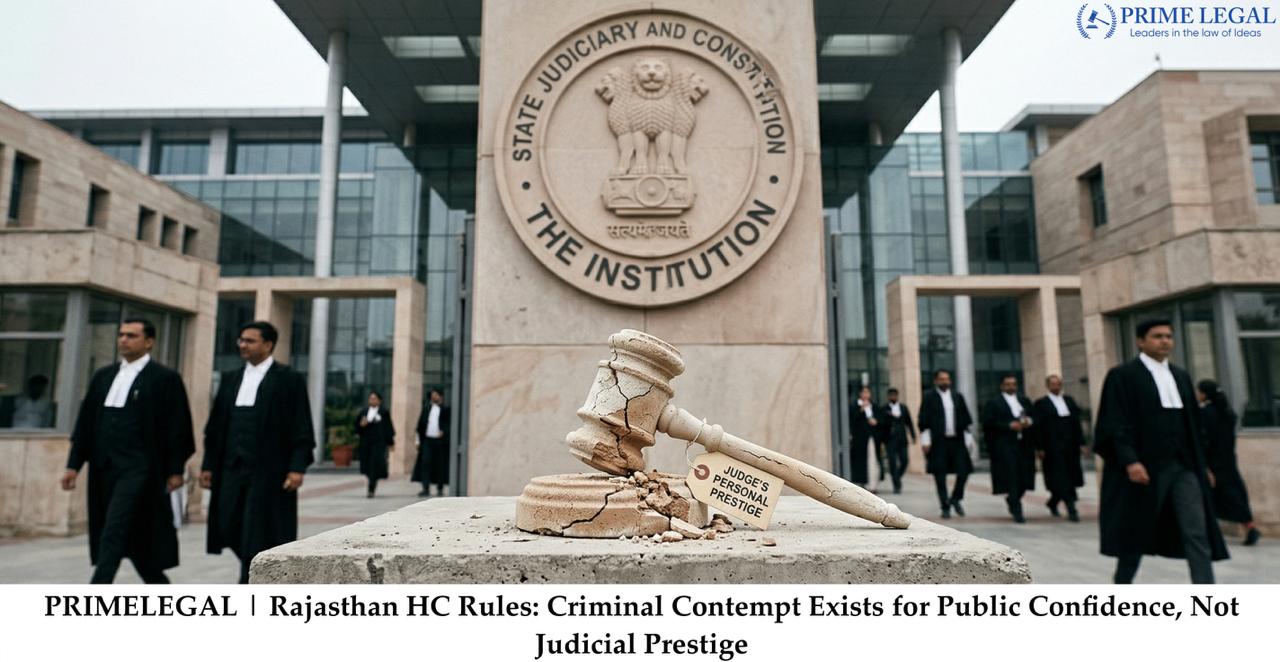
The Division Bench emphasised contempt protects institutions, not the personal ego or reputation of an individual judge. The Judges reviewed the case diary statements and noted that the allegations by the police alleged on the Magistrate were not made in open court, not circulated to the media or public, and were recorded only because the Magistrate himself ordered the Additional SP to inquire. Further, the statements explained interactions with the Magistrate for the dissatisfaction with him rather than attacking judicial orders and multiple officers independently raised similar grievances with two prior Vigilance complaints already filed.
The judges also found that the S.2(c) test failed as there was no scandalising “court” authority and it did not pose any prejudice to proceedings and no obstruction of justice. It was merely personal cynicism of an individual Magistrate’s behavior, not the court as whole , made in a closed, official inquiry. S.6 explicitly protects good-faith complaints against subordinate Presiding Officers to proper forums. It observed that the judicial system has its own vigilance mechanism of complaints to the Registrar (Vigilance), thus it is an administrative matter, not contempt jurisdiction. Contempt is “exceptional” power for clear threats to justice administration, not hurt feelings.
JUDGMENT
The ingredients of Criminal Contempt u/s 2(c) was not fulfilled and the statements don’t scandalize court, interfere with proceedings, or obstruct justice. Police merely responded to the superior officer’s inquiry directed by the Magistrate. Emphasizing that contempt is an “extraordinary and punitive” jurisdiction, the Court declined to invoke it in circumstances where ordinary administrative remedies such as vigilance inquiries were already available and engaged. It therefore dismissed the contempt reference, discharged the rule, and parties are at liberty to pursue administrative remedies.
CONCLUSION
The Rajasthan HC, through this judgment draws a clear line between criminal contempt of court and genuine grievances on the behaviour of judges towards the parties. By holding that the police grievance made out in the enquiry did not amount to criminal contempt it ensured the investigations won’t be hindered by fear of contempt proceedings and genuine criticism would be protected by Section 6 of the Contempt of Courts Act. It also highlighted that the administrative remedies available for such matter must be availed as Contempt is extraordinary punitive jurisdiction.
“PRIME LEGAL is a National Award-winning law firm with over two decades of experience across diverse legal sectors. We are dedicated to setting the standard for legal excellence in civil, criminal, and family law.”
WRITTEN BY: ABIA MOHAMMED KABEER
Read the judgment copy here

