
CASE NAME: Farhad Suri & Anr. Vs Praveen Choudhary & Ors.
CASE NUMBER: CRL. M.C. 1347/2024 And Connected Matters
COURT: High Court of New Delhi
DATE: 16th December, 2025
QUORUM: Hon’ble Ms Justice Neena Bansal Krishna
FACTS
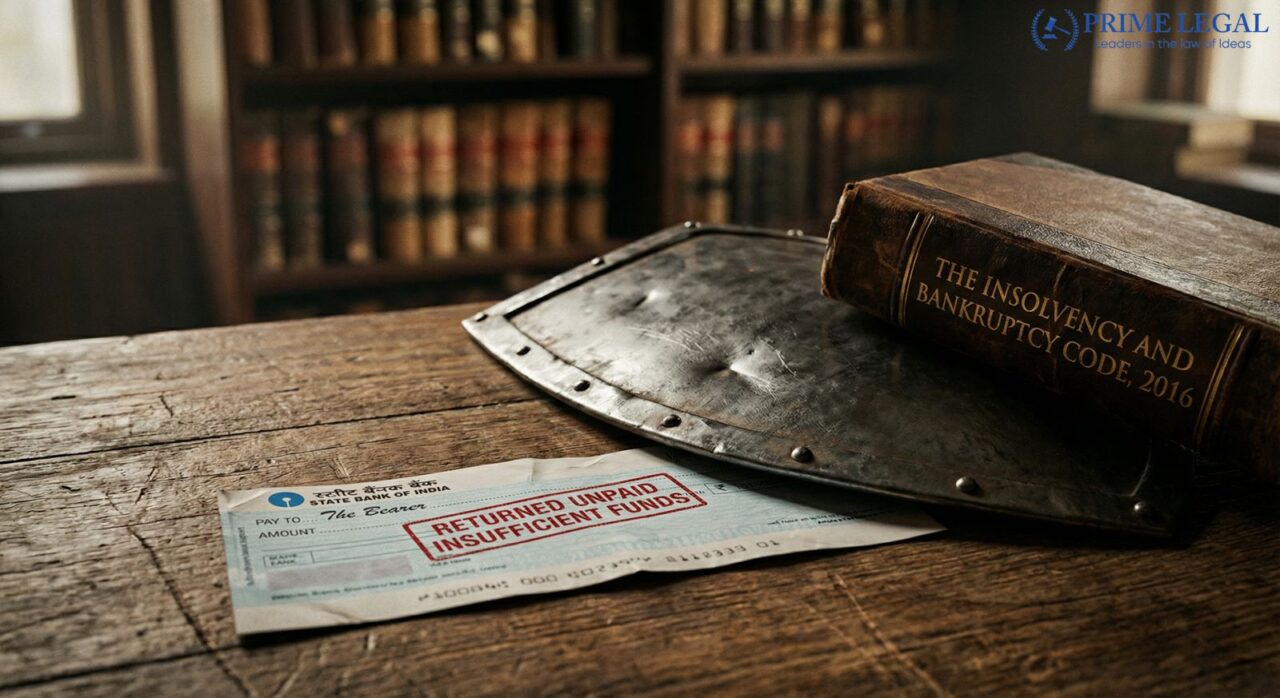
This case that arose from three petitions under Section 482 CrPC relating to quashing of summoning orders issued in three complaints under Section 138 of the Negotiable Instruments Act, 1881 (in short NI Act) was instituted by Praveen Choudhary and Jitender Choudhary against M/s Sumeru Processors Pvt. Ltd. and its directors, Farhad Suri and Dhiren Navlakha, along with Niraj Jha. The complainants’ case was that three cheques, dated 7 September 2020, were issued as repayment of friendly loans advanced in 2016 and also to settle unpaid rent and utility charges. The said cheques were dishonoured on 05 October 2020 with the remark “ACCOUNT BLOCKED.” Statutory notices were issued, and upon non-payment of the amount, complaints under Section 138 of the NI Act were filed. The Learned Metropolitan Magistrate took cognisance and issued a summons in January 2021. The petitioners’ case is that the Company had entered Corporate Insolvency Resolution Process (CIRP) on 15 April 2019, followed by liquidation on 03 December 2019, pursuant to which control over bank accounts and financial operations had vested in the Interim Resolution Professional and subsequently in the Liquidator.
ISSUES
- Whether proceedings under Section 138 NI Act are maintainable when cheques are dishonoured due to “ACCOUNT BLOCKED” consequent to insolvency proceedings.
- Whether the director could be held liable under Section 138 read with Section 141 of the NI Act in case the director has lost control of the company’s accounts.
- Whether the summoning orders passed by the Trial Court were legally sustainable.
LEGAL PROVISIONS INVOLVED
- Sections 138 & 141, Negotiable Instruments Act, 1881
- Section 482, Code of Criminal Procedure, 1973
- Sections 14, 17, and 18, Insolvency and Bankruptcy Code, 2016
ARGUMENTS OF THE PETITIONERS
The petitioners argued that the alleged loans of 2016 were time-barred by 2020; however, their principal contention was that the cheques dated 07.09.2020 were issued after commencement of CIRP and liquidation.
They submitted that from April 2019 onwards, they were divested of authority to operate the company’s bank accounts. Consequently, dishonour with the remark “ACCOUNT BLOCKED” was a statutory consequence of insolvency proceedings and not due to insufficiency of funds.
It was further averred that the NI Act Section 138 requires the cheque to be drawn on an account “maintained by the drawer,” which necessarily requires the existence of authority and control, which in this case was not present.
ARGUMENTS OF THE RESPONDENTS
The respondents argued that the cheques had been signed, drawn, and delivered by the petitioners themselves with complete knowledge. It was also argued that the petitioners had fraudulently concealed the insolvency proceedings as well as the issuance of the cheques, thereby misleading the complainants.
Moreover, the respondents had alleged the fraudulent acts of the petitioners in the running of the company and argued that disputed questions of fact ought to be decided during trial and not at the quashing stage.
Respondent Niraj Jha claimed that he was not a party to the cheques, as well as not involved in the day-to-day business of the company, and had been impleaded mechanically.
ANALYSIS
The Court analysed the reconciliation between section 138 of the NI Act and cases of insolvency under IBC. With reference to a decision in P. Mohanraj & Ors. vs. Shah Brothers Ispat Pvt. Ltd., (2021) 6 SCC 258, it has been held that although section 138 cases are prohibited during moratorium against the corporate debtor, a director’s responsibility will be governed by whether they have maintained control over the affairs of the company.
In the given case, it has been held that from 15.04.2019, the financial control rested entirely with the IRP and subsequently with the Liquidator. Thus, the dated cheques of 07.09.2020 were delivered when the petitioners had lost the right to manage the accounts.
Highlighting the importance of the word “account maintained by him” under Section 138, and based on the decision of the case “Rajesh Meena v. State of Haryana, MANU/PH/3229/2019” the Court declared that there must be authority and control over the maintenance of the account. Since the accounts have been statutorily restricted, this necessary ingredient is lacking.
Even if the existence of the liability was to be assumed, the Court held that the dishonour on account of “ACCOUNT BLOCKED,” based on the statutory insolvency proceedings, was not dishonour due to insufficiency of funds.
JUDGMENT
By order dated 16th December 2025, the Delhi High Court, in the case of Neena Bansal Krishna, Hon’ble Ms Justice, exercising the powers under Section 482 CrPC, quashed the proceedings under Section 138 of the Negotiable Instruments Act. The Court held that the checks had been given at a stage when the CIRP and liquidation process was initiated, when the petitioners did not possess the authority to run the bank accounts of the company, and that the dishonour of the checks for the reason “ACCOUNT BLOCKED” due to the Insolvency Proceedings is not within the provisions of Section 138.
CONCLUSION
The judgment clarifies that liability under Section 138 Negotiable Instruments Act cannot arise where the drawer lacks authority and control over the bank account due to insolvency proceedings, and where dishonour occurs for reasons other than insufficiency of funds. It reinforces the centrality of the phrase “account maintained by him” in determining criminal liability.
“PRIME LEGAL is a full-service law firm that has won a National Award and has more than 20 years of experience in an array of sectors and practice areas. Prime legal falls into the category of best law firm, best lawyer, best family lawyer, best divorce lawyer, best divorce law firm, best criminal lawyer, best criminal law firm, best consumer lawyer, best civil lawyer.”
WRITTEN BY: USIKA K

