
ABSTRACT
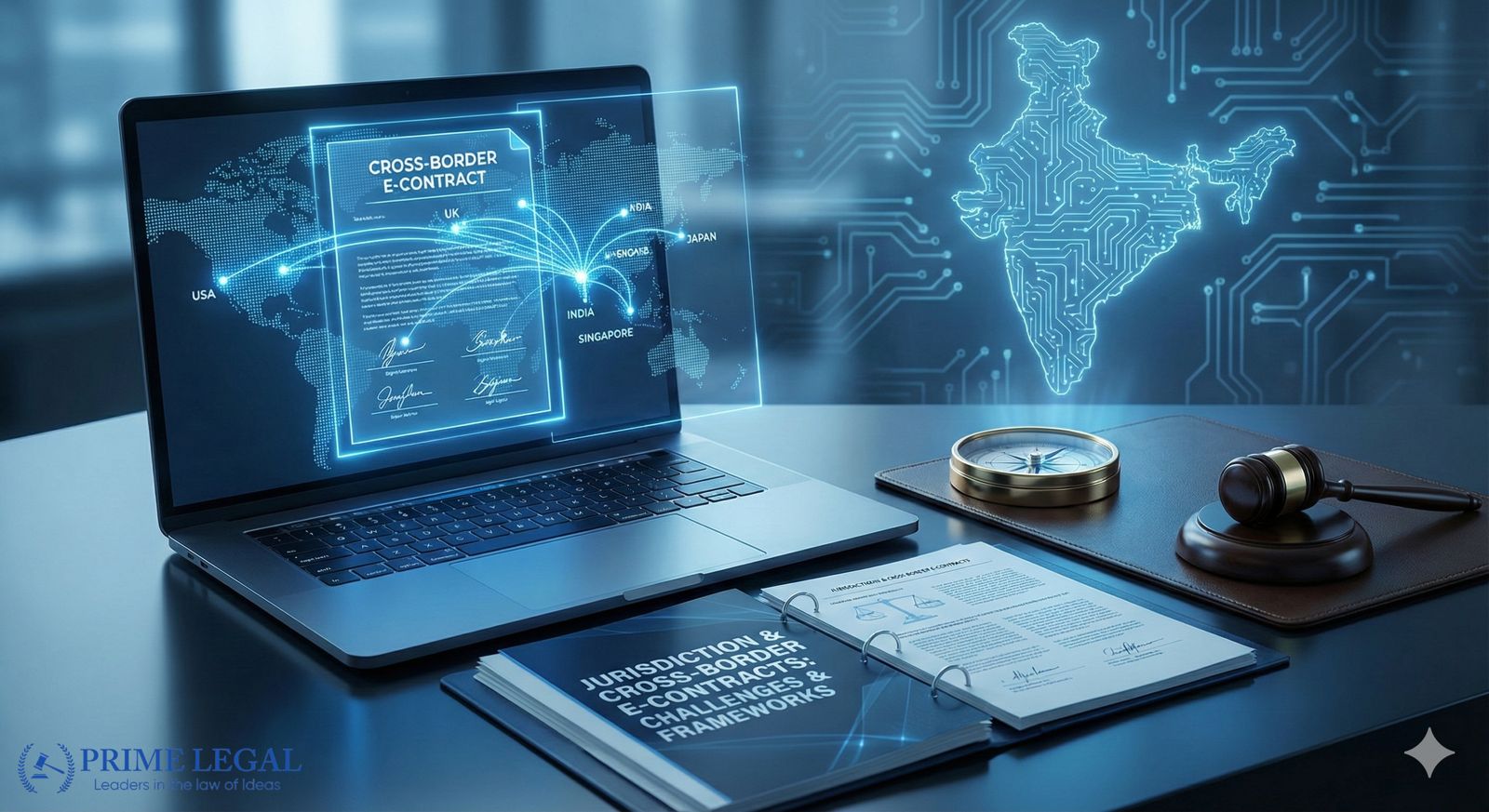
When someone in Delhi buys clothes from a US website or a Mumbai seller ships to Germany, these cross-border e-contracts seem simple. But if there’s a problem, which court decides? Which country’s law applies? This article breaks down the real problems: figuring out which court can actually hear the case, picking the right country’s law, keeping buyers safe, proving someone really clicked “agree,” and dealing with fancy new stuff like smart contracts that run on code. It covers helpful laws like UNCITRAL guidelines and India’s IT Act, plus some straightforward fixes businesses can use right now.
KEYWORDS
e-contracts, jurisdiction, online shopping, consumer rights, digital signatures, smart contracts.
INTRODUCTION
Online shopping across borders is normal now. A student orders headphones from Amazon US, or a small business sells handicrafts to Europe. But when delivery fails or products are fake, legal problems start. Where do you sue? Traditional courts look for physical connections that don’t exist online.
WHERE CAN YOU SUE?
The first question remains, which court has power? Old law says where the defendant lives or contract happens. Online, websites work everywhere but sellers don’t “live” in every country.
India’s IT Act Section 13(3) says sue where the plaintiff does business. But is that server location or actual office? Courts disagree.
Choice clauses help: “Disputes go to Delhi courts” in terms & conditions. Works well for businesses, less for consumers.
WHICH LAW APPLIES?
After settling on a court, the next step is deciding which country’s law governs the contract. Smart contracts usually have a clear line like “English law applies here,” and courts back that up, especially when it’s businesses dealing with each other.
But things get messy with consumer deals. EU rules make sure buyers still get their local protections, whatever the fine print says. Like a Polish shopper grabbing stuff from an Indian site—they keep Poland’s 14-day cancel window no questions asked.
PROTECTING ONLINE BUYERS
Consumers click “I agree” without reading 20-page terms. Many countries force sellers to give info first: address, returns, cancel rights.[repository.nls]
Small Maharashtra businesses selling to Europe suddenly face EU rules they never heard of. Compliance costs kill profits.
PROVING DIGITAL CONTRACTS
Paper contracts are easy to prove – just show the signed document. Digital ones are harder. How do you show someone really clicked “agree”? UNCITRAL says electronic signatures are fine if they’re reliable. India’s IT Act accepts digital signatures completely. But other countries use different technical standards, so cross-border proof remains difficult.
PLATFORMS AND SMART CONTRACTS
Flipkart seller in Bangalore, a buyer in Kerala, and a server in the US. The question arises, who to sue? Smart contracts are codes that run automatically. If code goes wrong, it’s still unsure who takes up the blame.
Solutions That Work
- Clear clauses: Name court, law, arbitration upfront
- Arbitration: New York Convention makes awards easy to enforce worldwide
- ODR: Online courts for small claims (₹500 disputes)
- Follow strictest rules: Comply with toughest consumer law
CONCLUSION
Cross-border online contracts need better global rules. UNCITRAL helps but countries still disagree. Until fixed, clear contracts and arbitration methods must be used. Tech moves faster than law, so businesses are to stay careful.
“PRIME LEGAL is a full-service law firm that has won a National Award and has more than 20 years of experience in an array of sectors and practice areas. Prime legal falls into the category of best law firm, best lawyer, best family lawyer, best divorce lawyer, best divorce law firm, best criminal lawyer, best criminal law firm, best consumer lawyer, best civil lawyer.”
WRITTEN BY: ARCHITHA MANIKANTAN

