
ABSTRACT
This article examines the changing idea of personality rights in the digital economy, focusing on the commercial exploitation of a person’s name, image, voice, and likeness. It examines the right to publicity in light of social media, influencer culture, and developing technologies like artificial intelligence. The article identifies regulatory gaps in online identity protection by highlighting current legal frameworks. Further, it aims to promote more precise legal recognition, robust enforcement strategies, and well-balanced protections to personality rights that balance business interests with personal autonomy and dignity.
KEYWORDS
Personality Rights, Digital Economy, Commercialisation, Right to Publicity, Right to Privacy.
INTRODUCTION
Personality rights refer to the rights of an individual that protect the traits attributed to one’s personality, such as name, voice, image, likeness etc. It aims to control the commercial use of personality as is protected under their right to publicity. In recent years, there have been several judicial precedents that have helped shape the definition and ambit of personality rights as we understand them today. Personality rights are therefore recognised as legal rights of an individual to control the commercial or non-commercial use of their identity or personal attributes, protecting them from unauthorised exploitation of elements uniquely associated with and identifiable to the individual.
Through the case of R. Rajagopal v. State of Tamil Nadu, the right to publicity laid the foundation stone by stating that unauthorised publication of a person’s life story without consent amounts to a privacy violation. The court thereafter began to recognise the commercial exploitation of the identity of celebrities through several personality rights petitions being filed by popular celebrities like Anil Kapoor, protecting against the unauthorised use of his catchphrase ‘Jhakaas’ or Karan Johar preventing his name from being used in movie titles or Arijit Singh wanting to control his sound-alike voices. Among the petitions filed by these celebrities were also petitions filed by Aishwarya Rai and Hrithik Roshan protecting their pictures from being portrayed in unflattering contexts with the help of technology, and by Abhishek Bachchan and Ravi Shankar protecting their personality rights from deepfakes, AI videos and misleading endorsements. This raises concerns about personality rights in the digital age.
COMMERCIALISATION OF PERSONALITY RIGHTS
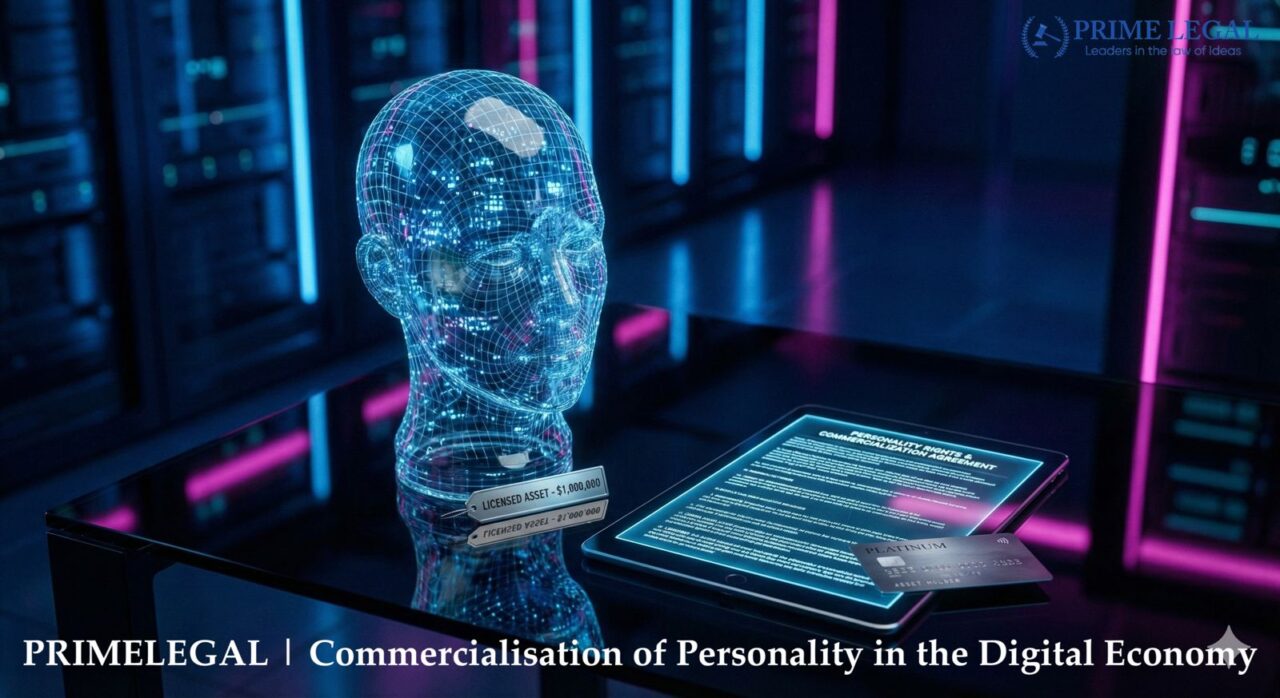
With the rise in social media, e-commerce and other emerging technologies, there has been a surge in disputes relating to the misuse of names, images and other personality traits. People have been identified as using, monetising and manipulating such personal traits without the consent of the individuals concerned. The use of technologies like deep-fakes, voice cloning, and AI-generated avatars has aggravated the situation by allowing users to recreate and manipulate images, videos or sounds. These activities heighten the risk of impersonation, defamation or blackmail through digitally altered content, with the presence of social media providing the platform for the dissemination of such content with little to no accountability.
RIGHT OF EXPRESSION AND PERSONALITY RIGHTS
Article 19 of the Constitution of India grants citizens of the country a crucial fundamental right, which is the right of expression. The right to express oneself includes an individual’s creative freedom to express themselves through various means and media. However, this freedom is not absolute and comes with its own limitations. Creators adding value to content through curation, editing, and contextualization or comedians and impersonators presenting their acts through mimicry or satire of public figures. Moreover, the fan community created fan pages, arts or video content, or journalists reporting about public figures reflect the freedom of citizens to freely express their ideas and feelings.
However, actions against a person when it crosses a line leading to tarnishing of image, blackening or jeopardising their personality, attributes or hampers their moral integrity, lead to an action which is illegal and hampers the rights of an individual.
LEGAL PROTECTION OF PERSONALITY
Personality rights in India are governed by the legal framework comprising scattered statutory legislations such as the Copyright Act of 1957, Trade Marks Act of 1999, Information Technology Act of 2000, Consumer Protection Act of 2019, Constitutional Provisions, International Organisations and judicial precedents.
- The Constitution of India, through Article 21, provides the right to privacy, which was recognised as a fundamental right through the landmark judgment in Justice K.S. Puttaswamy v. Union of India. It forms the bedrock for protecting personality from unauthorised commercial exploitation.
- The Copyright Act of 1957, through Section 14 and Section 17(b), regulates the unauthorised use of personality, which comes under the purview of copyrighted work. It aims to protect creative expression, but lacks protection of a person’s image or identity unless it has been copyrighted.
- Trade Marks Act, 1999, through Section 1,4 which restricts any false connection with any person, living or recently deceased, without their consent.
- The Information Technology Act, 2000 criminalizes the non-consensual publication or transmission of private images and obscene content.
- Consumer Protection Act, 2019, protects against unauthorised celebrity endorsements under the ambit of misleading advertisements.
- Universal Declaration of Human Rights operates to recognise personality rights, though relegating it to the background by focusing on dignitary interests and individual privacy.
CHALLENGES WITH THE EXISTING FRAMEWORK
The absence of a comprehensive statutory framework that defines and protects personality rights holistically has resulted in a fragmented approach, which has led to the rights being determined on a case-by-case basis. The current trademark and other IP regulations fail to adequately protect a person’s image from commercial use. This has resulted in uncertainty for content creators, advertisers and media platforms. It has resulted in issues such as overprotection from general injunctions, conceptual ambiguity from the switching between the privacy, property, and intellectual property paradigms, and varying judicial interpretations.
The legal enforcement of legislation runs the risk of overreaching or providing insufficient protection in the absence of statutory boundaries that differentiate between commercial exploitation and free speech. It has to be ensured that the relief granted does not extend beyond these core concerns into areas that result in curtailment of free speech, creativity, and cultural engagement. Considering the need of the hour, the principle of transformative use must be extended and applied in situations where required, and an independent statutory framework governing personality rights in the age of artificial intelligence must be legislated.
CONCLUSION
To conclude, the commercialisation of personality in the digital economy marks a profound shift in how individual identity is created and consumed. On one hand, digital platforms, influencer culture, and emerging technologies increasingly monetise through personal attributes such as name and image, whereas on the other, the traditional legal frameworks still struggle to keep pace with the developing technology. While personality rights and the right of publicity aim to safeguard individual autonomy, the existing statutory protections remain fragmented, scattered and inadequate in addressing the new forms of digital exploitation. There is thus an urgent need for clearer statutory recognition of personality rights. The underscored importance of balancing commercial interests with fundamental values of dignity, privacy, and consent needs recognition. Therefore, in an era where identity has become a commodity, it is essential to safeguard and preserve human rights and personality.
“PRIME LEGAL is a National Award-winning law firm with over two decades of experience across diverse legal sectors. We are dedicated to setting the standard for legal excellence in civil, criminal, and family law.”
WRITTEN BY: STUTI ANVI

