
INTRODUCTION:
The arrest of environmentalist and educator Sonam Wangchuk has grown to become a major constitutional and administrative law concern in India, casting doubt on the application of preventive detention authority, the guarding of civil freedoms and judicial review. The issue, which began as demonstrations in Ladakh to seek statehood and constitutional protection has overgrown to a regionally based political issue to a nationwide court battle heard by the Supreme Court.
The case is now procedural conformity with the national security act, reliability of evidence, and humanitarian issues like the health status of the detainee. The way the Court has addressed these issues indicates that the conflict between state security interest and the constitutional obligation of individual liberty remains.
The focus of this note is to address the background of the case and the most recent judicial proceedings down to 17 February 2026 and specifically mention individual hearing dates and their legal importance.
BACKGROUND:
On 26 September 2025, Sonam Wangchuk was arrested after riots in protest on the outbursts over the need to have constitutional protection and legal status of Ladakh statehood. Officials claimed that the speeches given in the process of agitation were the cause of violence and he was put under preventive detention through the National Security Act, 1980. This detention was ratified in the beginning of October 2025 and he was shifted to Jodhpur Central Jail.
His wife later filed a habeas corpus motion in court to contest the validity of the detention in the Supreme Court. The petition was made out claiming that the constitutional protections had been violated, especially the ones concerning the fact that the provision of materials that were being used by the authorities has been delayed and the supposed dependency on partial or false evidence. Between late 2025 and early 2026, the Supreme Court admitted notices, allowed amendments to pleadings, and started receiving further submissions in conjunction with compliance with the rules in its procedures, and fiscal security provisions.
By January 2026, the case would reach substantive argument stages, before a panel of Justices consisting of Aravind Kumar and P. B. Varale, evidence of the executives obtaining justification and using evidence to support it, would be under additional examination stages.
KEY POINTS:
- Preventive Detention and the Judiciary Review:
In January 2026, the counsel representing the petitioner told the court that procedural flaws such as the continued lack of timely communication of documents used to justify detention infringed protection provided by Article 22 of the Constitution. The Court discussed the possibility of such defects being remedied by statutory provision pointing to its readiness to review the issue of executive satisfaction in the preventive detention orders.
- Reasonableness of Detention by Government:
On 2 February 2026, the Union Government made the submission before the Court that Wangchuk was capable of causing unrest in a geopolitically sensitive border area by his speeches, and thus deserved preventive detention. The action was highlighted by the counsel as a must to ensure there was stability and all the statutory mechanisms had been applied. The petitioner argued the other way holding that the protesters were peaceful demonstrations of democracy.
- Health-Related Judicial observations:
During the hearing on 4 February 2026 the medical reporting that medical concerns were raised regarding health aspects was present and the government was requested by the Supreme Court to review the detention based on the medical concerns raised. The case was further brought up on 10 February 2026, where the Court once again discussed health concerns; the government replied that Wangchuk was under control, under specialised care and chose not to be released on medical grounds.
- Evidencing Reliability and Cyberspace Accuracy:
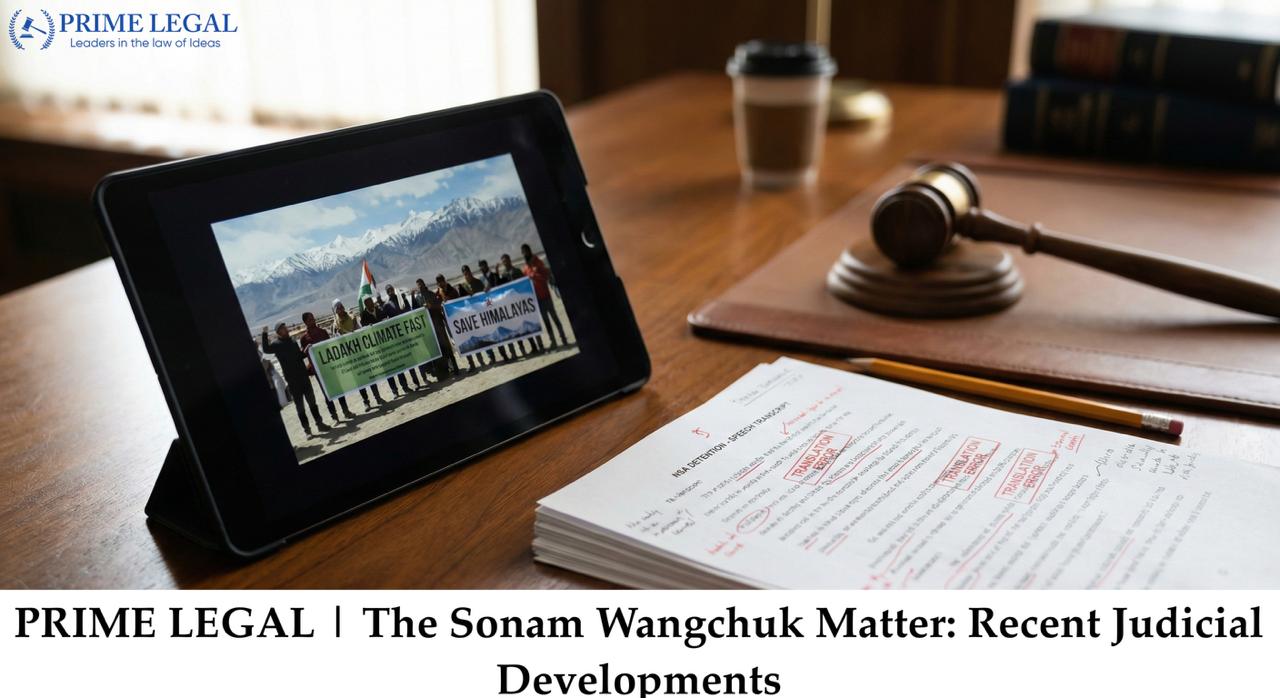
The last substantive hearing that took place on 16 February 2026 was on evidentiary issues. The Court asked authorities to generate digital video evidence that was used in the detention order and caused the issue of the inaccuracy of transcript and translation. A significant focus on the accuracy was in the times of digital manipulation and artificial intelligence, where the bench was reminding that evidentiary material that underlies the detention should be credible and full.
RECENT DEVELOPMENTS:
The video evidence provided by the authorities highlighted a high level of attention on authenticity and completeness during the Supreme Court hearing that took place on 16 February 2026. The counsel of the petitioner claimed that some of the recordings mentioned were omitted and transcripts were inaccurately reflected in terms of speeches given. The Court then ordered reproduction of original digital work and emphasized that without correct translation and transcription further use of such evidence was not possible. The case was then further adjourned later that week.
Medical considerations were discussed earlier on 10 February 2026, and the bench asked for detention to be reconsidered based on medical reports whilst the government argued that sufficient care was being administered. The hearings were based on submissions that were filed on 4 February 2026, when the Court was initiating a raise of concern over the medical condition of the detainee and recommending reevaluating of the time spent in custody.
All of this shows that the inquiry of the Supreme Court is still in motion and is multifactorial, covering procedural and evidentiary reliability and considerations of humanity. As of 17 February 2026 there is no final decision made as to the legality of the detention and the petition has remained in adjudication.
CONCLUSION:
The Sonam Wangchuk case is a progressive constitutional conflict, which demonstrates the thin line between the authority to prevent detention and personal liberty. In a series of hearings, the Supreme Court has touched upon procedural protections and the standards of evidence used as well as humanitarian issues, and the complexity of the latter is understandable in dealing with cases of national security related detention.
Although the ultimate judgment is still to come, the case highlights the need to have the judiciary checking on the accountability of the executive powers when the rights of an individual are curtailed by executive power. Its decision would surely affect future debate on preventive detention, scrutiny of evidence and the constitutional boundaries of the state move in democracy of India.
“PRIME LEGAL is a full-service law firm that has won a National Award and has more than 20 years of experience in an array of sectors and practice areas. Prime legal falls into the category of best law firm, best lawyer, best family lawyer, best divorce lawyer, best divorce law firm, best criminal lawyer, best criminal law firm, best consumer lawyer, best civil lawyer.”
WRITTEN BY: TANUSH RAJ

