
Abstract
While one of India’s social and legal discourse has rightly focused on protecting women and other marginalized groups, men struggle often to remain invisible the stereotype that men must be strong in the absence of legal remedy for male victims of domestic violence or workplace harassment and mental health negligence create a silent crisis. This article examines how gender specific laws, social expectations and systematic bias leave men vulnerable not as aggressors but as a victim of circumstances. It argues that recognizing men’s rights does not undermine women’s rights, instead it strengthens the foundation of justice promoting fairness, empathy and equality for all.
Keywords
Men’s right, Gender equality Bharatiya Nyaya Sanhita, Gender neutral law, Legal bias, social stereotype
Introduction
For years discussions on rights and justice in India have focused mainly on women and other marginalized groups. Yeah, I agree that those struggles were really urgent and long ignored and needed a balance of correction but when we created the balance, we created another silence. It was not correcting an imbalance. Men were pushed out of the conversation and as if suffering suddenly became gender exclusive.
The idea that men do not need rights is not progressive It’s lazy thinking. It rests on old beliefs that men are always strong, always in control and never affected by emotional legal or social harms but the belief might have survived in the late 90s but it has no place in today’s India. Men lose custody of their children face mental health cries Endure domestic abuse suffered legal consequences without support yet society still tells them to “men up” and stay quiet.
Talking about Men’s rights is not an attack on women’s rights. Justice is not a competition where one group’s protection comes at the cost of another; a fair and a balanced society must be willing to acknowledge suffering and injustice where it exists without filtering it through gender-based assumptions.
The stereotype of the “always strong” man
Indian society has always seen men as the one who must stay strong no matter what. They are expected to earn to protect their side and never show emotional weakness. While this image may look powerful it quietly hurts men. When a man is stressed, depressed or emotionally broken he is rarely taken seriously and instead of support he is told to “man up”. Over time this pressure pushes many men to suppress their pain, avoid seeking help and suffer alone especially when it comes to mental health and emotional abuse.
This same stereotype shows how our law functions and many automatically see men as aggressors And women as victims. Although women undeniably face serious violence this one side leaves no space for individual truth. The Supreme Court itself in Sushil Kumar Sharma versus Union of India 2005 warned that loss meant to protect should not be misused to harass innocent people. Then law assumes guilt Based on gender justice becomes unfair equality cannot exist where the strength is mistaken or guilt and vulnerability is refused recognition.
Gender specific laws and the question of balance
India has made several laws specially to protect women such as Section 84 85 and 86 of BNS, The Protection of Women from Domestic Violence Act 2005 And several provisions related to sexual harassment. These laws were created because many women suffered in silence for years with no protection no violence and their purpose is important and their existence is justified.
But when love begins to see only one kind of suffering it forgets the other. When acquisitions are treated as a conclusion and legal actions begin before the facts are properly examined, lives are affected instantly, reputation destroyed, families are broken and mental health shattered. Questioning this imbalance is not cruelty towards women is concern for justice. A system that protects without listening and punishes without certain risk losing its moral strength. True justice lies in compassion for genuine victims and fairness for innocent and without balance law stops healing wounds and starts creating new ones.
Domestic violence a gender neutral reality
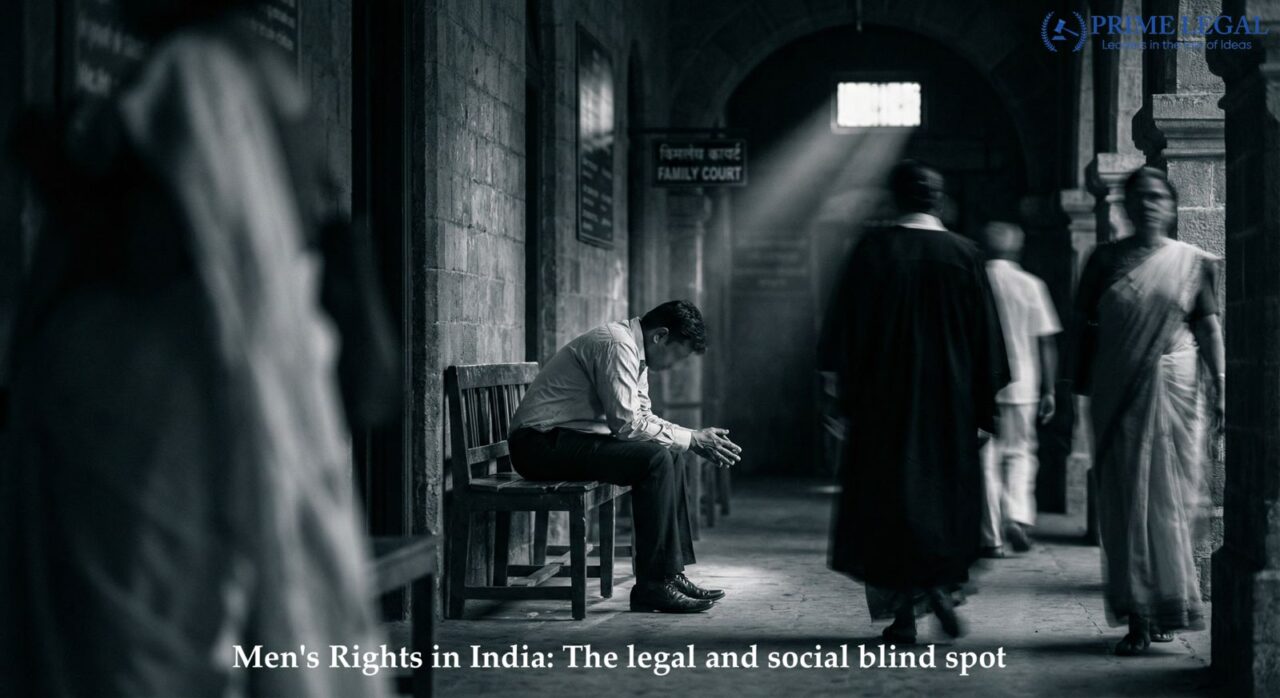
Domestic violence is often spoken about as if it happens only to women. While women do face serious and widespread abuse this single narrative hides another uncomfortable truth men can also be victims. Emotional abuse, humiliation, financial control and even physical violence against men exist but they are really acknowledged and when a man speaks up about the abuse he’s more likely to be laughed at then helped and society finds it difficult to accept that man can be afraid inside his own home.
The law reflects this silence India’s domestic violence framework recognizes only women as a victim leaving men without almost no legal remedy. This sends a clear message male suffering does not count and as a result many men choose silence over shame even when abuse is severe. Let’s understand violence does not depend on gender it depends on power control and circumstances and a legal system that refuses to see this reality does not eliminate the violence it may decide which pain deserves recognition and which pain can be ignored.
Mental health and the silent crisis among men
One of the most painful consequences of ignoring men’s struggle is seen in mental health. Men are expected to carry pressure without breaking financial stress on responsibility, legal battles, social expectations and when they collapse under this weight Society responds with indifference. Depression in men is often dismissed as weakness and asking for help is seen as failure. As a result many men suffer quietly until silence becomes unbearable.
Suicide data in India repeatedly shows a harsh truth a large majority of suicide victims are men. These are not just numbers, they are the lives lost to loneliness, pressure and lack of support yet the mental health policy and public conversations rarely treat men as a vulnerable group. When a society teaches men to stay silent and offer no space to speak it shares a responsibility for damage caused and ignoring this crisis does not make it disappear it only ensures that more lives are lost without being here.
Family law custody and question of fairness
Family courts are meant to protect relationships but for many men they became space for quiet loss. In divorce and separation cases fathers are often treated as secondary parents regardless of their emotional bond or involvement in the child’s life. Custody usually goes to the mother by default while fathers are reduced to visitors in their own children’s lives. This is always based on the child’s best interest but a long-standing assumption about caregiving and gender roles.
Maintenance laws further reflect their imbalance; men are often expected to provide financial support when they are struggling, unemployed or emotionally drained. At the same time changing the reality of working financially independent women is really considered and support should prevent hardship not created. When a family ignores individual circumstances and applies one rule to all its stops being compassionate. Fairness in family matters cannot be built on stereotypes; it must be built on reality empathy and equal consideration for both parents.
Workplace harassment and the absence of protection
The workplace is often presented as a professional and neutral space but for many men it is not always safe or fair. Sexual harassment laws in India are framed almost entirely around women as victims leaving men without a clear legal remedy when they face harassment. When a man experiences inappropriate behavior, verbal abuse or coercion at work there is often no formal mechanism for him to report it. Worse, his complaint is usually met with disbelief or mockery.
This lack of protection forces many men to remain silent or walk away from their jobs to avoid humiliation. The fear of being loved or not to be taken seriously discourages reporting allowing misconduct to continue unchecked. The safety and dignity at the workplace should not depend on gender. A system that protects only the voice while silencing others fails its purpose and true workplace equality means creating a space where everyone can speak without fear and be heard with respect.
Social stigma and lack of support systems
When men suffer, society rarely asks what went wrong. Instead it questions their strength. A man facing legal trouble, emotional abuse or mental breakdown is met with jokes. Unlike men who have very few support systems, no government shelters, limited counseling service, I know almost no public welfare schemes designed to help in times of crisis and their pain is expected to be privately invisible and quickly overcome.
Men’s rights groups exist but they are often dismissed as anti women rather than pro justice.This reaction shut down meaningful conversation and they reinforce the idea that men speaking about their struggle are somehow threatening equality. In reality ignoring men’s suffering does not empower women, it weakens society as a whole. A system that refuses to listen to the population cannot claim to stand for justice and compassion should not depend on gender and support should not be treated as a privilege.
Conclusion
Men do not cry. This sentence has been repeated for generations and it has done more damage than we are willing to admit. Men do cry. Men break. Men feel fear, loss and helplessness just like anyone else. Asking men to suppress their emotions does not make them stronger, it makes them silent and the silence when force turns into suffering.
Talking about men’s rights is not about denying women’s pain or undoing hard on protections. It is about accepting reality as it is today, not as we imagined it to be. India has moved forward but its understanding of justice remains incomplete and a society that believes equality cannot choose whose pain matters and who doesn’t. Men do not need special treatment, they need fair treatment. At the moment we have the right to speak, feel and seek justice without shame we take a real step towards a moral balance and humane society.
“PRIME LEGAL is a full-service law firm that has won a National Award and has more than 20 years of experience in an array of sectors and practice areas. Prime legal falls into the category of best law firm, best lawyer, best family lawyer, best divorce lawyer, best divorce law firm, best criminal lawyer, best criminal law firm, best consumer lawyer, best civil lawyer.”
WRITTEN BY: NISHTHA JAIN

