
CASE NAME: Sohan Lal vs Jagdish Kumar Sharma
CASE NUMBER: Cr. Revision No. 188 of 2025
DATE: 20 December 2025
COURT: High Court of Himachal Pradesh
QUORUM: Hon’ble Mr Justice Rakesh Kainthla
FACTS
The present case is a review petition filed by the accused, challenging the judgment dated January 16, 2025, passed by the Additional Sessions Judge. The appellate court had upheld the order of the Trial Court’s conviction and sentence of the accused for an offence punishable under Section 138 of the Negotiable Instruments Act (NI Act).
The accused had been alleged to have issued a cheque worth ₹2,50,000/-, which was subsequently dishonoured due to insufficient funds. Despite a legal notice, the accused failed to pay the said amount and thus, was ordered for a simple imprisonment of one year, followed by a compensation of ₹50,000/-, while the accused contested the cheque being lost and is being used by the principal complainant on false grounds, and also states that the case was filed without fulfilling the waiting period of 15 days (after receiving the notice).
ISSUES
- Did the lower courts make a mistake by ignoring the defendant’s claim that the cheque was lost and the money was never borrowed?
- Was the criminal case filed in court premature?
- Can a Revisional Court (the High Court) act like a regular Appellate court and re-examine all the witnesses and facts?
LEGAL PROVISIONS
- Section 138 of the NI Act: Pertains to the offence of dishonour of cheques for insufficiency of funds.
- Sections 118(a) and 139 of the NI Act: Establish the presumption that a cheque was issued for consideration to discharge a debt or liability.
- Section 313 of the Cr.PC: Relates to the power of the court to examine the accused to explain the circumstances appearing in evidence.
- Section 397 of the Cr.PC: The High Court’s power of revisional jurisdiction to examine the legality, correctness, or order by a subordinate court.
ARGUMENTS
PETITIONER
The petitioner contends that the complainant had failed to prove the sum borrowed. He additionally argues that the complaint had misused the lost cheque and stated that the complaint had failed to follow the statutory time line of filing the case, which is a 15-day repayment period following the notice.
RESPONDENT
The respondent submitted that the accused had admitted his signature on the cheque, giving a legal presumption of liability. He also stated that the notice was validly served to the petitioner and thus, prayed the court to uphold the previous judgment of the subordinate courts.
ANALYSIS
The High Court, in its analysis, observed that a Revisional Court is not an Appellate Court and its scope is very limited, only to rectify patent defects, errors of jurisdiction, or perversity. It highlighted that concurrent findings of fact should not be disturbed unless there is a glaring feature demonstrating a gross miscarriage of justice. The High Court also held that since the petitioner admitted his signature on the cheque, there was a legal presumption of consideration under Sections 118(a) and 139 of the NI Act, which placed the onus on the accused to show that the cheque was not issued for a debt. Citing the precedents Malkeet Singh Gill v. State of Chhattisgarh[(2022) 8 SCC 204] and Bir Singh v. Mukesh Kumar [(2019) 4 SCC 197], the Court once again reminded that it is impermissible for a Revisional Court to re-appreciate evidence as if it were a second appeal.
JUDGEMENT
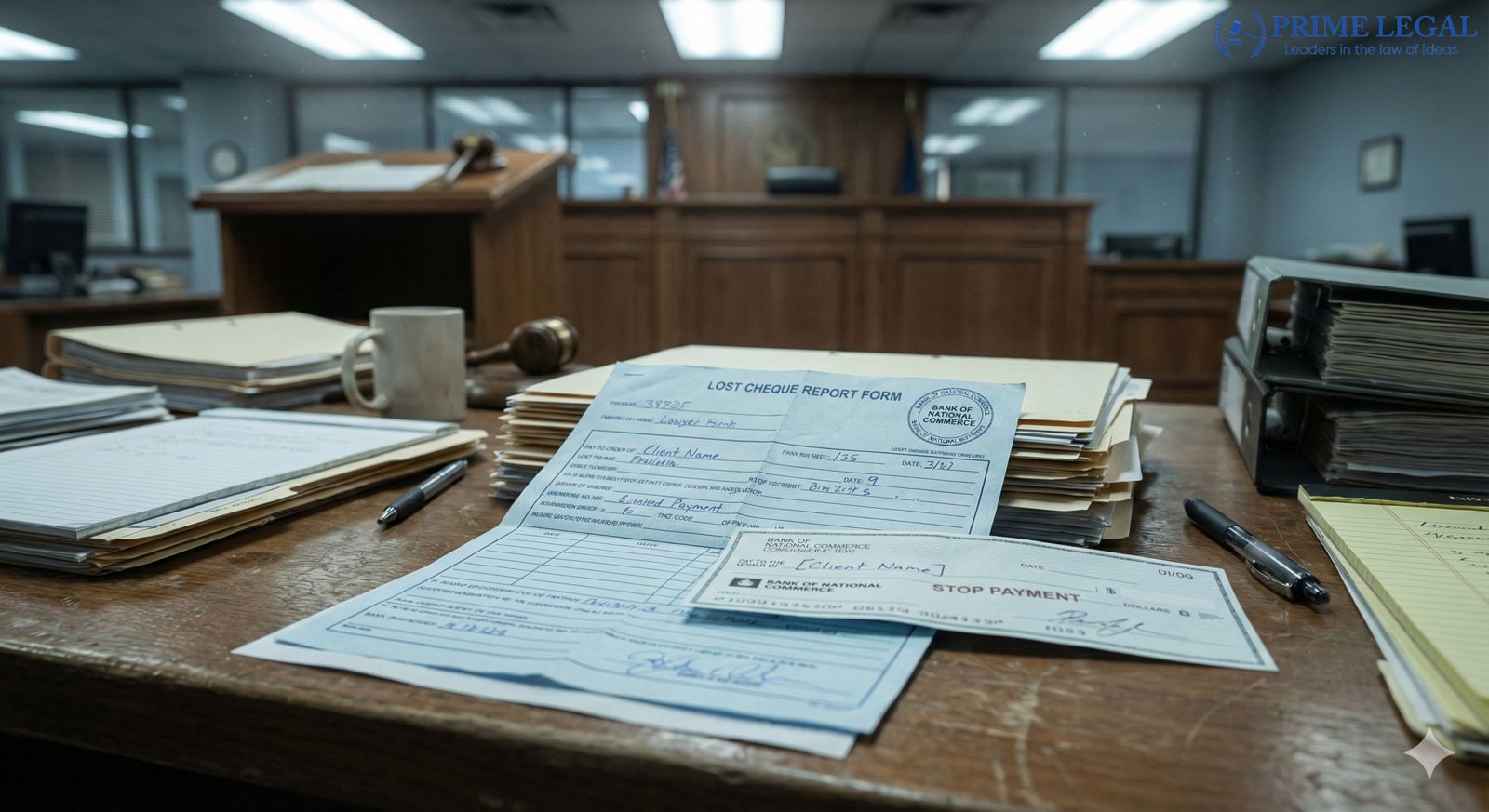
The High Court dismissed the revision petition and upheld the decisions of the lower courts. The Court ruled that the “lost cheque” theory lacked credibility because the petitioner failed to file a police report or give “stop payment” instructions to his bank at the time of the alleged loss. Additionally, since the signature on the cheque was admitted, the Court held that the legal presumption under Section 139 of the NI Act (that the cheque was issued for a valid debt) remained unrebutted by the accused
CONCLUSION
The High Court asserted that it has only a supervisory role in cases reviewed by it on revision and plays more of a legal check and balance function rather than being a second appeal where an argument about witnesses and facts is entertained. It is apparent that if the Trial Court and the Sessions Court arrive at the same conclusion concerning the verdict (concurrent findings), the High Court will neither interfere with it unless the petitioner can establish that the lower courts’ verdict is totally irrational and indefensible from a legal point of view. That is to say that if the legal propriety was observed and the conclusion was not irrational, the High Court will uphold the verdict of the lower courts to bring finality to the judicial delivery system.
“PRIME LEGAL is a full-service law firm that has won a National Award and has more than 20 years of experience in an array of sectors and practice areas. Prime legal falls into the category of best law firm, best lawyer, best family lawyer, best divorce lawyer, best divorce law firm, best criminal lawyer, best criminal law firm, best consumer lawyer, best civil lawyer.”
WRITTEN BY: SHARANYA M

